
For years, whenever I thought of Finnish PlayStation studio Housemarque, my mind would only go to Super Stardust HD.
I put so many hours into that 2007 shoot ’em up that some of its particle explosion animations have been burnt into my brain. I enjoyed 2013’s Resogun as well, but never really found the time to go back and finish 2021’s Returnal.
I’m kind of thankful for that latter fact, because I went into the studio’s latest entry, Saros, with completely fresh eyes and not knowing much about what to expect. And those eyes really liked what they saw, enough so that I think Super Stardust HD can be retired in my brain now.
Never felt better
Saros is a third-person action shooter that is, first and foremost, a visual feast. “Your eyes eat first,” they say, and Saros on PS5 Pro is a spectacle in every sense of the word: buttery smooth, gorgeous 4K visuals that boast some of the most stunning environmental vistas I’ve seen. The graphical fidelity extends in the game’s myriad of color-coded projectiles from a variety of alien life that protagonist Arjun Devraj must contend with as he looks for life (and more) on the dangerous yet beautiful alien planet of Carcosa, where “time” seems to have its own ideas in mind.
Beyond the game’s beautiful visuals and presentation, Saros is point-blank one of the best third-person shooters I’ve played in quite some time. The control scheme is excellent, and every button input is precise and satisfying, making combat feel like a breeze as you fire upon foes, time your Gears of War-style active reloads, and dodge or block projectiles to stay in the fight. It’s just a genuine joy to play, and it feels like Housemarque’s best gameplay offering yet, which says a lot.
While fighting all sorts of horrifying and awesome-looking creatures on different runs up to each biome’s boss fight, Arjun is able to pick up abilities and buffs that make the game feel like a roguelike at times. But a dedicated skill and attribute tree drives the game forward and makes progression more about how long you play and how much currency you can obtain, rather than “getting good” at certain fights like a traditional roguelike might. And that’s not to say the game is a breeze, because it definitely isn’t. Leveling up eventually makes fights easier to deal with, but they’re still a challenge and require some perfect execution at times to get the job done.
There’s also a fair amount of traversal and platforming throughout the game’s multiple unique locations, and that’s also quite enjoyable. Saros is the kind of game that’s perfect for throwing on some music, zoning out, and running around to shoot things while trying to level up. And I generally love that kind of vibe.
Additionally, I’ve always disabled the PS5 DualSense controller’s adaptive triggers because I find them cumbersome and annoying, but Saros uses them in a way that feels quite good and just makes sense, and this is one of the biggest compliments I can give to the game as a big detractor of how the triggers work by default.
Gone rogue
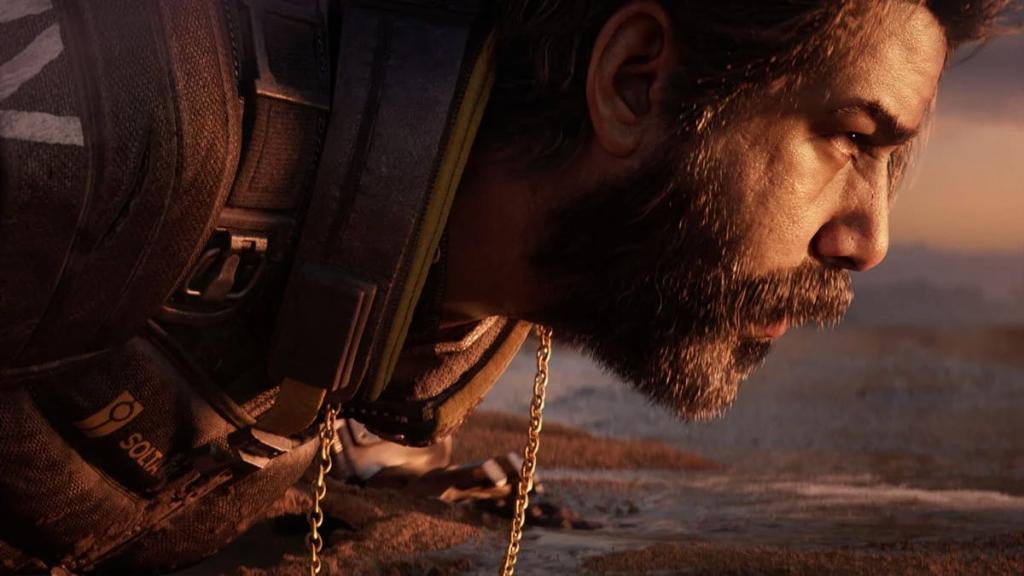
What separates Saros from being an all-time experience, for me, is its plot. The characters and events they go through in the game’s plot never really hooked me, other than serving as a driving force for where I was going and who I was shooting at next.
Saros tells a decent story with some interesting twists, and everything is very well-acted by leading man Rahul Kohli and the rest of the ensemble cast, but I never found myself longing to dig into audio or text files in lieu of heading out on another run to try and progress further in several well-made and exciting boss battles.
There’s nothing inherently wrong with the game’s storyline. There is a lot to find there if you want to dig into the world’s lore and what Arjun and his team are up to via dozens of files and audio logs, but it ends up falling flat and feeling second-fiddle with a narrative pivot that left me scratching my head. That feeling continued throughout the game’s “true” ending, which didn’t really answer any of my questions and felt like it tried to leave it all open-ended and up to interpretation. I would’ve rather had something more concrete.
Several of Saros’s characters came off as boring or uninteresting to me, as well. The gameplay feel is so good, though, that it did little to take away from my overall enjoyment of Saros and how I felt about it upon reflection after the credits rolled. It’s still a must-play game for anyone who enjoys action titles, third-person shooters, or scratching a roguelike itch.


