
Weird Weekend
Weird Weekend is our regular weekend feature where we celebrate PC gaming oddities: peculiar games, strange bits of trivia, forgotten history. Pop back every weekend to find out what Jeremy, Josh and Rick have become obsessed with this time, whether it’s the canon height of Thief’s Garrett or that time someone in the Vatican pirated Football Manager.
In the early winter of 2000, Russ Bullock, Bryan Ekman and Jay Holtslander stepped off a flight from frozen Vancouver into the warm Los Angeles sun. The three men, all in their early twenties, had arrived in LA to negotiate a deal with 20th Century Fox to turn an unofficial Half-Life mod into an official Die Hard video game.
For Holtslander, a lifelong Die Hard fan, the journey was thrilling, bordering on surreal. “It was wild,” he says. “Even [at] the airport, we were able to spot, like ‘Oh, this is the spot where [Willis] came out with the teddy bear and he lit a cigarette.'”

Arriving at Fox Plaza itself was even stranger. “We were all so familiar with it, having worked on the graphics and the levels and reviewed every frame of the film,” he says. “We got met in the lobby, and then walked through the lobby. It looked exactly like the movie.”
Holtslander recalls little about the meeting itself, only that they walked out with Fox “still very much interested in working with us”. Indeed, the meeting led to the newly founded Piranha Games scoring a deal to develop what would become Die Hard: Nakatomi Plaza.
Welcome to the party, pal!
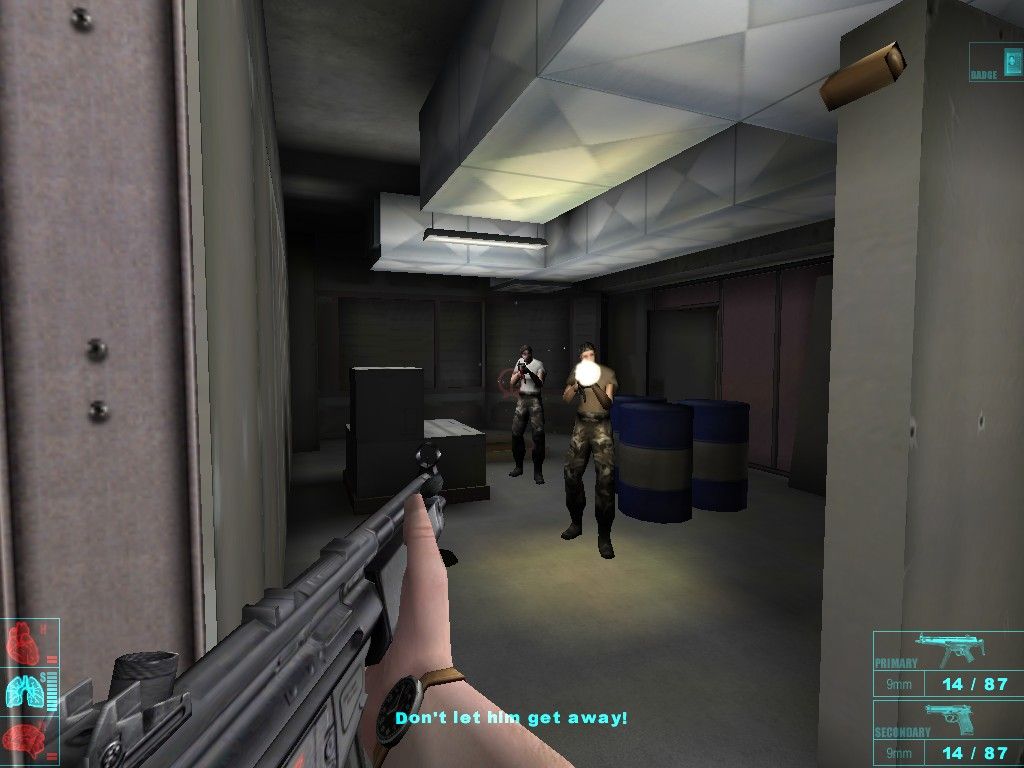
For Holtslander, it was a dream come true. But the ensuing battle to bring Die Hard: Nakatomi Plaza to life would prove very different from the unambiguous heroics of the film. Piranha Games’ debut title was a gruelling introduction to the world of videogame development, one from which none of its founders would emerge unscathed.
The origins of Die Hard: Nakatomi Plaza stretch even farther back than its GoldSrc-based incarnation, with the game starting out as a mod for Duke Nukem 3D. Holtslander, who at the time worked for a software production company that he describes as being a bit like the “Wild West”, had been drawn to PC games after the release of Doom. He started making his own levels for id Software’s 1993 shooter, but was frustrated by the fact that Doom’s engine didn’t let designers place rooms above other rooms:
“When Duke Nukem came along, I got really, really interested, and I thought ‘I want to make my own full-on mod’. The one that was most inspiring to me at the time was a mod called AlienzTC,” Holtslander says. “Somebody had gone in and fully converted [Duke Nukem] into James Cameron’s Aliens.”
Holtslander decided he wanted to do the same thing for his favourite film— Die Hard. “I was totally, totally obsessed with it at the time. I remember seeing it in the theatre on opening day,” he says. “I remember I saw it with my mom, who even liked the movie, which was surprising.”
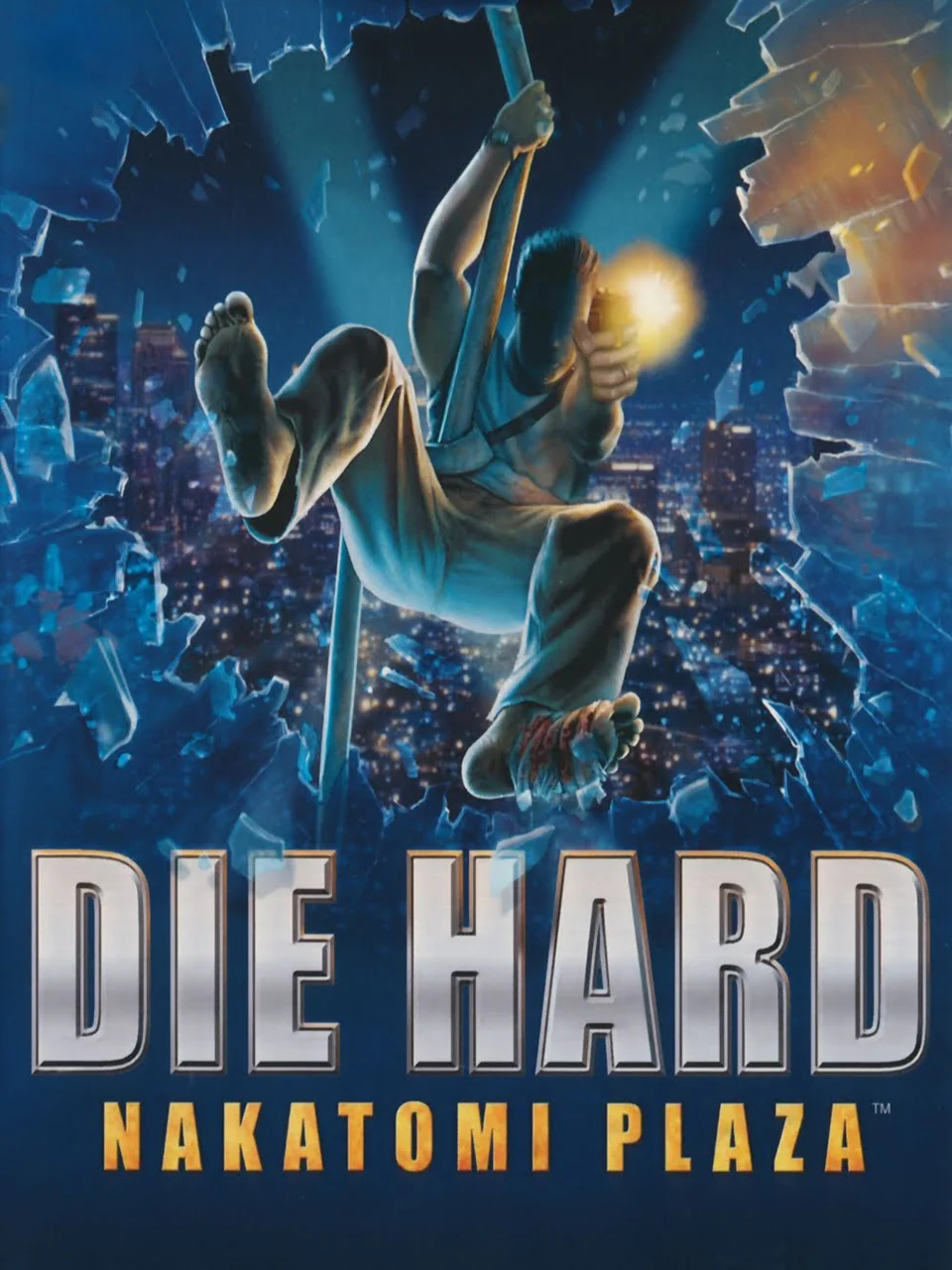
Hard: Nakatomi Plaza. His plan was to make a movie-accurate recreation of Die Hard, but with first-person combat. Yet with graphics technology evolving at such a rapid pace through the ’90s, it wasn’t long before Holtslander, like many modders and even full-blown developers at the time, was drawn to a newer, shinier game—Half-Life.
“The technology leap in Half-Life, it made me abandon all interest in the Duke Nukem thing,” he says. “It was sad that I had to rebuild a lot of the things that had already been done, but a lot of the textures and whatnot were able to be recycled.”
But modding in Half-Life’s GoldSrc engine proved significantly more complicated than working with Duke Nukem’s Build, and Holtslander soon realised that he required assistance. “I was more of a graphics person and level design than an actual coder,” he says. “We want to change the jump height? I didn’t have the ability to do that.”
Holtslander can’t recall exactly what happened next, but he believes he reached out for assistance on internet forums and bulletin boards. Among those who responded were Bryan Ekman and Russ Bullock, the latter a college student from southern Alberta studying computer science at the University of Lethbridge.
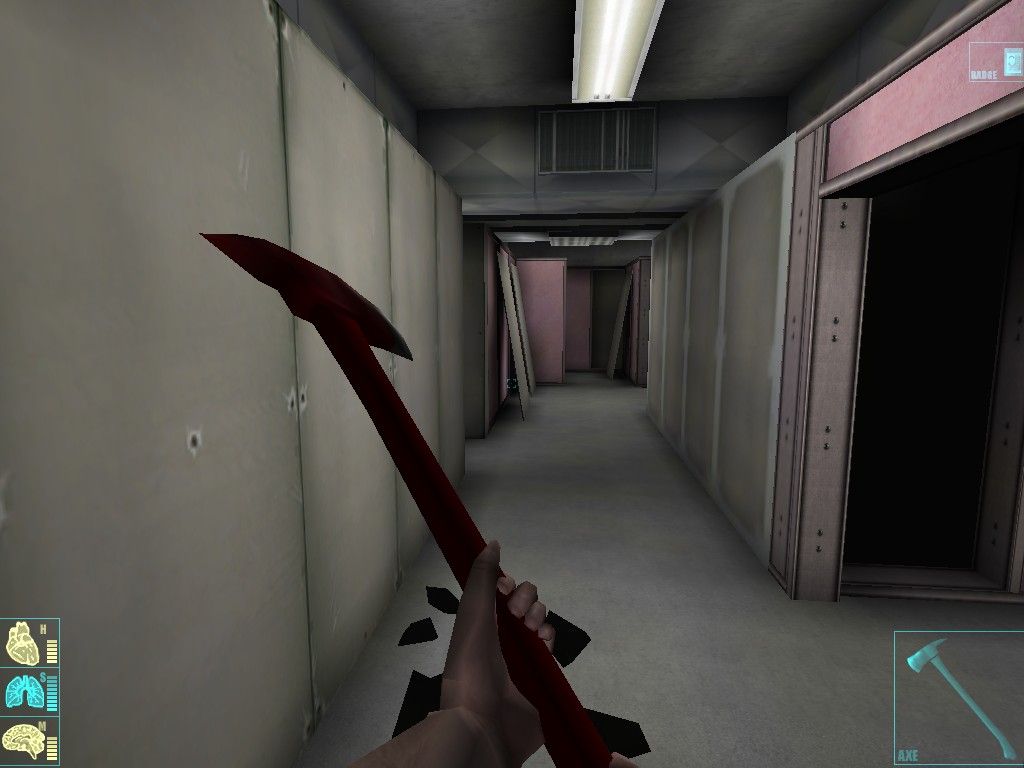
“I was looking for experience and even resume material, or whatever I could get to, when I graduate, help me get a job in the games industry,” Bullock says. “I just thought it was my path, for sure.”
With Ekman and Bullock on board, progress on the mod began moving rapidly. The team set up a website for the mod and it began to garner attention from the Half-Life modding community. This was partly due to the theme, but it was also because of the advanced graphical techniques the nascent Piranha Games were employing.
“We had some kind of early, almost photorealistic type of textures or face mapping…taking some of the famous actors and slapping their faces on a model,” Bullock says. Holtslander also recalls their late ’90s aspirations to photorealism. “I had green screen stuff—which was cutting edge at the time for a small studio—animations of the pistol that were done on green screen.”
Then, the trio received what has doomed so many enthusiast projects in the past—a cease and desist letter from Fox Interactive. “They basically said, shut it down. Delete everything. Get rid of it all. It’s our property. Cease and desist,” Holtslander says. “I was absolutely gutted, because I had spent, I don’t know, two years up until then working on it.”
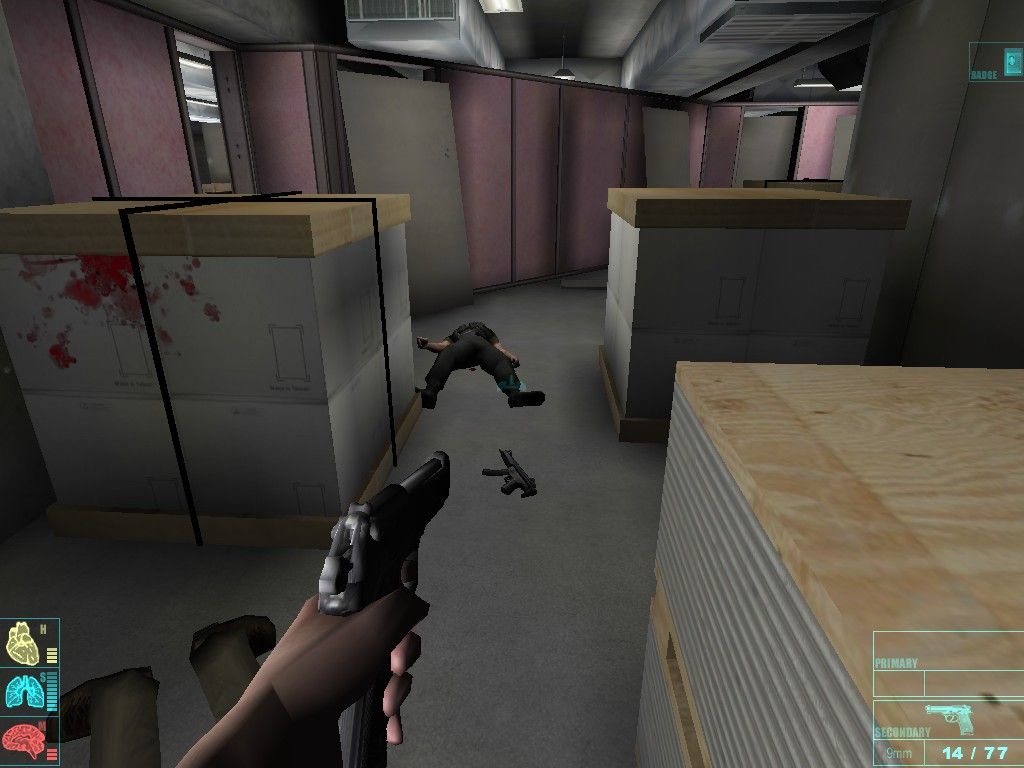
Bullock and Holtslander’s accounts of what happened next diverge. Bullock says it was his idea to try to persuade Fox to rethink their position. “I told the other guys [that] I think we should contact them. I think we should let them know we got their letter, and that, you know, they need to be making a Die Hard game,” he says.
Holtslander, however, says that he called Fox Interactive, and that the plan was not to persuade them to let the modders make a Die Hard game, but simply to allow them to use the assets they’d created to make something else. “I got connected to somebody there and I started my spiel,” he says. “I was saying ‘I was hoping we could come to some kind of agreement here.’ And before I even had a chance to finish my thought, the guy on the other end of the line at Fox is like ‘You mean, like a publishing deal?'”.
Whatever their response, the modders piqued Fox Interactive’s curiosity. Moreover, after the trio flew down to Los Angeles, Fox opted to fund production of a prototype demo, and Piranha games was born. To this day, Bullock is astonished by Fox’s response. “I’ve been doing this now for 26 years at Piranha, and I’ve had projects disappear that had 10 times the promise that this did,” he says.
A pain in the ass
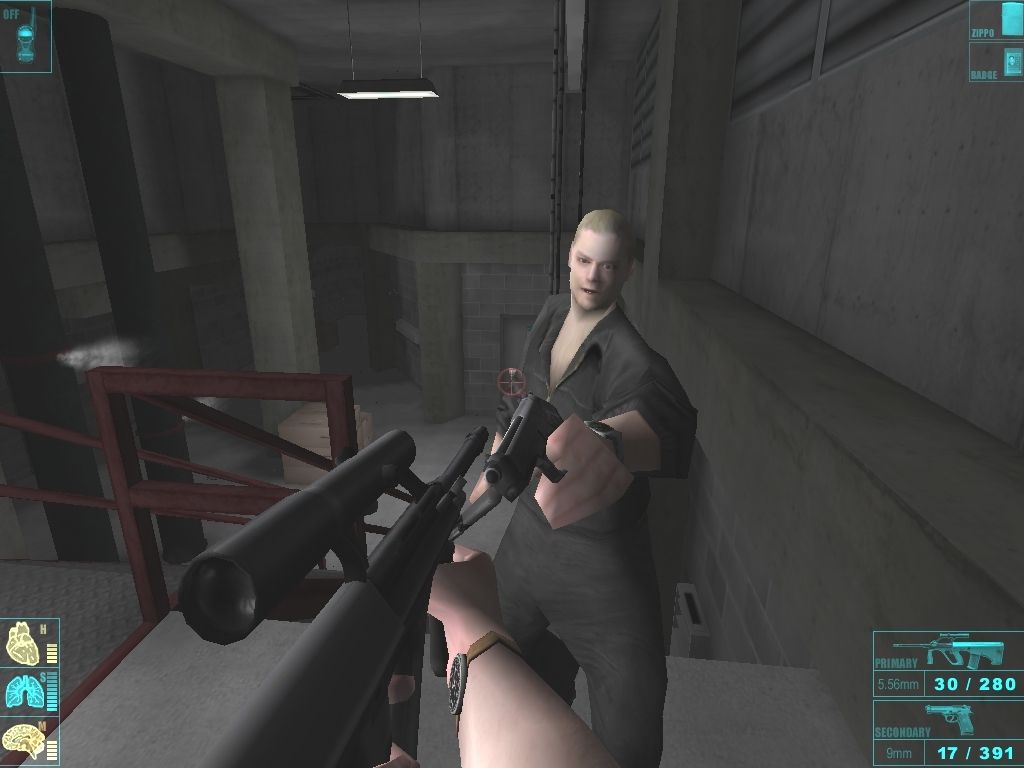
Piranha Games was founded on January 22, 2000. Bullock took a hiatus from college to join Ekman and Holtslander in Vancouver. Holtslander claims he came up with the company name. “We were all racking our brains, trying to think of a cool name,” he says. “I thought up Piranha Games, and then their faces lit up and they’re like ‘Oh, that’s awesome.'”
The seed money Fox had given Piranha was somewhere between 100,000 and half a million Canadian dollars. But rather than move into an office right away, Piranha decided to stretch it out by moving into an apartment together. “We paid ourselves minimal money, sleeping on the floor for months at a time,” Bullock says.
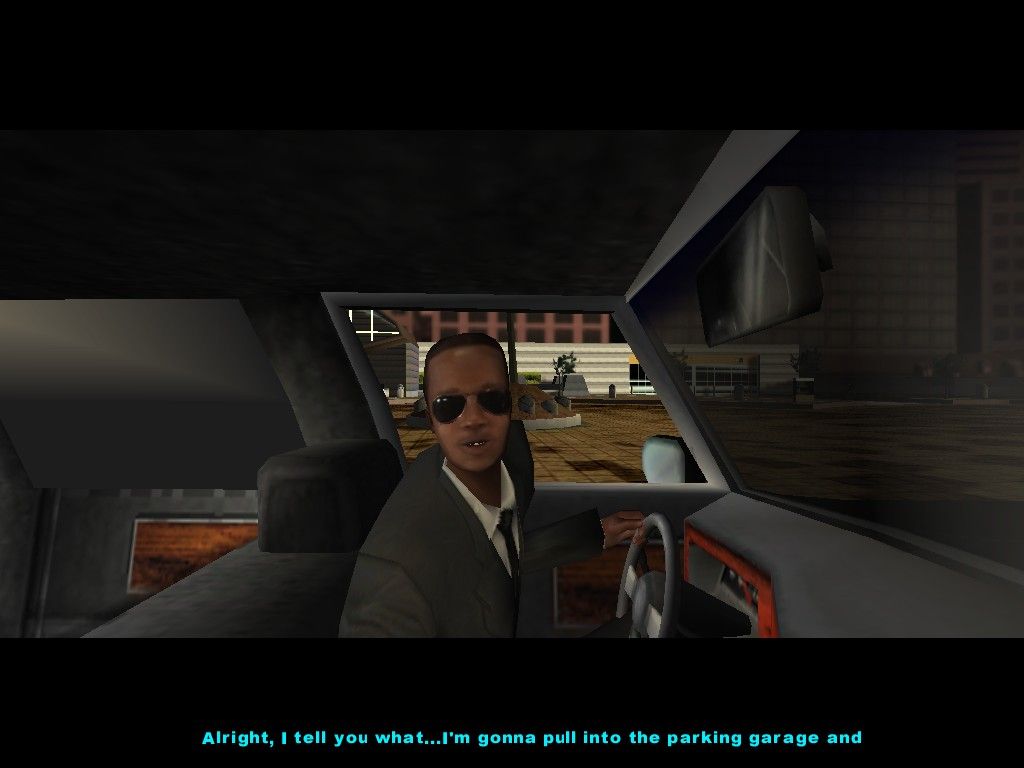
According to Bullock, Piranha ended up producing three demos for Fox during this period. The first two were built in Half-Life’s GoldSrc engine, while the third was built using Quake 3’s tech. Bullock can’t recall exactly why Fox wanted this, but suspects it was because they wanted to see “greater visuals than Half-Life was starting to let people do.”
There may have been another motivation. In the autumn of 2000, Fox committed to funding the whole game, and Piranha became a professional game studio. But there was a caveat. Fox wanted Die Hard: Nakatomi Plaza to be built in Monolith Productions’ Lithtech engine.
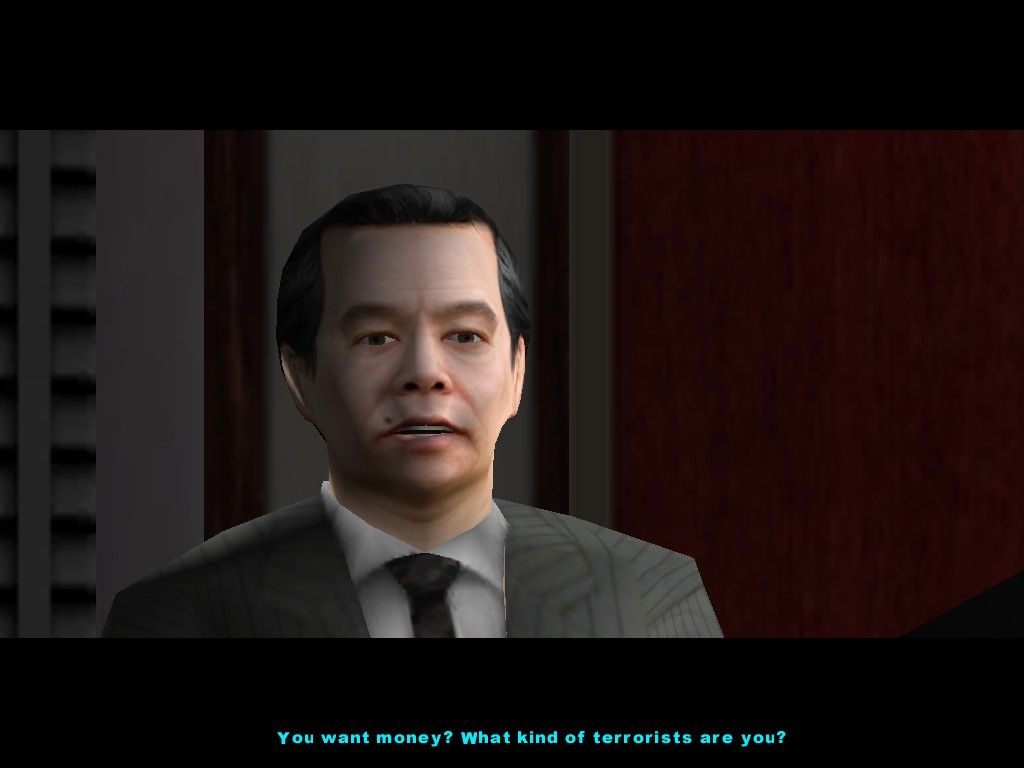
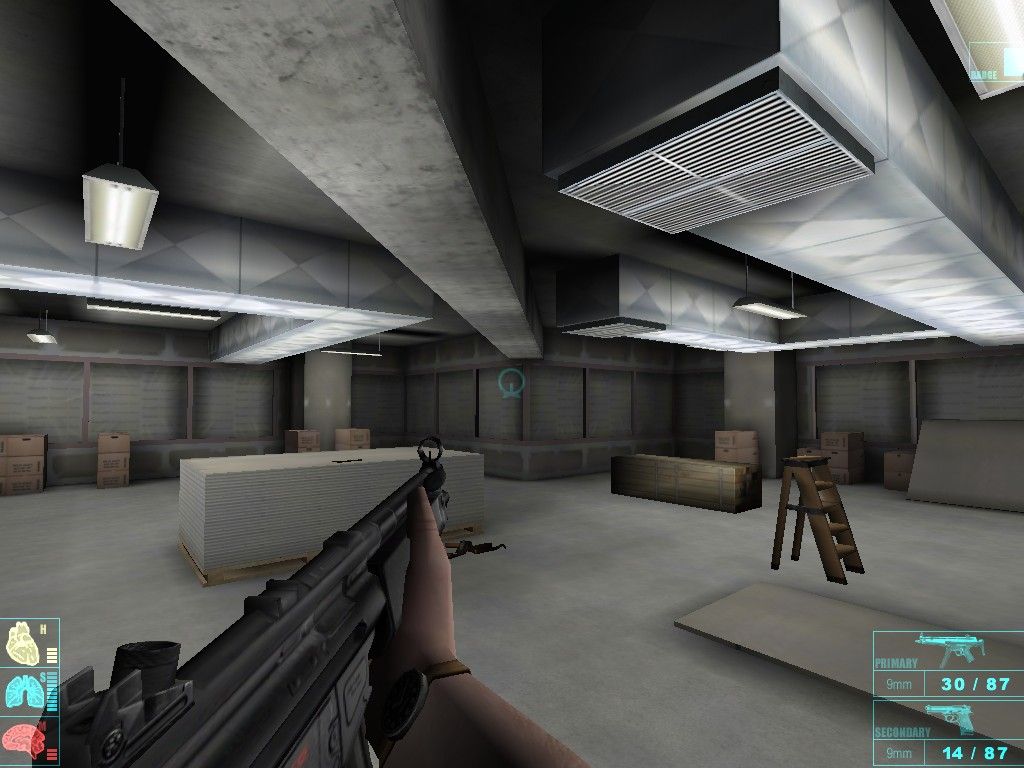
Holtslander was not happy with this decision. “It was not even the Pepsi to the Coke,” he says of Lithtech. “It was very crushing to us.” Bullock is more diplomatic, saying it had “every feature we needed [for] a first-person shooter”. Even so, he acknowledges that Lithtech was tricker to work with, leading to issues in Nakatomi Plaza that were never really fixed. “The physics simulation was really problematic,” he says. “We kept complaining about [it], felt like we never got anywhere with Monolith. They were just like ‘It works fine.'”
Being pushed to use an engine it wasn’t familiar with was the first reality check for Piranha Games. The second was making the mod into a commercial product. This involved increasing the scope of the game beyond the two hours of action scenes depicted in the film, which in turn meant levels and sequences that don’t appear in Die Hard.
“There was some desire initially to try to map things like exactly 1:1 from the building, but we [found out] right away, this is kind of small [and] cramped,” Bullock says. “We were already learning that we would have to change certain things.”
Holtslander, meanwhile, says that Fox provided advice on how to expand Die Hard’s story. “Fox helped us brainstorm, like ‘Okay, here’s what we could do. We could do a scene where maybe the police do another raid and they’re trying to get in,” he says. “Which kind of bugged me a little bit. It’s like ‘Oh, this isn’t honouring the source material, but we’ve got to make it longer.'”
Only John can drive somebody that crazy
Prior to making Nakatomi Plaza. Bullock, Ekman and Holtslander had never met in person. Most of—if not all—their communication had been through emails or online message forums, and their first encounter in the flesh was on the way to Los Angeles to speak to Fox Interactive.
Initially, the trio got on well enough. But as time passed, the relationship began to sour. “Eventually, we started having differing opinions on things, and it led to basically an unspoken rift that developed between us,” Holtslander says.
Specifically, the rift placed Bullock and Ekman on one side, and Holtslander on the other. Neither Bullock or Holtslander is keen to delve into what caused the rift, and despite several attempts to contact Ekman for his perspective on Nakatomi Plaza’s development, I did not receive a response. Nonetheless, the design direction of the project certainly played a role. “I would say it’s hard for some people to come to the realisation that it’s a game, and so therefore you can’t necessarily match things perfectly in some cases,” Bullock says.
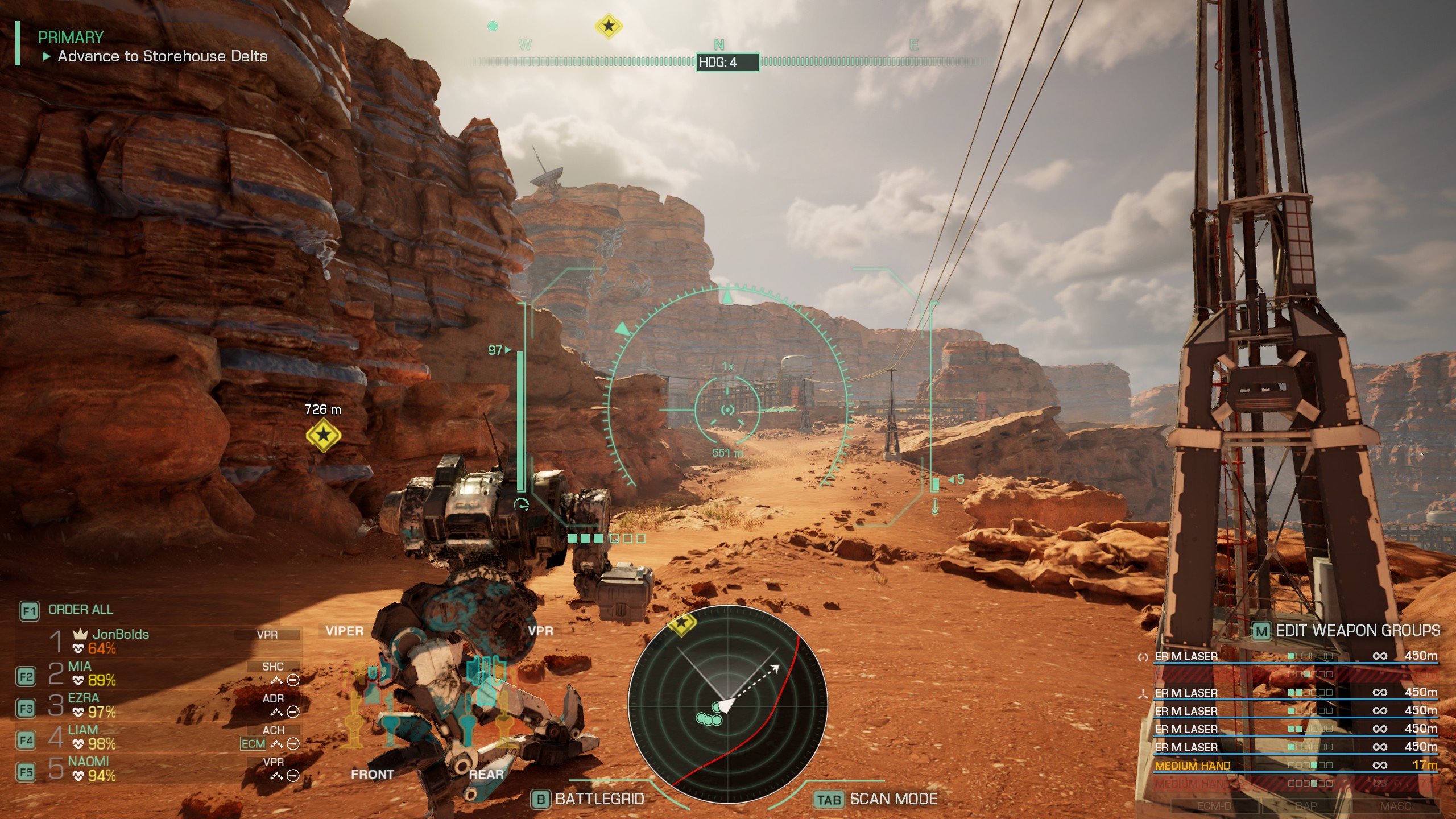
Holtslander adds that the trio’s diverging views on the future direction of Piranha was also a factor. “We had different ideas over which projects we wanted to do, and how we wanted to spend company funds,” he says. Bullock, for example, was a huge MechWarrior fan, and was keen to find a way to work with the licence. “The way I was passionate about Die Hard, Russ was passionate about MechWarrior.”
But Holtslander had ideas of his own. During our video chat, Holtslander showed me a pitch document for a singleplayer game based on Marvel’s The Punisher. “We were hoping that Fox would work out a deal with Marvel,” he says. Crucially, this game would have featured subscription-based content, where new missions and experiences would have been added into the game in an exchange for a monthly fee.
“It’s like new issues of the comic adventures,” he says. “You pay [a] subscription. We continue to bring out content for it. Nobody had been doing that. That was just before EA came out with Majestic, which was a success.”
But Holtslander’s Punisher game would never see the light of day. When the trio had formed Piranha Games, they had decided to share ownership equally, a three-way-split. With Bullock and Eckman aligned on both design and company direction, Holtslander’s executive power was essentially nullified. “Eventually things got to the point where it was uncomfortable enough that it looked like we needed to part ways,” he says. Reluctantly, Holtslander sold his share of the company to the other two members, and left Piranha, Die Hard, and the games industry forever.
It isn’t clear exactly when Holtslander left Piranha. But Bullock estimates it was “six to nine months” into full production. It was also during this period that Bullock became CEO of Piranha Games.
“I remember one time coming up and looking around and being, like, ‘Do we have any money?’ So that was really where I stepped up, right away,” he says. “I discovered I could hire engineers that were better than me, and I needed to take on the business side of things.”
Bullock also believed that Piranha needed a “singular voice” when dealing with Fox Interactive, to make it seem like a more professional operation. “We were somewhat combative developers at the time,” he says. “In hindsight, they really helped us walk through our first product.” He cites an example: “Our initial player models weren’t very good,” he explains. “When they told us they sucked, we were like ‘Oh, what the hell?!’ And then we realised that, yeah, these do kind of suck, so we got a different character artist and fixed those up.”
Even with their good relationship with Fox, Piranha nonetheless went through a “massive” crunch to get the game done. “That’s probably when we learned the definition of crunch,” Bullock says. “Don’t think of it like the publisher had their thumb on us. This was us. This was our new company, and we want this company to survive.”
And there was no guarantee Piranha would survive. Around a year out from launch, Nakatomi Plaza was in terrible shape. “The game went through some heavy revisions over the last year,” Bullock says. “Something that was maybe on track to be very bad, I think initially, [became] something that was actually relatively decent.”
We do it the hard way
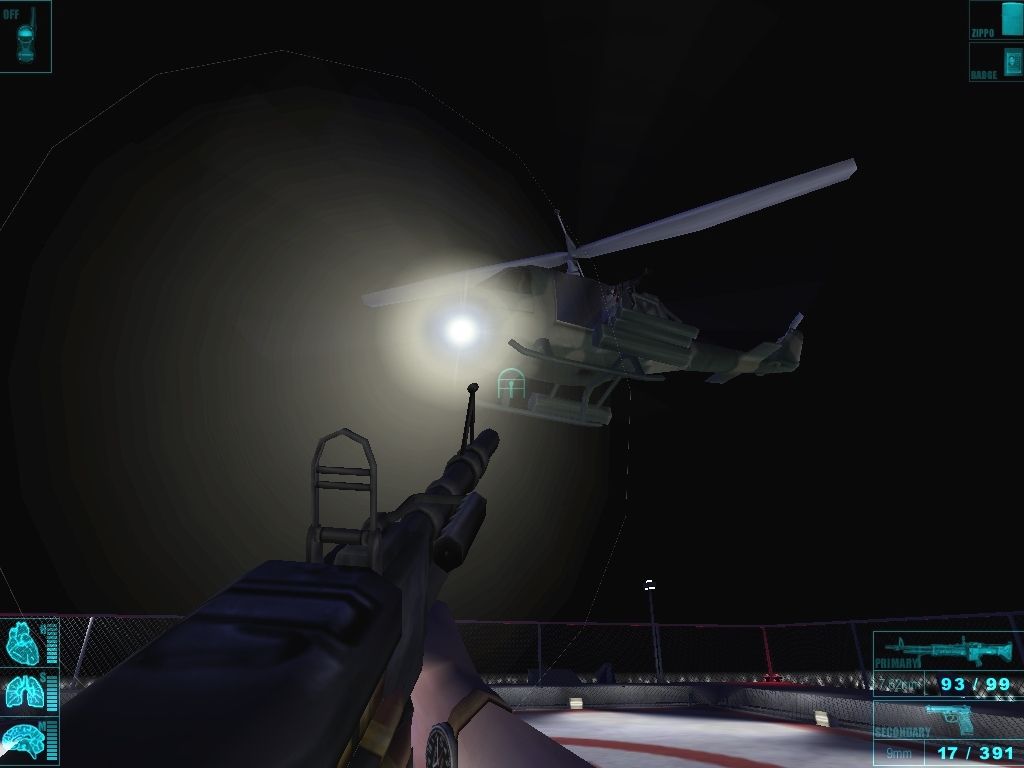
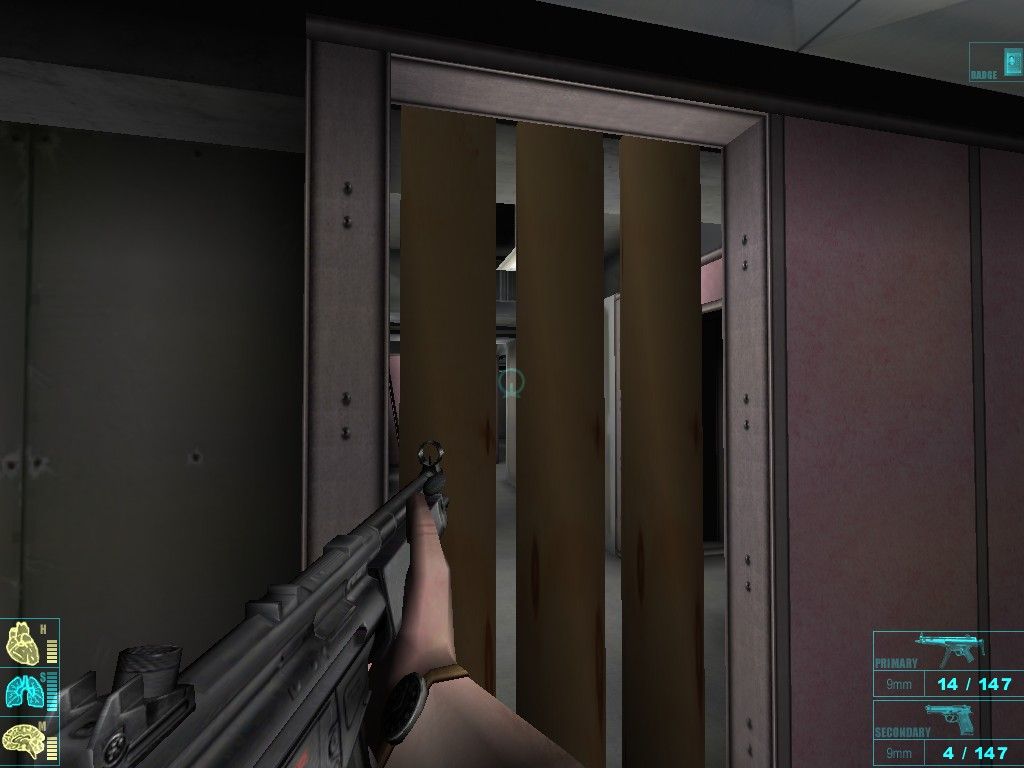
Die Hard: Nakatomi Plaza released on April 23, 2002 in the US, landing almost exactly one month later in the EU. It received mostly middling reviews, with a few landing on either side of the spectrum.
Looking back, Bullock is objective about the game’s quality. “I’m trying to make a really bad joke here, but [it’s] like a 6/10 or 7/10,” he says. “I think we were a little bit disappointed that we didn’t achieve our grander dreams that we had when we first got started. But [we] felt like ‘OK, now we know a hell of a lot more. We want to make another one, let’s go, what’s next?'”
“What’s next?” proved to be another 10 years of work-for-hire projects. Over the next decade, Piranha Games made Need for Speed games for EA, Transformers games for Activision, and much more. The studio was even the final developer to touch the infamously troubled Duke Nukem Forever, handling the console ports for Gearbox and 2K. “They came to us and said ‘Hey, can you port this to the Xbox 360 and PlayStation 3, and do all the multiplayer for it,'” Bullock says. “And let’s just say, that was probably the biggest crunch of my career.”
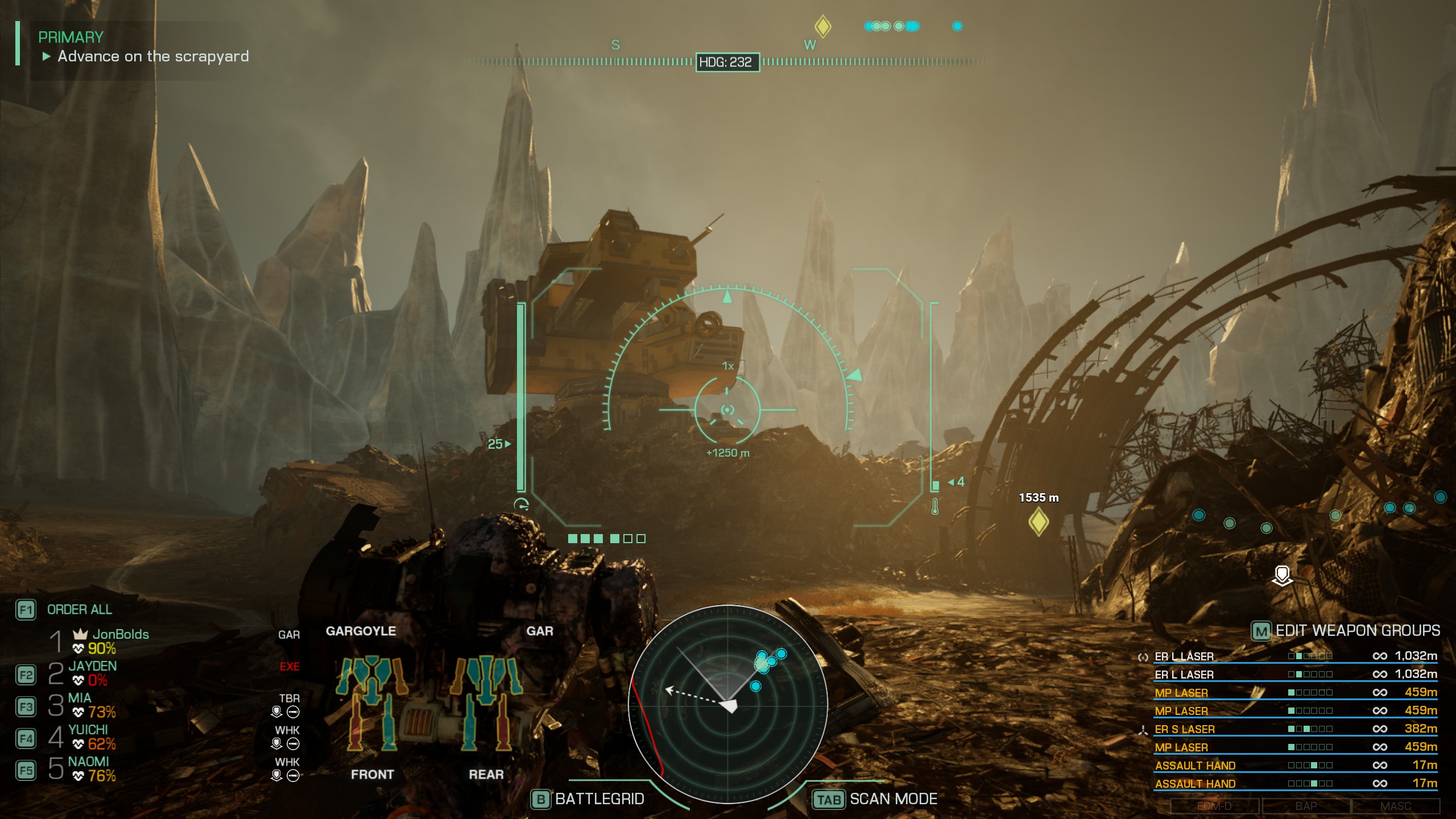
Eventually, however, Bullock’s dream came true, he managed to acquire the licence to MechWarrior. “I managed to wrangle that up,” he says. “Massive lifelong fan. Dreamed of making a MechWarrior game since I started the company.” Piranha would go on to produce MechWarrior Online, which is still running 15years on, and develop MechWarrior 5: Mercenaries and MechWarrior 5: Clans, both of which are highly regarded entries in the series.
Holtslander, meanwhile, bounced around for several years following his departure from Piranha, first trying to start another game development company, then working several other jobs before finally landing in tech. “Present day, my job title is technical director, and I work at an agency which services law firms and takes care of all their marketing needs,” he says. “I always thought I was going to end up either in film or games, something creative. But it didn’t end up that way.”
Die Hard: Nakatomi plaza is approaching 25 years old, and Bullock and Holtslander haven’t spoken at all in that time. The rift between them remains. During my talks with them, neither said anything overtly negative about the other, but they are clearly reluctant to discuss one another in detail, and neither mentioned the other by name until specifically asked or prompted.
Holtslander, in particular, struggles to hold back his emotions when talking about how things ended for him at Piranha. “There’s some trauma there,” he says. When asked if he ever played Nakatomi Plaza, initially he says he didn’t, but then corrects himself and says he played it, but not to completion.
“I think the worst thing when it finally came out was discovering that I’d been completely omitted from the credits of the game,” he says. This is accurate. Holtslander is not mentioned anywhere in the credits for Die Hard: Nakatomi Plaza as they appear at the end of the game. Following our initial interview, I asked Piranha why Holtslander was not credited for his work on Nakatomi Plaza, but did not receive a response.
Nonetheless, Holtslander says he’s content with where he’s at. “I’m happy with where I am. I don’t feel like ‘Oh, I’m not doing what I’m supposed to be doing.’ I still get to flex my creative juices in other ways that give me satisfaction.” He also has no plans or thoughts about returning to game development. “The days of holding on to the dream of continuing on in the games industry are long behind me now.”
As for Piranha, I asked Bullock whether the studio is ever likely to consider returning to Die Hard. He replies that it’s “a great thought experiment” but points out that any modern Die Hard game would have to be significantly more involved than Nakatomi Plaza.
“When we made Die Hard: Nakatomi Plaza, it was the era of ‘Sure, whatever, pick another license, make another shooter. Can’t have too many non-stop shooters.’ Now, it’s not just enough to be a first-person shooter,” he explains. “Even Call of Duty, it’s got the full multiplayer experience. There’s a lot there. So I don’t think there’s the richness of IP there to support what today’s games need. Full shooter experience, full multiplayer, the full set of maps and everything. So that’d be tough. That’d be a tough call.”
.jpg?width=1200&height=630&fit=crop&enable=upscale&auto=webp&w=360&resize=360,270&ssl=1 "In a week of Xbox leadership changes, longtime Treyarch boss Mark Gordon is retiring from the Call of Duty studio to “focus on his next chapter”")


