
Game masters in TTRPGs are constantly challenged with the daunting task of bringing entire worlds to life. Like overworked demiurges, we squeeze every last drop of creativity from our brains to keep players fully immersed in the game, whether that’s a classic Dungeons & Dragons adventure, a chilling Call of Cthulhu mystery, or something weirder, like a DuckTales-inspired apocalyptic RPG with doom metal tinges.
This titanic effort is fueled by our inspirations, chief among them the many books that (I hope!) constitute every good GM’s bread and butter. One indie RPG takes that well of inspiration and turns it into the main resource of the game itself. Thieves of the Tome, created by George Philbrick and published by First Pancake Studios, is all about books. The titular tomes are real-world books brought to the session by each player, and they are used to create the characters, define their abilities, and also establish the setting of the adventure. So, if you ever thought that Anna Karenina could be the perfect scenario for a chaotic fantasy heist story, this is the game for you.
Thieves of the Tome immediately stands out thanks to psychedelic visuals from artist Tom Lowell, which feel like they’ve been ripped from an acid-soaked underground music zine from the ‘90s. Thankfully, the layout remains surprisingly readable. Unlike games that use overwhelming graphics as the main attraction, Thieves of the Tome uses its presentation to reinforce the chaotic energy of the experience itself.
Like most indie TTRPGs, Thieves of the Tome thrives on the simplicity of its rules. However, while the mechanics at play might be lean and mean, the game’s unique approach adds a layer of depth rarely found in similar products. Each Thieves of the Tome game requires no preparation from the GM or the players. The only thing each participant has to do is to pick a book of any kind — from novels to travel guides — and bring it to the table. The sole requirement is for the book to have at least seven chapters. This is where the fun begins.
The players embody thieves who have stolen magical tomes (the books they have brought to the game) from the Library of Na’zar, the great scribe who wrote the universe into being. Each book contains seven spells, created by the players at the start of the session by writing down the title of the first seven chapters of their book (or, if they lack a title, the first sentence in the chapter), which will be the spell names. Then, the player describes the effects of each spell, with no restrictions other than the fact that each spell must relate to its name. Finally, the player selects a “choice,” which determines what the spell can target.
The game’s example of this process is The Shining and its first chapter, “Job Interview.” A suggested spell description is as follows: “Job Interview. Choose a person. The chosen person realizes they forgot about a job interview that starts in 10 minutes! They leave immediately to rush to the interview.”
This gives you an idea of how wild the game can get, but the best is still to come. Once a player has finished writing their list of spells, the books are swapped. Players now only know the names of the spells they can cast — not their effects, until they decide to cast them. The result is unadulterated chaos. Considering that spells are the main way in which the characters can interact with the world, this unpredictable mechanic sits at the core of Thieves of the Tome, making each session memorable.

Each book is also used to create characters by providing words or sentences picked from random pages. “Adjectives” function as the game’s stats, granting a situational bonus to rolls used to resolve uncertain outcomes. “Destinies” are goals and outcomes each thief has to pursue during a session, granting a bonus once a specific condition has been fulfilled. Finally, “dooms” act like hit points: every time a thief fails a “reaction” (usually triggered by an enemy attack or another harmful situation), they activate one doom, a negative descriptor that applies from that moment onward. Once four dooms are activated, that thief is removed from the game due to dying, going mad, or worse!
The players are not the only ones who get to play with their favorite books. The GM also has to pick one that will be used as the setting of the adventure, determining the Tomeality (one of the near-endless worlds created by Na’zar) where the story takes place. Every Thieves of the Tome game has the same goal: the thieves must escape with their precious magical books, avoiding pursuit by the antagonists, usually members of the White Guard, an order of wizards who hoard magic and knowledge. After choosing a Tomeality, the GM sets the escape condition, which usually involves reaching a specific location with two or more stealable items. Those are determined by using words from the last pages of the GM’s chosen book.
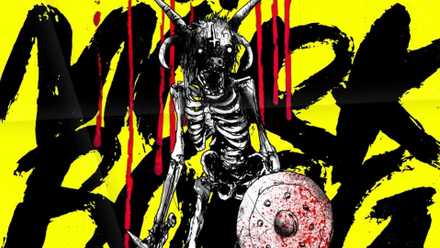
D&D’s metal alternative made me appreciate character death in the game
In Mörk Borg, characters don’t last long, and maybe that’s a lesson for D&D, too
The GM preps for the session by filling out a “palette,” or a list of locations (places in the world where scenes can take place), obstacles (things that stand between the thieves and their goals), and actions (things that people inhabiting the world can do) — of course, these are all determined by picking words or sentences from the GM’s book. By consulting the palette, the GM can respond to the actions and decisions of the players on the fly, thus creating a true collaborative storytelling experience. The same can be said about the action/reaction dynamic (essentially the only hard rule in the game where dice rolling comes into play). If a player succeeds in an action, they gain “narrative control” of that scene and are allowed to describe it as they see fit. If they fail, the GM will introduce a complication and gain narrative control over the scene.
This method might not surprise experienced GMs who rely on improvisation more than preparation. However, it’s significant how Thieves of the Tome makes it a core part of its game structure by standardizing the prep process and encouraging GMs to rely on a “fixed” source of inspiration, their chosen book. In my experience, this process can be a bit challenging, so I would encourage GMs trying this game for the first time to add some prep to the palette process.

I picked up Terry Pratchett’s The Light Fantastic as my Tomeality — what’s better than the Discworld as the setting for a chaotic romp with magic going wild? The adventure was fun and the players loved it. One player brought a book about black holes to the table, with predictably catastrophic consequences. The poor Librarian was disintegrated, and the adventure ended with a spell that unleashed a swarm of miniature black holes in the Unseen University bar, which is full of poor students and academics. It genuinely felt like the ending of a lost Terry Pratchett book. However, there were a couple of instances where I wished I had prepped more detailed scenarios for the adventure.
Still, this is Thieves of the Tome’s best quality: it forces GMs to be creative by delegating most aspects of prepping to an external source (the Tomeality book). Improvisation is one of the hardest skills to acquire for GMs, and there’s nothing wrong with relying on extensive preparation instead. However, in TTRPGs, reactive skills are often needed to ensure the smooth flow of a session or to make players feel more actively involved in the story.
Thieves of the Tome can help you train those creative muscles, and it succeeds because it transforms improvisation from a soft GM skill into the foundation of the entire game. The “number one rule to GMing” this game is: “When in doubt, read a sentence from your Tome.” It’s messy, unpredictable, and occasionally taxing, but any game that forces you to look for inspiration and turn that into something creative is a worthy addition to a GM’s library.


