
It’s very common for RPGs to introduce an off-stage villain who’s been secretly pulling the strings all along. Usually, this is some kind of malevolent supernatural being who doesn’t like humanity very much. After a lot of bloviating about the nature of free will, you and your companions must defeat him with the power of friendship, cool swords, and boob armor.
Fire Emblem: Fortune’s Weave adheres to this trope, but its abruptly introduced baddie is so outrageously horrible that it works remarkably well. After all the leisurely gift-giving and friend maintenance of Act 1, Act 2 of Fortune’s Weave grabs you by the collar and tosses you out of an airplane. It’s proof that storytelling tropes exist for a reason, and if they’re executed properly, they can still be incredibly satisfying.
Spoilers ahead for Act 2 of Fire Emblem: Fortune’s Weave.
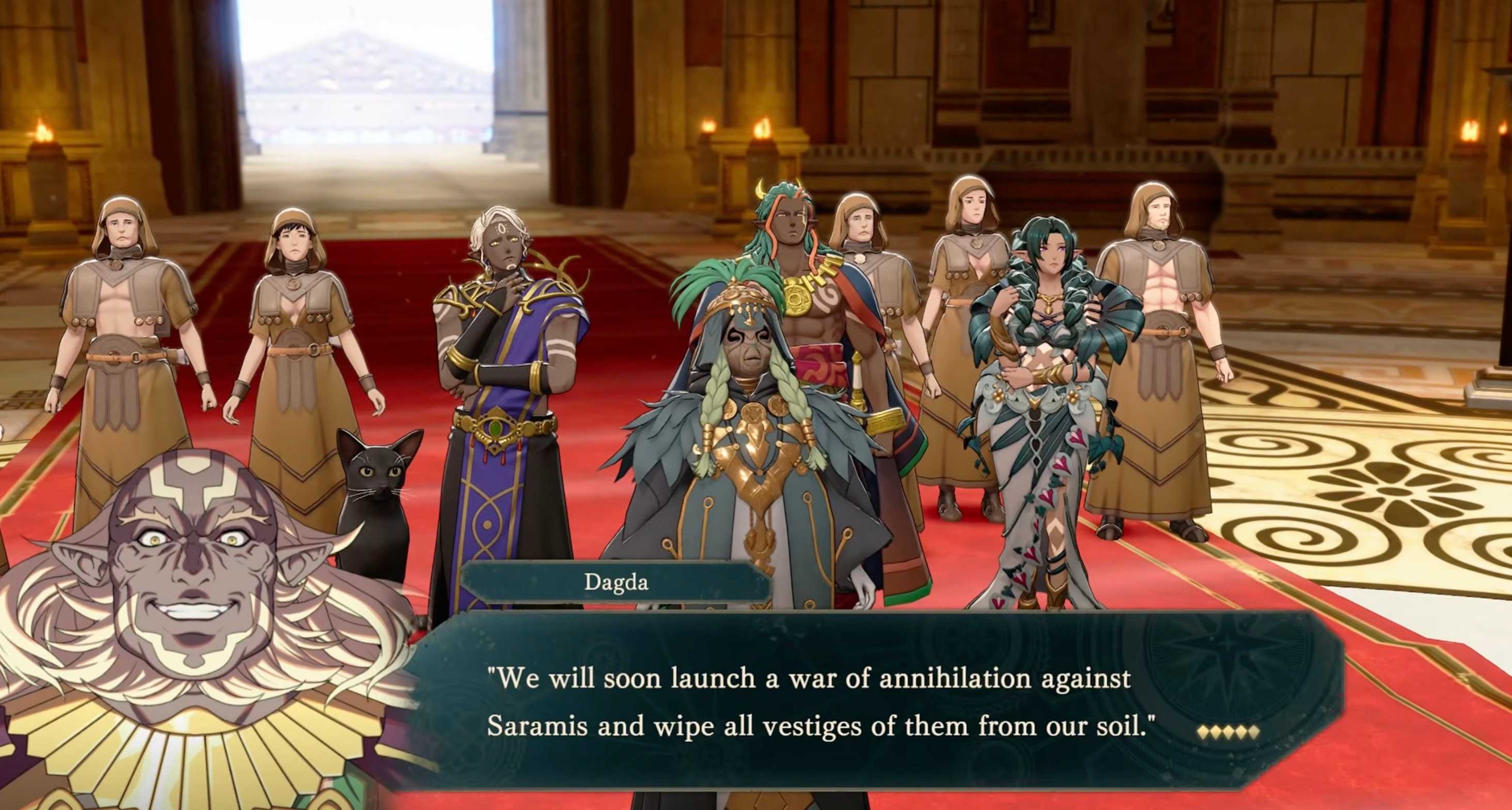
To begin Act 2 of Fortune’s Weave, the War Arc, you must touch the Strife Obelisk. (Insert Liz Lemon-inspired dating joke here.) Most people will do this after completing at least one of the four Act 1 routes, but it’s technically possible to do it directly after the prologue. From there, the story picks up several months after the pomp and circumstance of the Heroic Games. We learn Raksha — that creepy, green-haired schemer hidden behind a wooden mask — has revived her father, Emperor Dagda, after a 500-year-long slumber. And boy, is this guy an asshole.
-
 Screenshot: Intelligent Systems/Nintendo via Polygon
 -
 Screenshot: Intelligent Systems/Nintendo via Polygon
 Screenshot: Intelligent Systems/Nintendo via Polygon
 Screenshot: Intelligent Systems/Nintendo via Polygon
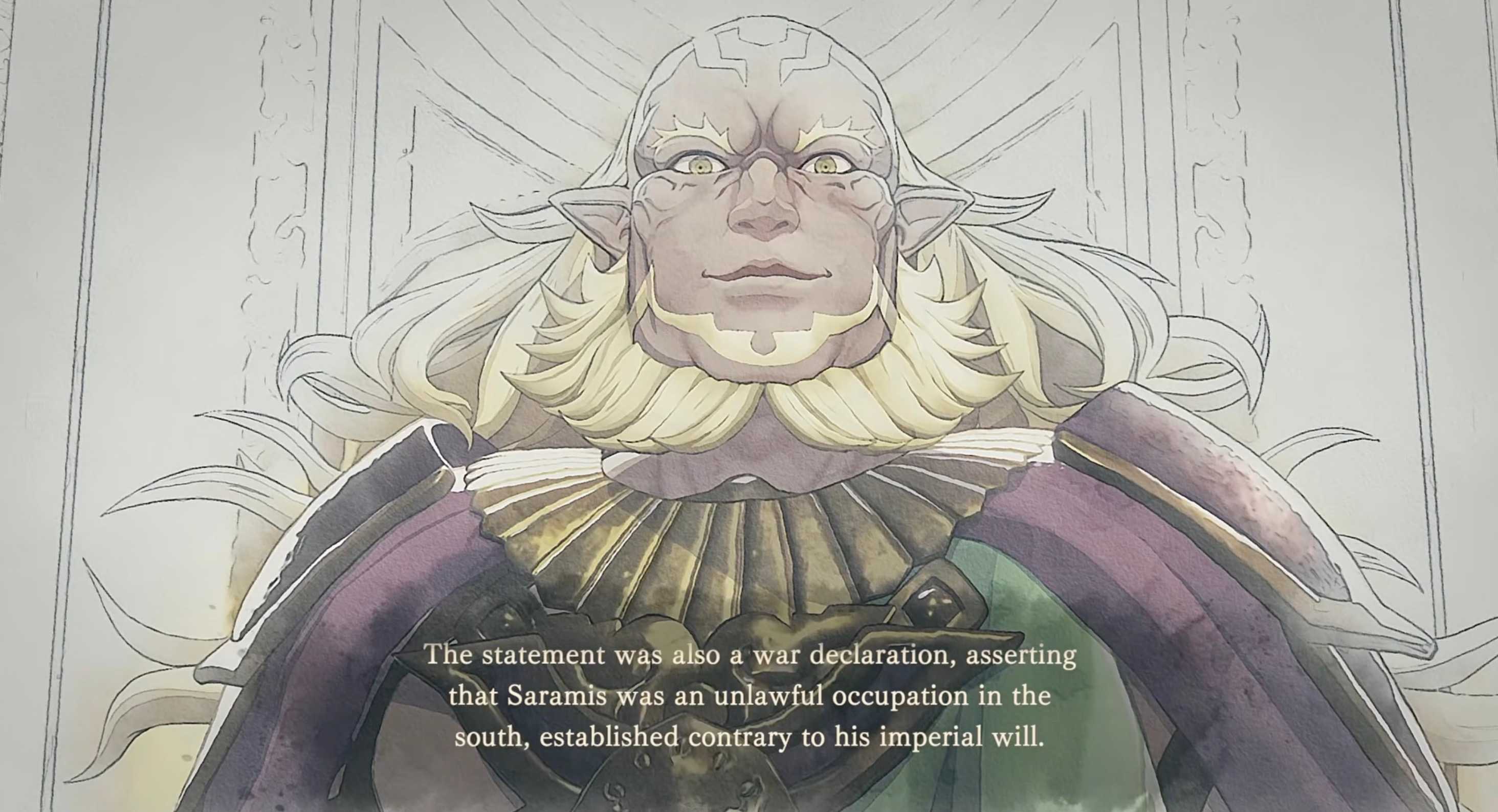
Dagda makes no pretense whatsoever of being a fair and just leader. He makes Edelgard from Three Houses seem like a saint. Once he’s back on the scene, he immediately murders his himbo son, Solel. He then declares a “war of annihilation” on Saramis, the southern region of the continent that just so happens to be home to a lot of Fortune’s Weave’s people of color. Finally, he orders that Dagsion’s beloved arena be torn down and replaced with his “cauldron” — more on that later. No more bread and circuses, plebs! Pretty soon, the vibrant capital city we’ve spent so much time in becomes a hellish place, with imperial troops routinely beating up ordinary citizens and stealing their food and money to give to their big evil daddy.
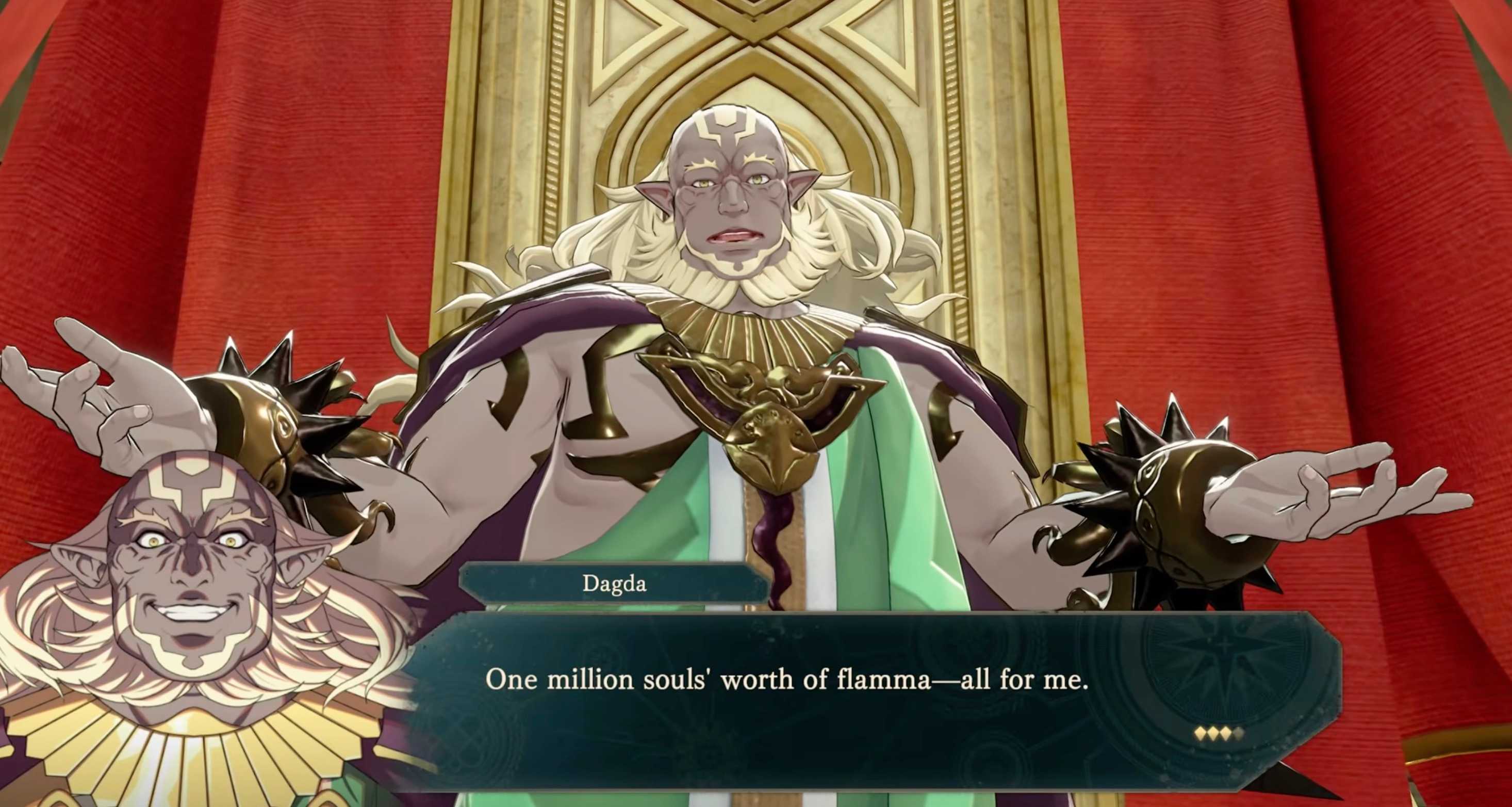
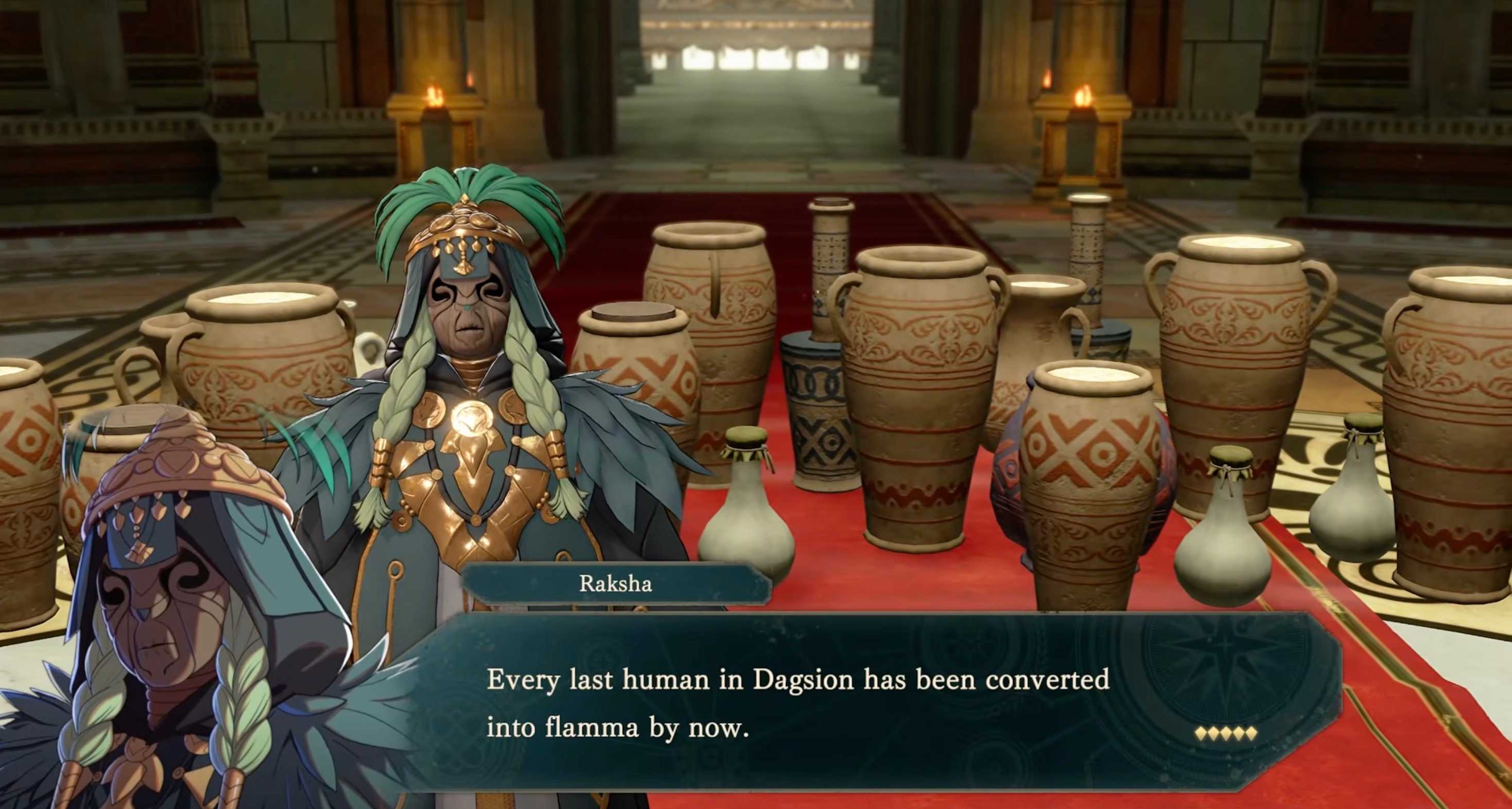
Dagda’s extremism soon rubs some of the Empire’s allies the wrong way, and they defect to join Theodora’s forces on the Saramis side. After a couple humbling defeats at the hands of the resistance, Dagda concludes that the best course of action is to toss every single citizen of Dagsion, all one million of them, into his cauldron. This process — which, mercifully, we do not see — turns their bodies and souls into a slurry known as flamma. Dagda drinks these soul slurpees by the bowlful to restore his strength, or just when he’s feeling a bit cranky (which is always).
-
 Screenshot: Intelligent Systems/Nintendo via Polygon
 -
 Screenshot: Intelligent Systems/Nintendo via Polygon
 -
 Screenshot: Intelligent Systems/Nintendo via Polygon
 Screenshot: Intelligent Systems/Nintendo via Polygon
 Screenshot: Intelligent Systems/Nintendo via Polygon
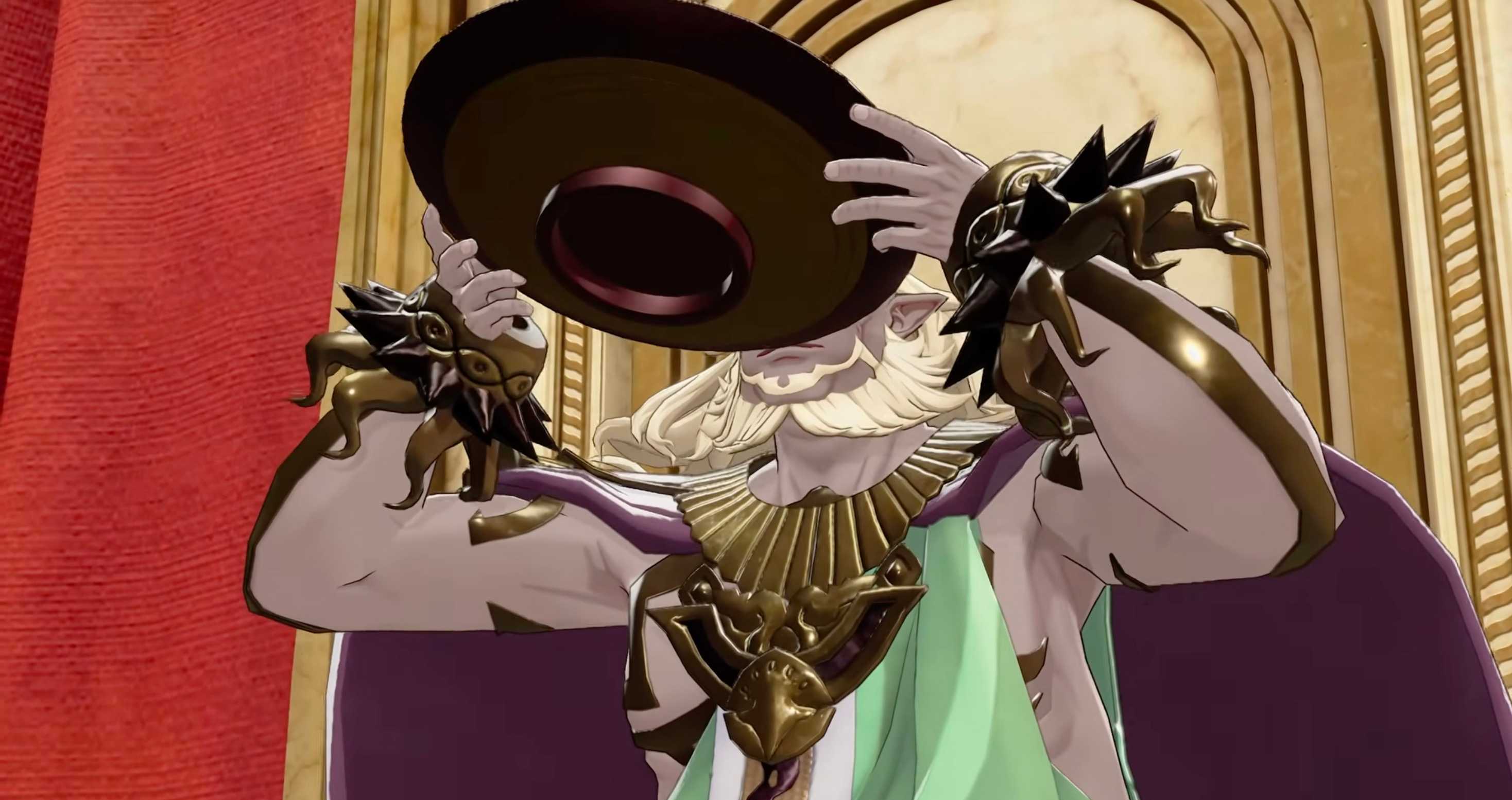 Screenshot: Intelligent Systems/Nintendo via Polygon
There’s more than a passing resemblance between Dagda and a certain contemporary political figure: his overt racism, his tendency to declare war on a whim, his all-encompassing greed and self-interest, his small army of scheming-yet-inept offspring, his bottomless capacity for cruelty, and his extremely punchable face. Remind you of anyone? I couldn’t possibly comment.
If that’s all a little too close to home, worry not. Dagda’s fall comes as suddenly as his rise. Drunk on the souls of a million murdered subjects, he transforms into a mighty dragon, waiting for our heroes atop the highest peak in Dagsion. He’s impervious to any attacks — that is, until Eshmel descends like a bolt from the blue and kicks Dagda straight in the dick. With his shield broken, your party is free to whale on him until he finally, finally goes down. And golly, does that feel terrific! Then a new evil rises to take his place, which feels less terrific.
In the grand scheme of Fortune’s Weave, especially if you play more than one Act 1 route, Dagda actually isn’t around for all that long. Yet he is so vividly, unreservedly evil, and the battles in this section are noticeably longer and more challenging. That makes each win you eke out against his forces feel all the more gratifying. Even if he’s not the game’s ultimate villain, this soul-guzzling old bastard has certainly left his mark on my memory.


