
Waiting for Winds of Winter has become the new normal for A Song of Ice and Fire fans. The good news, however, is that George R. R. Martin has recommended plenty of other great fantasy books to fill that time. Martin is a famously voracious reader, and over the years, he has used his personal “NotABlog” blog to recommend everything from foundational classics to modern hits.
Through his recommendations, Martin has highlighted authors who helped shape the fantasy genre before Westeros existed, contemporaries with different kinds of fantastical worlds, and even books he read and immediately went out to purchase the sequels to. His recommendations aren’t always surprisingly similar to A Song of Ice and Fire, but that’s part of the fun: fantasy is a wide genre, and Martin has given readers a very good reason to pick up these books.
8
The Once and Future King
By T.H. White

The story of King Arthur has been told so many times that it’s easy to forget just how strange, funny, and sometimes heartbreaking The Once and Future King can be. T.H. White’s collection of stories follows Arthur from his childhood as the Wart through the rise of Camelot and the tragedy that eventually tears it apart, bringing Lancelot, Merlin, Guinevere, and other familiar pieces of Arthurian legend along with him. Sure, there are knights, quests, and sword fights, but T.H. White also puts a lot of focus on what power is actually for and Arthur’s attempts to replace “might makes right” with something better, which gives the story a surprisingly thoughtful center.
You owe it to yourself to read
Having also recommended The Once and Future King on his blog, Martin also suggested T.H. White’s book to anyone who loved Game of Thrones. The Once and Future King is whimsical enough to turn young Arthur into various different animals, then grow increasingly melancholic as his idealistic kingdom proves impossible to protect from failure and human jealousy. Anyone coming from Martin’s work will recognize the ideas about what happens when lofty ideas about kingship collide with messy people, so there’s no surprise the author included T.H. White among the pioneers of the genre.
7
The Dying Earth
By Jack Vance
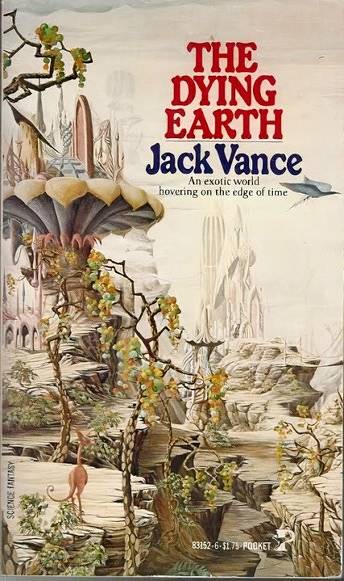
Calling The Dying Earth a fantasy only really tells half the story. Its world exists unimaginably far in the future, beneath a fading red sun that could go out at any minute, and where the remains of advanced science sit alongside magic, monsters, and sorcerers. Rather than following one enormous quest, the original book is a collection of connected stories that gradually build into a world that’s already living through its final days. Martin highlighted The Dying Earth as something readers “owe [to themselves] to read.” When discussing Songs of the Dying Earth, which Martin composed with Gardner Dozois as a tribute to Vance, he said:
It’s a great honor for us, and for Jack Vance, without whose seminal work modern fantasy would look very, very different. If you haven’t read the book yet, hey, never too late… and after you’ve read these Vance tributes, by our all-star lineup of writers, go and read some of Jack’s own books. Fantasy doesn’t get much better.
The Dying Earth has selfish, clever, and decidedly unheroic characters, while its world boasts peculiar and influential magic. The idea of spells being memorized and then forgotten when cast would eventually help inspire the magic system associated with Dungeons & Dragons. Further, Martin named Vance among the great fantasists who came before him, without whom A Song of Ice and Fire would never be possible. That’s a pretty compelling reason to check out The Dying Earth.
6
The Goblin Emperor
By Katherine Addison

The Goblin Emperor follows Maia, a half-goblin son of an elven emperor who has spent most of his life away from court, only for the deaths of his father and older half-brothers to suddenly leave him on the throne. As a result, Maia is dropped into an intimidating court filled with unfamiliar rules, political interests, and people who are much more knowledgeable about wielding power than he is. It’s a great fantasy set-up and feels reminiscent of A Song of Ice and Fire in many ways. In his blog, Martin recommended The Goblin Emperor, saying:
It’s a fantasy, a novel of court intrigue. Those of you who like that aspect of my own work will probably like THE GOBLIN EMPEROR as well. The characters were well drawn, especially the protagonist, who I found likeable and sympathetic. This is a “low magic” fantasy, something else it shares with GAME OF THRONES. In fact, there’s even less magic here than in my own books.
Addison gets a surprising amount of tension from etiquette, appointments, arranged marriages, and competing political factions, with relatively little conventional fantasy action needed. Martin didn’t say The Goblin Emperor was flawless, and actually highlighted his desire for more plot twists in the story, but there’s certainly enough there to make it an appealing next read for Game of Thrones fans.
5
The City of Brass
By S.A. Chakraborty

Nahri begins The City of Brass as a con artist who’s surviving on the streets of 18th-century Cairo, using tricks and supposed healing abilities to make money, when one of her schemes accidentally summons a djinn warrior. That very encounter eventually takes her to Daevabad, the legendary “City of Brass,” where discovering magic is real turns out to be a lot less straightforward than she thought.
I am so glad I [read The City of Brass]. I get sent a lot of fantasies, as I said, but this one really stood out. I loved the protagonist, there was a nice cast of supporting characters, and the plot had some twists and turns that I did not see coming… and her style is vivid and colorful and very readable. The best thing, though, was the setting.
That interesting and immersive setting is a great reason to pick The City of Brass up and is something Martin specifically highlighted in his recommendation. S.A. Chakraborty builds her fantasy around Middle Eastern history, folklore, and stories of Djinn, then fills Daevabad with its own religious and political divisions. Martin’s reaction is perhaps the best endorsement of Chakraborty’s book: after finishing it, he immediately ordered the other two books in the trilogy.
4
The Lies of Locke Lamora
By Scott Lynch

Martin recommended Scott Lynch’s Locke Lamora series when pointing readers toward contemporary fantasy, and starting with The Lies of Locke Lamora makes it easy to see why. The titular Locke is a thief and the leader of the Gentleman Bastards, a group of highly trained con artists who make their living separating the wealthy inhabitants of Camorr from their money. Their schemes often involve disguises, elaborate identities, and an impressive amount of nerve, which gives The Lies of Locke Lamora a heist-thriller energy in its distinct fantasy setting.
They will keep you turning pages for a good long while, I promise…
Author Scott Lynch allows readers to enjoy the swagger and camaraderie of Locke’s crew before forcing them into a much nastier struggle involving Camorr’s criminal underworld. Perhaps Locke’s most impressive skill is his ability to talk and improvise his way out of situations that should probably kill him, and witnessing him desperately trying to keep one deception ahead of disaster is always fun.
3
Watership Down
Richard Adams
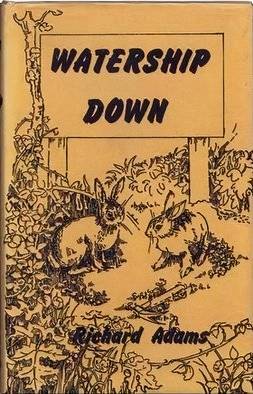
A fantasy epic about talking rabbits sounds like it should be a whole lot gentler than Watership Down actually is. Richard Adams’ book follows a small group who flee their warren after Fiver, a rabbit with prophetic abilities, foresees its destruction. Led by his brother Hazel, the survivors set out on a search for a new home, encountering predators, hostile warrens, and eventually the terrifying General Woundwort along the way. The characters may be rabbits, but Adams treats their journey with all the seriousness of a great human migration story. In a tribute blog post after Richard Adams’ passing, Martin wrote:
A truly amazing book… and one that somehow always seems to get forgotten when fans discuss the great fantasies. Maybe because of the talking rabbits? No idea…Adams was a wonderful writer. Yes, WATERSHIP DOWN was his masterpiece, but it was by no means his only great book.
Watership Down has endured as a fantasy classic in the years since its release in 1972. The rabbits have their own mythology, language, social structures, and beliefs, but never turns them into humans wearing fur. Their vulnerabilities and limitations are important throughout Watership Down, and underneath their adventures are important lessons about leadership, freedom, and sacrifice. It’s a beautiful and sometimes funny read; the fact that Martin recommends it just goes to show that fantasy doesn’t need swords or dragons to be magical.
2
Nine Princes in Amber
By Roger Zelazny

Nine Princes in Amber kicks off with a man waking in a hospital, unable to remember who he is. It’s an interesting hook, and things get considerably stranger when Corwin discovers he belongs to the royal family capable of moving through different realities and that Amber is the only world of which all the others, including Earth, are merely shadows. Naturally, a family like that doesn’t get along.
Go out and read NINE PRINCES IN AMBER
It’s an enormous idea, but Nine Princes in Amber packs that concept into an impressively lean adventure. Corwin’s search for his identity quickly becomes a struggle for Amber’s throne, complete with scheming siblings, shifting alliances, and the ongoing problem of a selfish narrator. The familial politics make it particularly easy to see why Nine Princes in Amber might appeal to Martin, and the author highlighted Zelazny’s series as one of his favorite books of 2023, encouraging others to go out and read it.
1
The Lord of the Rings
By J.R.R. Tolkien

Putting Tolkien’s The Lord of the Rings in the #1 spot isn’t exactly uncovering an overlooked fantasy gem, but modern fantasy has spent decades borrowing, reacting to, and deliberately moving away from the seminal series, and escaping its influence is almost impossible. Tolkien’s story starts with the hobbit Frodo inheriting the powerful One Ring and embarking on an epic journey across Middle-earth, which is packed with rich history, languages, and mythology.
Tolkien, of all the authors I mentioned earlier, had an impact on me, but Tolkien is right up there at the top. I yield to no one in my admiration for The Lord of the Rings – I re-read it every few years. It’s one of the great books of the 20th century.
Lord of the Rings’ scale is enormous, but some of its most iconic moments are remarkably small: friendships, meals, acts of mercy, and ordinary people simply deciding to keep going. Though Martin admitted Tolkien’s trilogy isn’t perfect, he’s been exceptionally open about its influence on him. Westeros is very different from Middle-earth, but the ASOIAF author made it clear that the road to one runs right through the other.


