
Like the repeating pattern effect afflicting its warped Manhattan, Control Resonant threw me for a loop. One minute I would be brutally slashing and smashing my way through hordes of inhuman enemies, enacting a never-ending chain combo of bellowing violence with my Aberrant, and the next minute I would be scanning nearby rooftops for signs of a squeaking purple dragon plushie to give to a very wiggly dog (who, I was pretty sure, could teleport). Combat often felt desperate and bloody; knockdown-and-drag-out brawls that had me limping away like John Wick after a particularly messy gunkata affair. Still, these fights all ended eventually, and in their place was not always more action-RPG battling but, more often, an odd sense of melancholic peace and quiet. It’s a strange dichotomy I’ve been thinking about nearly nonstop since I finished my first playthrough.
Spoilers/Revelations for Control Resonant ahead. Don’t say we didn’t warn/notify you.
Control Resonant is, as has been extensivly documented and commented upon, a very different game to the original Control. But beyond the most obvious action differences (Jesse packs heat while Dylan speaks softly, carrying a big stick), Resonant seems much more inclined towards these quieter moments. For one thing, the lack of enemy mob respawns, outside of specific major plot beats and world-resetting boss victories, gave me the time to breathe and take in my surroundings in a way Control never let me do. The Oldest House was disorienting by design, and it used the constant Hiss pressure to keep me motivated, always moving towards the next objective or plot point. Control Resonant, conversely, allows the mind to wander.
This makes sense when you look at who you’re playing as. A more introspective adventure is the perfect speed for Dylan, someone trained from childhood to be capable of superhuman violence, and is now equipped with the perfect, shapeshifting tool for the job – yet spends one of his first scenes in Resonant enjoying the fresh, crisp Autumn stink of New York City for the first time in his life. When he stumbles out of the Oldest House right at the beginning of the game, the camera shifting focus to a single leaf, floating on the wind to greet him a la Forrest Gump while the dreamy strings and flutes of Petri Alanko’s soundtrack play wistfully behind it, we don’t see a killer unleashed. We see a prisoner liberated, and are invited to feel with him the elation that came with finally being truly free. Even if it’s coupled with the sadness and conflict of knowing, with his sister missing and Manhattan in danger, he can’t simply disappear into the ether.
“We agreed on his direction early,” Control Resonant director Mikael Kasurinen tells me. “We didn’t want the brooding hero out for revenge. We wanted someone who doesn’t reach for violence as the first solution, someone who can see beauty where others see horror. He feels empathy for the monsters because he sees himself in them.”
Even though much of Control let us in on Jesse’s running inner monologue, I wouldn’t classify it as a very introspective narrative, because Jesse isn’t a very introspective person. She’s motivated by action, living in the moment, constantly moving forward, and this is reflected in the way her and her brother’s story is told in that first game. Jesse would come across a document, a recording, some evidence of the FBC’s abusive treatment of Dylan, and she would feel genuinely terrible about this – but only momentarily, her innate sense of urgency almost forcing her to put her thoughts on hold until the latest threat is dealt with. And even when she does react, she’s rarely truly surprised, having known for ages that these were the shadowy G-men who stole Dylan away; any new information mainly just reinforces her existing motivation to find and rescue him.
By contrast, Control Resonant is almost primarily about Dylan’s interiority: his guilt, his need to atone, and ultimately, who he is outside of the clutches of both the FBC and the Hiss. This also reflects on the exterior, in the way the game ebbs and flows between cavalcades of carnage and the many quiet, pensive moments throughout.
“The contradiction is that he has no doubts about himself as a parautilitarian,” Kasurinen says. “He knows he can face the paranatural threats and win. What he doubts is whether he deserves to exist as a person. He also has a gentle heart. He wants to help, and he has no trouble saying what he sees and feels.”
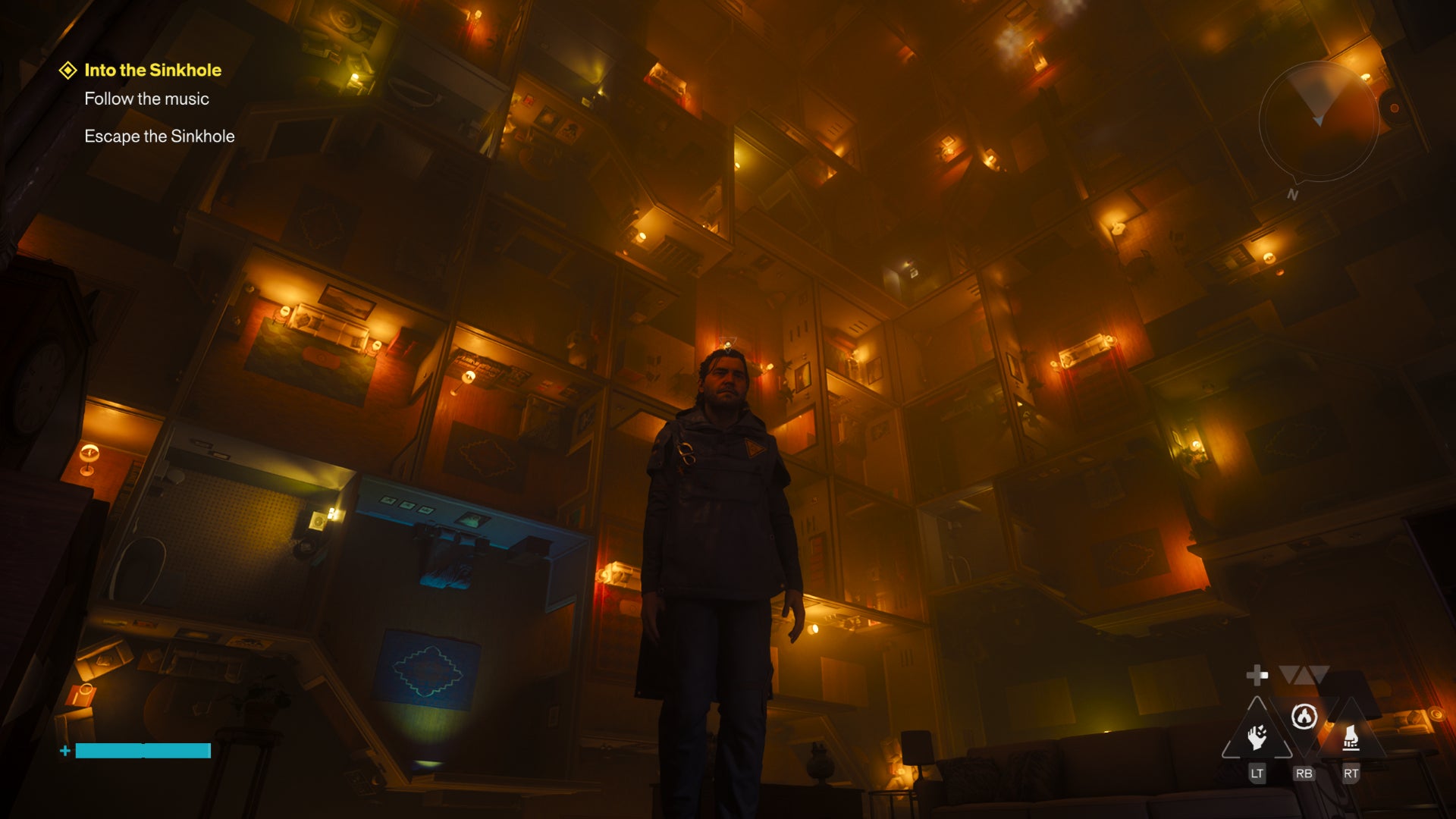
A perfect example of this type of moment happens in the Sinkhole, a particularly intense, Earth-piercing concentration of the citywide Patterning. The trip to the bottom, using an ad-hoc “diving bell” of cobbled-together FBC sensors, comprises multiple levels of tricky fight scenes, as dozens of crimson fiends coagulate around you in increasingly abstract-looking patterned apartment blocks. The Hiss are brutal here, and you have to work quickly to dispatch each new wave or risk getting overwhelmed. Upon finally reaching the bottom, you’re faced with one more crushing attack, including one massive, flying monstrosity you’ve likely never faced before. The fight is hard, and tense, but eventually you prevail – only for your diving bell to be yanked back up to the surface, leaving you behind. A diver trapped at the bottom of a paranatural Mariana Trench.
Control Resonant never tells you outright how to escape the subsequent maze; it just lets you navigate the strange geometry and variable gravity on your own, leaving you alone – despite the attempts of handler Zoe to raise you on the radio – with your thoughts. Music rings out, and it’s unclear whether it’s something Zoe is playing for you or if it’s happening in your head, especially as crackling snippets of comms chatter reveal that your minutes stuck in the Sinkhole have lasted hours on the surface.
It’s a powerful sequence, heightening the struggle of escape with the dread of hearing how the world is going by outside. And it works because, even with the music, it’s quiet enough for you to focus on those feelings. It’s a big moment for Dylan as a character, too. He’s spent most of his life helpless, first as a ‘guest’ of the FBC, then as a brainwashed agent of the Hiss. Threatened with entombment in a reality-breaking pit, his voice wobbles with fear, yet he chooses – for one of the first times in decades – to reject that helplessness and save himself. He weighs up those doubts, and decides he deserves to exist.
I still have thoughts on Control Resonant that I haven’t reconciled, especially around Jesse. The first female main protagonist of a Remedy game, she does end up sidelined in favor of exploring the inner workings of her brother, including through a series of quests where she risks being literally erased by the Patterning. Then there’s the ending that (seriously, spoiler re-warning) has her pull a kind of messed-up UNO reverse card on Dylan’s ultimate sacrifice, ensuring that he lives while she… ends up where Dylan had been, all the way back at the beginning of the game. What do we do with this?
“It’s too early to talk about the future,” Kasurinen replies when I ask if we might get a new glimpse of the Fadens soon; perhaps a peek at a ‘Control: Gestalt,’ if you will. Thoughh… yeah, for sure, of course. “But thematically I wanted the two games to complement each other and show two different sides of the same world. The world stays the same, but we see it through a new protagonist.”
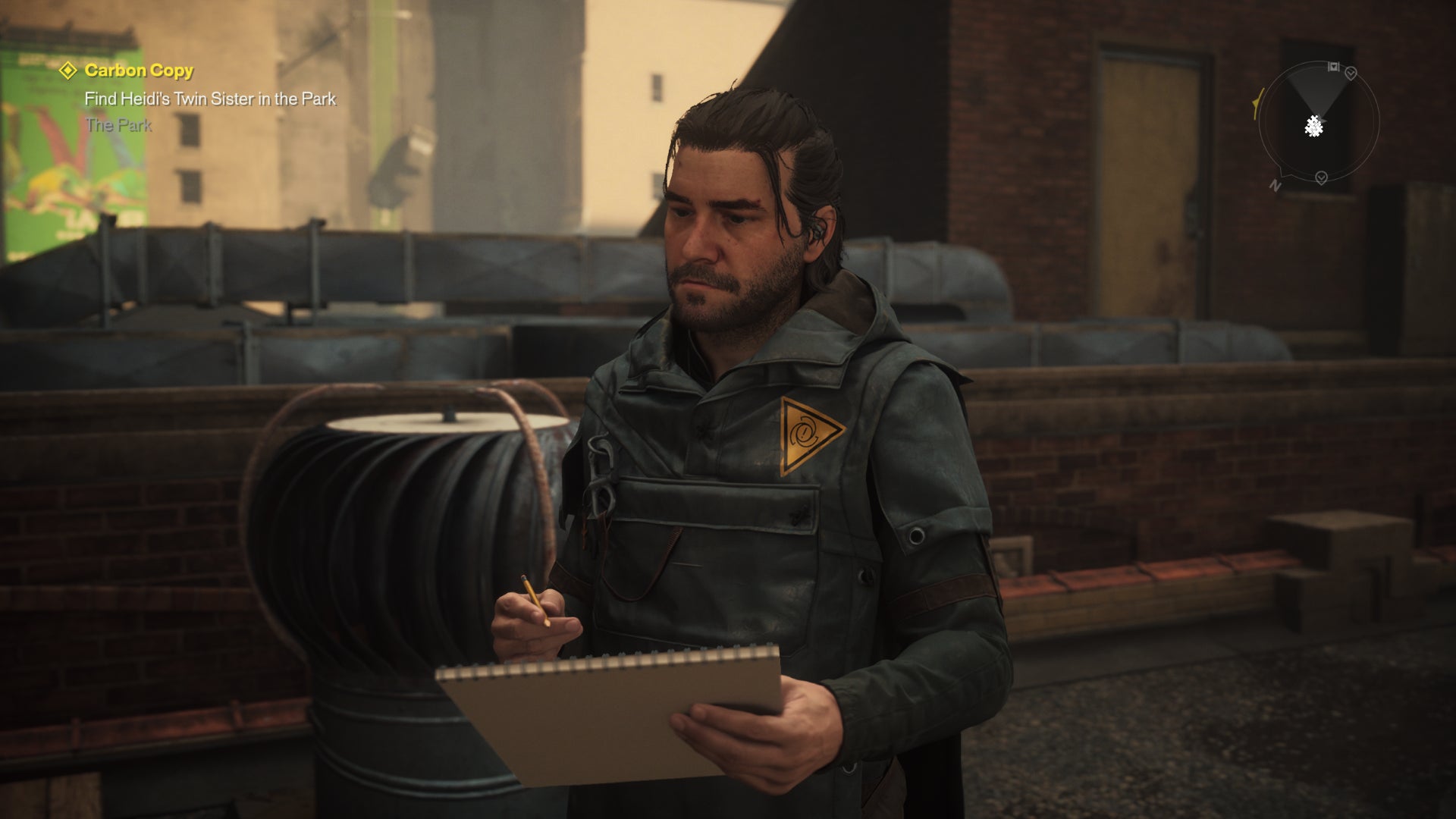
As someone who played through Control quite thoroughly a few years ago, I didn’t initially feel like I needed a whole lot of extra information about the myriad ways Casper Darling was a wretched manipulator who’d abused Dylan. But on the other side of this, I was occasionally quite taken by the lengths Control Resonant went to give Dylan chances to heal on-screen, whether it was by befriending a dog, hearing new music for the first time since childhood (courtesy of music fan and radio misappropriator Zoe), or drawing perfect still-life tableaus out of piles of garbage he found, ruminating on the idyllic scenes he imagined as he sketched and thinking about how he’d like to experience them once the Altered World Event was over. One drawing, which was just a self-portrait of Dylan in his 40s, sitting on a bench surrounded by birds, hit me profoundly. There is something powerful about imagining a peaceful future for yourself when all evidence has always pointed to the contrary, and there’s no better time to have those thoughts than in a moment of quiet.


