
I’ll forgive you if you’ve not clocked The God Slayer. While it’s always been vaguely curious in an Inside Baseball sort of way, its action-RPGness being a stark departure for My Time at Sandrock/My Time at Portia lifesim devs Pathea Games, the project’s been in hiding since its 2023 reveal as an apparent PS5 exclusive. Yet it’s still in the works, release date TBD but with a PC version confirmed, and has successfully caught my eye after a hands-off preview session last week – even with said preview being shy about its most intriguing, immsim-influenced openness.
Watch on YouTube
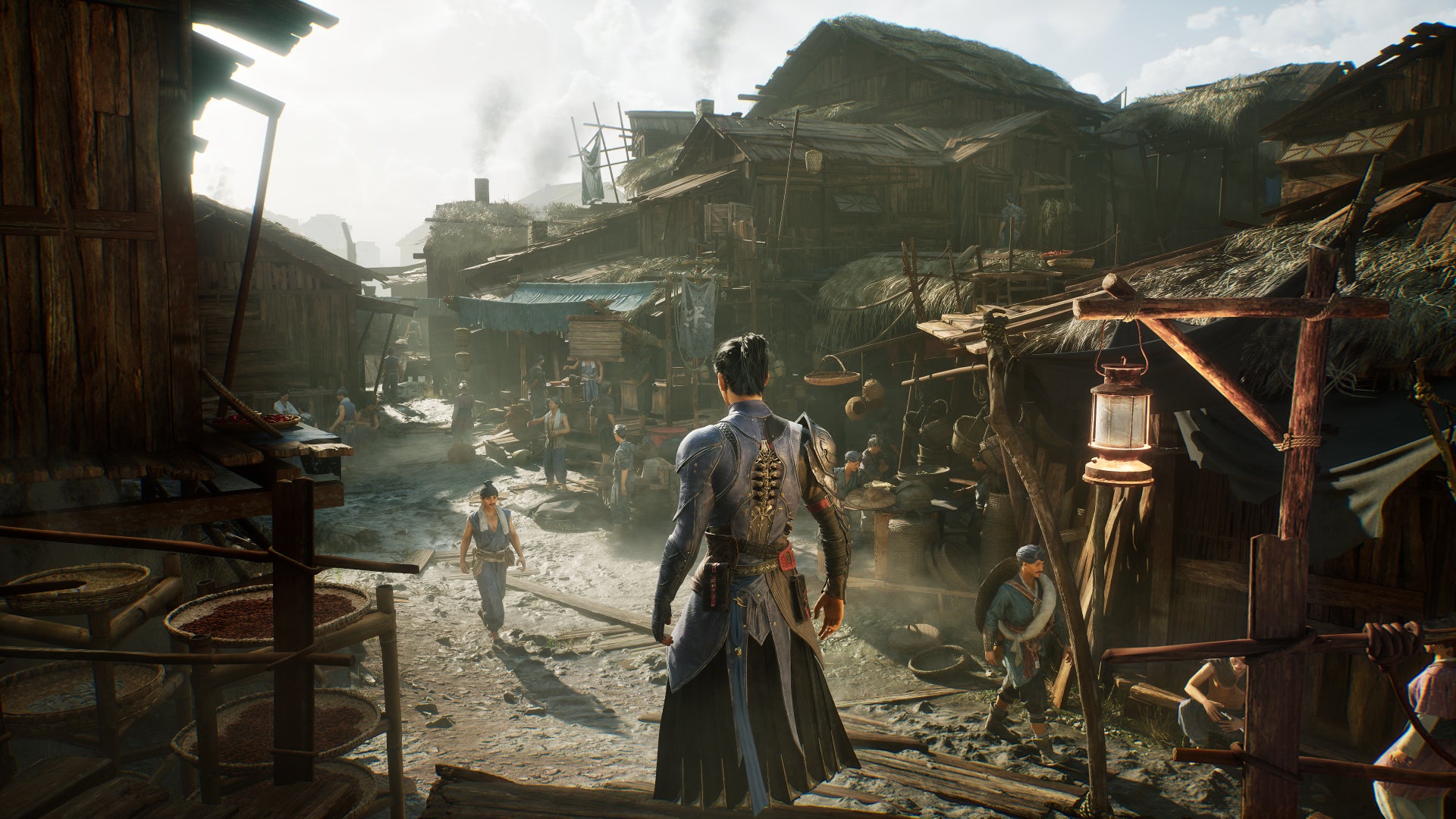
Set in a fantasy Chinese city that melds Ming Dynasty aesthetics with steampunk tech, The God Dynasty could scarcely look further away from the cutesy farming of Sandrock, including the part where you get a gun. Here, as its name suggests, the dangers are more divine in nature. After humans gained the power to control the five Wuxing elements – fire, water, earth, metal, and wood – and formed the Elemancers, an order of Avatar-style warriors, they were purged by the Celestials, overmuscled jerks who’ll happily put a heavenly boot on the Earth’s neck if it means keeping that power to themselves. You play Cheng, a young surviving Elemancer, out for revenge and a cheeky bit of regime change. Gods, y’see, need slaying.
The in-game footage I saw showed that, in fairness to the Celestials, most Elemancing revolves around beating people up. The city is open-world but traversal, unless you can catch a ride on top of a steam-powered car, is on foot, so there’s a lot of flame-powered double jumping across rooftops and even more magical street-fighting of lackeys as you hoof it from A to B. The brawly part is, in turn, a smoothly flowing mix of element-infused martial arts and more elaborate ‘mancery.
Quick and dirty applications include rock throws and flamethrower hands, while contextual prompts allow for weaponising the environment. Manipulating the metal in roof tiles sent one poor grunt tumbling off two storeys, and with a few waved hands, Cheng yanked over an entire water tower like spilling a drink, one that sloshed a gang of thugs down the street. As well as half a street market. And himself. There’s also some occasional rock, paper, scissors to play with enemy elementalists, like throwing up rock shields to counter flame-wreathed soldiers before extinguishing them with a water wave.
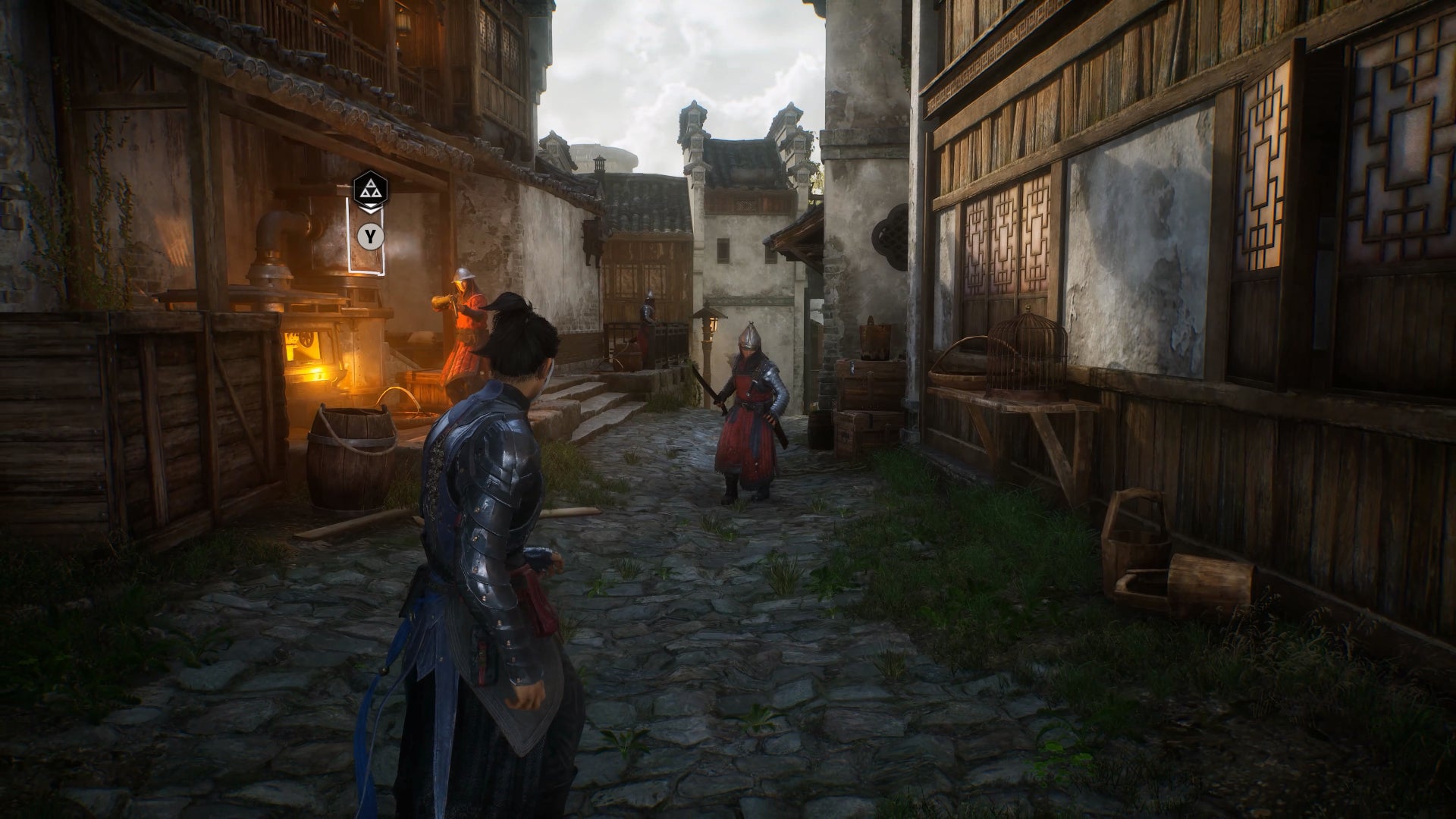
Comboing elements like this is encouraged, as four of the five – wood handles passive effects like total health – are each assigned to a single key or controller button, saving the need to switch disciplines manually. Of what I saw, the most effective (read: funniest) example of this came upon trapping a team of fire troops within a whirlpool, freezing them in place, then summoning a vast sliding boulder to smash them into ice cubes. While riding it, like a skateboard. Or Spongebob. I’m told elements can interact more directly, too, like combining flames with water to create steam, an improvised smokescreen to cover escapes.
Between the flamboyant element-fu, the ease with which single large attacks (or even just a few fiery punches) can wipe out foes, and the fact that the demo ends with an attack by a gigantic metal fox, The God Slayer is evidently going for spectacle over challenge. It is not a Soulslike, something Pathea pointedly noted before showing me the footage, possibly to head off comparisons to fellow Chinese export Black Myth: Wukong. Whoever was playing did, however, clearly possess a well-thumbed grimoire of powers, which is something players must develop themselves. You’ll start the game with access to just two elements, and can choose either to train in the others for a balanced arsenal or to specialise, investing XP upgrades in your starting powers to secure more advanced skills later on.
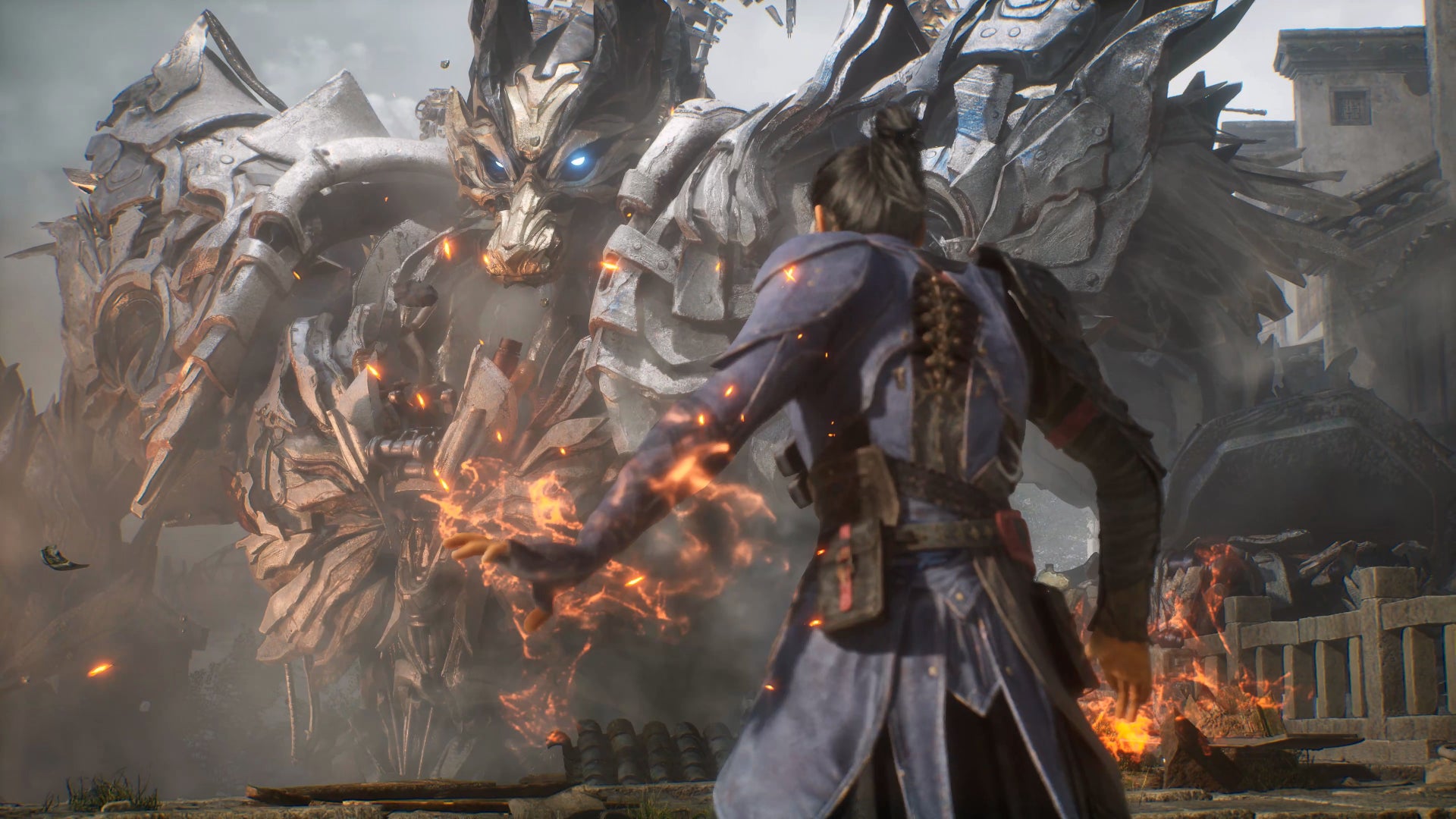
Generally, that footage presented a competent, even fun attempt at making Assassin’s Creed: The Last Airbender. But you’ll also only be hurling masonry around if you choose to. Stealth and misdirection, Pathea say, will be consistent alternatives, with even a spot of Dishonored-ish lateral problem-solving thrown in.
One described example was a Celestial boss fight: you could either earthpunch and waterkick your way in, or you could apply your firecasting talents to set a nearby building ablaze. This will pull the authorities away from sentry duty as they investigate, opening up the chance for a sneaky ambush on the unguarded Celestial. Or, you could find a certain NPC and pay them to poison the baddie beforehand, forcing him to battle you with only half a healthbar.
To stress, I didn’t witness any of these play out in-game, and I’m a bit skeptical about how often The God Slayer will truly open up like this outside of the main questline. Pathea, however, do seem keen on reactivity, and at the very least, these third options might well need to be earned. In another described mission, entering a stronghold could be achieved by sneaking in, or by bribing the doorman – or, if you’ve previously befriended him by doing him sidequest favours, he’ll reward your efforts by letting you waltz in.
This granularity of cause and effect is mighty appealing, and would put an enchanted fist through any accusations that The God Slayer is just another dumb, excessively cinematic action slog. I’m therefore left in the unusual position of being interested in a game, but for reasons I haven’t verified with mine own eyes, let alone played with these (comparatively) uncelestial hands. I am, in other words, committing the cardinal hack sin of taking someone’s word for it.
Still, what I have seen has potential, and it’s not like big-braining your way to less obvious quest solutions is unheard of in open-world games. Nor unfeasible for something that’s clearly got budget to burn. With both cynicism and optimism, then: I would like to see more of The God Slayer.


