
In the jostle for the crown of best Souls game that constantly plays out in my mind, it’s Dark Souls 2 that tends to come out on top. Controversial, I know, but I love it, flaws and all. I adore its ludicrous ambition, even if its coolest ideas – the focus on light, the time-travel – mostly got ditched during its tumultuous development. I love its big ideas; the Bonfire Ascetic system, say, or the obscure alternative steps you can sometimes take to make bosses easier. And more than anything I love the exquisitely forlorn mood of it all. But, even so, it’s 2016’s Dark Souls 3 I’ve found myself returning to most, so as it celebrates its 10th anniversary today, and as we all crumble further into dust, it only seems right to wish it a proper happy birthday.
And because I can already feel the burning eyes of the Dark Souls faithful upon me, I should probably quickly give the original game its dues. Dark Souls 1 is obviously a classic. It clearly has the best, most coherent world design, the best lore, phenomenal ambience, memorable bosses, some all-timer setpieces, and of course the best hat – but its rough spots are rough and it’s definitely showing its age, to the point I struggle to reconnect with it some 15 years on. But Dark Souls 3, despite only arriving five years later, feels like it’s barely aged a day.
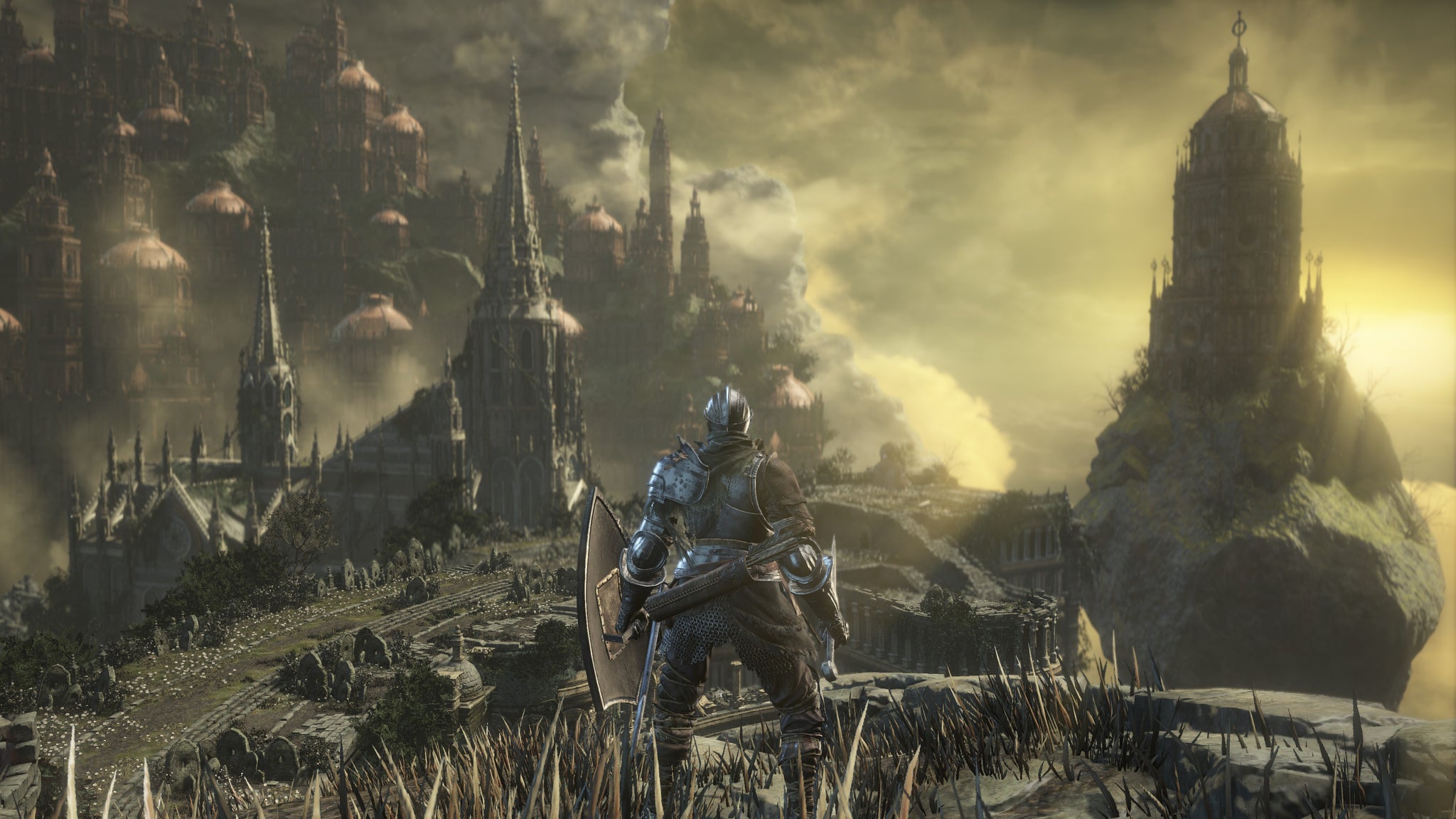
It helps, of course, that it still a looker; FromSoftware’s leap into high-fidelity (first seen in Bloodborne) here meets the studio’s unmatched knack for meticulous world design in a way that’s just completely transporting. Every dislodged stone slab, every sickly skybox, every precisely positioned enemy in Lothric contributes to a sense of history and place so complete, it practically seeps into your being through osmosis. Which is all the more impressive given Lothric is perhaps the series’ most atypically arranged world – a predominantly linear string of self-contained areas explained away by the narrative’s talk of time and place squishing together at the impending end of it all (and it’s fascinating to read about some of Dark Souls 3’s dramatic late-development changes, and an earlier version of Lothric which, geographically speaking at least, seemed to make a lot more sense).
But despite this, and despite the fact its scatter-shot lore feels equally patchwork, Dark Souls 3 gets away with it. Lothric’s individual locations – its faded battlements, its ramshackle villages and overgrown graveyards, its busted bridges and looming cathedrals, all cowering in the the shadow of the ever-present Castle Lothric and festering beneath a putrid, dying sun – are wonderfully realised, showcasing From’s stellar level design skills again and again. Lothric as a whole might lean toward the linear, but these looping, interconnected environmental marvels are a joy to probe, each one notably different in their demands of players.
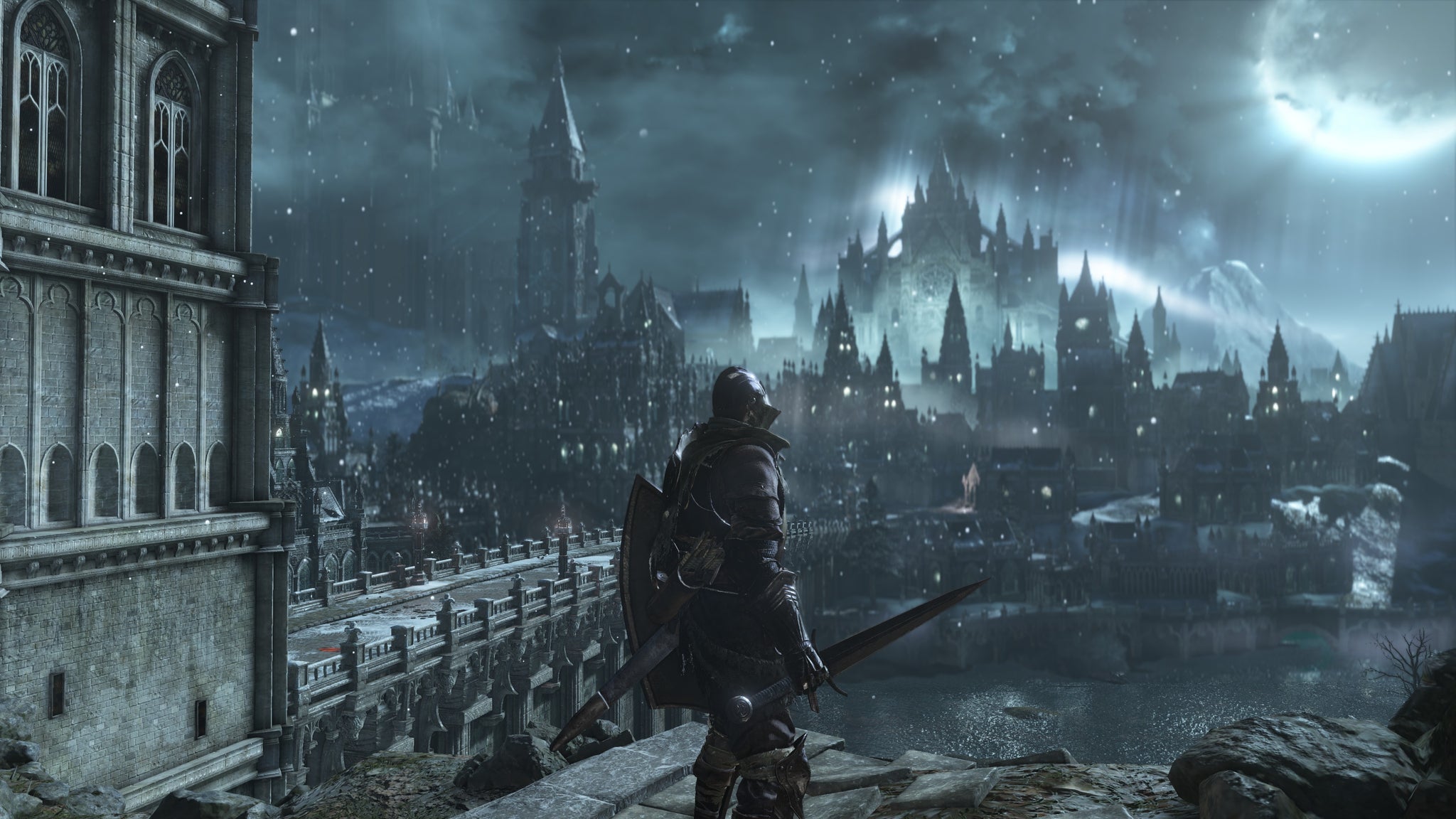
Cathedral of the Deep is perhaps the game’s first truly memorable environment, an extravagantly designed, ever-tightening spiral featuring some classic FromSoftware trolling with its fraught buttress battles and cramped giant encounters. Down in the poisonous depths of Farron Keep’s rotting woods, meanwhile, distress and disorientation take hold. Later, Ithryll Dungeon opts for oppressive horror as it drags players deeper into the past, pulling them closer to the Profaned Capital far below. Elsewhere, there’s the wonderfully elaborate Grand Archive, forcing players on an impressively convoluted path as it goes up and around and out and back in again, cavernous interiors suddenly giving way to vast apocalyptic vistas.
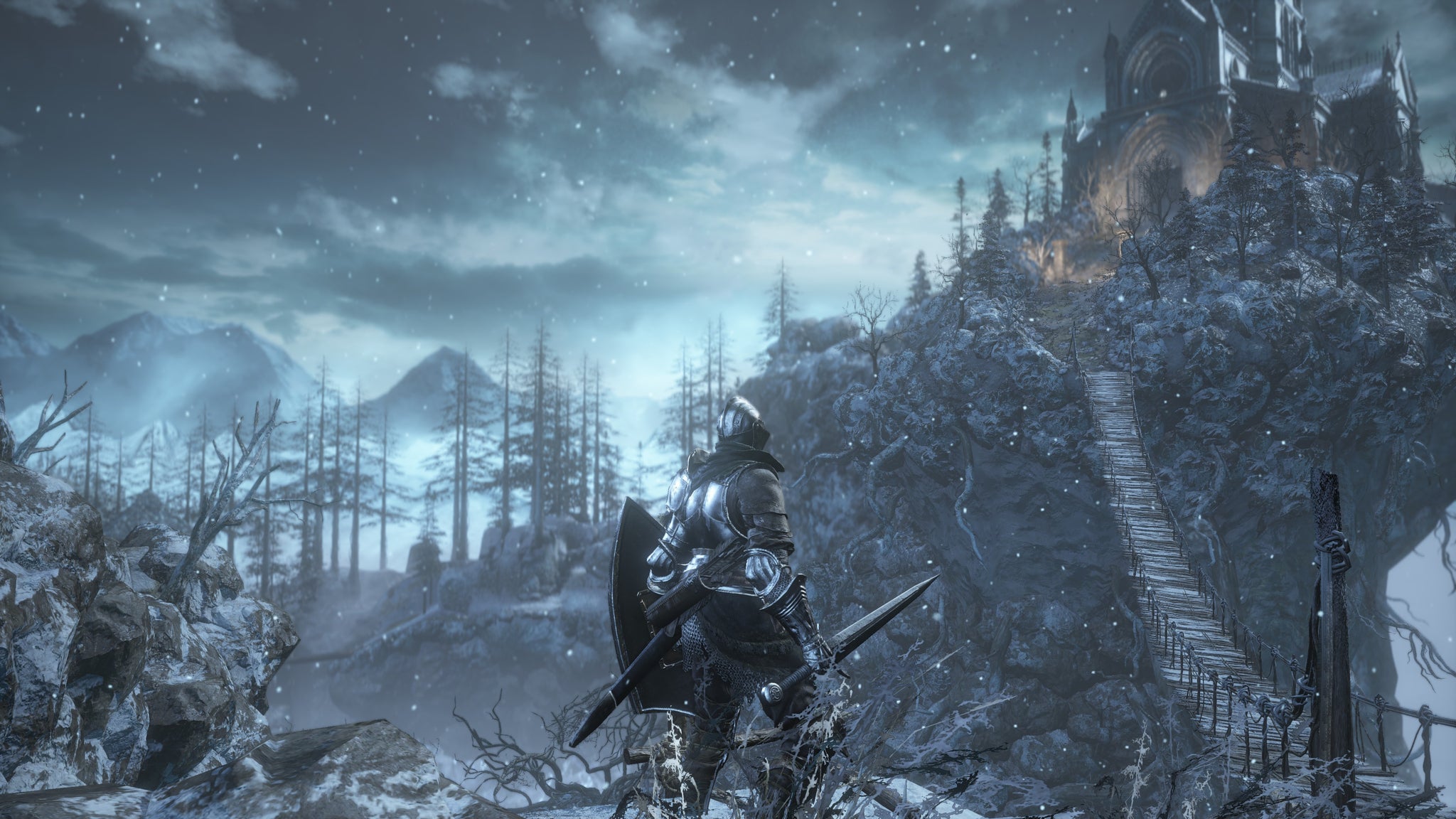
And the DLC is (if we ignore the unmitigated bobbins of the Dreg Heap, at least) equally fascinating, beginning with the expansive snowfields of Ariandel and culminating with The Ringed City, one of the series’ most striking locations. It’s also a stellar capper to the trilogy as, after a whole bunch of Easter eggs on the way down, it finally revisits one of the series’ most curious (and furtive) enigmas. Oh, and the immortal Patches hat-tip is a fun bit of fan-service too.
It’s great stuff, and I’d argue Dark Souls 3 has the most enjoyable combat of the series too. I’ll admit I’m not a hitbox fiend or i-frame counter, but to my simple tastes, fights feel pacier, more fluid, without completely jettisoning the series’ cautious stop-block-roll rhythms; it’s certainly far from the all-out frenzy of Elden Ring. And nowhere is battling more joyous than in its stellar boss fights. Ignoring the Crystal Sage, who can absolutely do one, I honestly don’t think there’s a proper stinker here. I’m even fond of the divisive bosses, like the Deacons of the Deep, which, with their more puzzley, gimmicky designs, feel like welcome palette cleansers to me. But many are series high points, and these highs are high – both spectacular to behold and mechanically diverse, each finding clever new ways to test your mettle.
There’s the strangely moving last stand of the Abyss Watchers as they pile in from all sides, fighting amid the remains of their fallen brethren; the final pitiful throes of the Twin Princes, defending one another to the death and beyond, and driving me slightly insensible with their teleportation moves. There’s Sister Friede’s dazzlingly choreographed two-hander (which I’ll admit was nearly my undoing); the pyrotechnic intensity of Pontiff Sulyvahn, and the even more impressive spectacle of The Nameless King as he battles, dragon-mounted, through the shifting murk of a swelling storm. There’s the wonderfully confounding rhythms of the ethereal Dancer of the Boreal Valley, the mad Oceiros and his (apparently not always) invisible baby, and the whirling end-of-the-world brilliance of Gael. Honestly, I even kind of like that stupid tree. Here’s to them all – apart from you, Crystal Sage.
When I last wrote about Dark Souls 3, just ahead of Elden Ring’s release, I called it an “exercise in refinement [that sees] From at the top of its game, smacking against the limitations of the [traditional] Soulsborne formula… with dazzling craftsmanship and invention,” and that still holds true today. Admittedly, four years later, I reckon Shadow of the Erdtree probably beats out Dark Souls 3 in terms of quality boss quotient (I also think the Land of Shadow is From’s best bit of world design, although that’s a controversial hot take for another day), but that still doesn’t stop me coming back, over and over, to Lothric and its beautifully doomed world. Sometimes, I think Dark Souls 3 might even be my favourite of the trilogy, but then I’ll wake up tomorrow and it’s Lordran, or Drangleic, calling me again.
So as Dark Souls 3 turns 10, maybe it’s the whole glorious lot we should be celebrating – after all, where the flame is concerned, the beginning is the end is the beginning again. And that’s an endless cycle I’m happy to be trapped in.


