
I had upset the peasantry by, er, murdering quite a lot of them. To be fair, they were about to hang a deserter. To make things right I agreed to help with their protest against taxation, which is why they asked me to kill a barghest for its blood: “The green really pops on our protest signs.” But I hadn’t got to grips with the combat system yet and the barghest ended up collecting my blood instead, which is how Dandelion got yet another story of Geralt’s many deaths to turn into a ballad.
Remember Reigns? Nerial’s game of Tinder-esque swipe-based monarchical decisionmaking was massive in 2016, followed by a sequel called Reigns: Her Majesty and spin-offs in other settings. Reigns: Game of Thrones seemed like a particularly perfect fit with its stories of bastardry and beheadings.
Next month, in collaboration with CD Projekt, Nerial will release Reigns: The Witcher. Rather than reliving the short-lived reigns of cursed royals, each run is one of Dandelion’s ballads about Geralt’s adventures. Only I guess the bard’s in his tragic era, because they all end with Geralt’s death. (After the barghest, I was killed by a gnomish prank.)
Every decision you make can alter four values, all of which you want to keep near the middle to avoid disaster. Three of them represent how liked you are by a different faction: humans, non-humans, and sorcerers. The fourth represents your dedication to the witcher’s path. In the original games it was a bit odd how the need to maintain balance led to diffidence—one of the four icons represented wealth, so you could die by being too rich. Here, the demand for balance suits Geralt’s standoffish neutrality. You can only afford to get so involved, and then you have to back off and play the reluctant antihero.
When things go particularly wrong, battle breaks out. It’s a little more complex than the back-and-forth duels of the original. It’s a real-time dance, with Geralt hopping left and right at the bottom of a grid while icons fall toward him like Tetris blocks. Only instead of tetrominoes some of them are witcher’s swords and some of them are your enemy’s attacks.
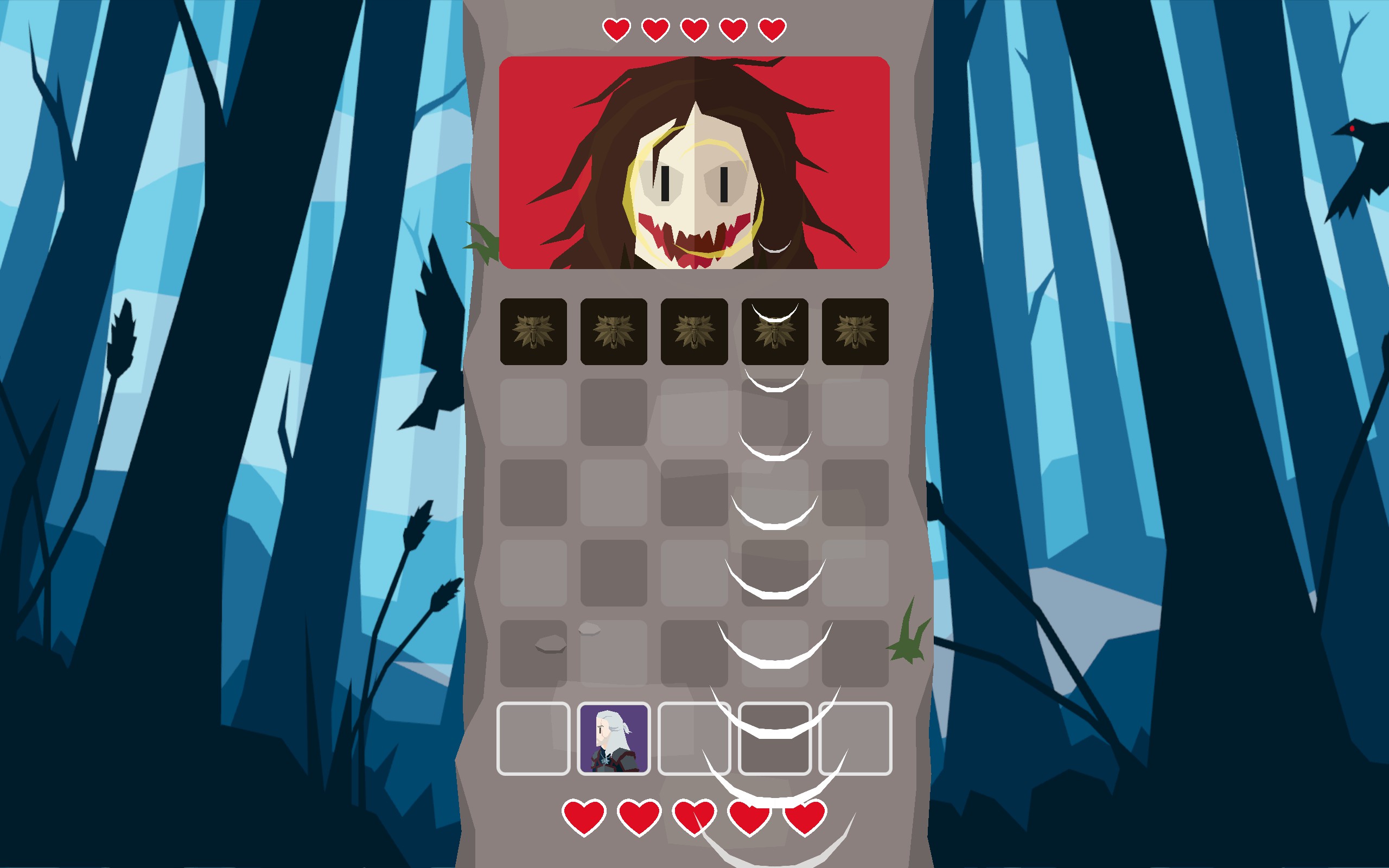
You have to kind of dance between them, trying to land on the swords as they reach you and dodge the rest. Witcher signs can also appear on the grid to set off your abilities, and some monsters have special attacks—the bruxae lets loose a paralyzing scream that freezes you in place for instance.
Each run is like a string of sidequests. You catch a serial killer, protect a merchant, arm wrestle a guard, burn a wizard’s tower, and are turned into a jade pendant so Yennefer can wear you to a banquet. Completing objectives gives you more cards for the next run and levels up Dandelion’s bardic abilities. One of my next objectives is to find love, which makes it easier to please people and harder to annoy them—it’s called Geralt the Bathed and its icon is two feet in a tub.
Like the protestors using barghest blood, it’s the kind of silly but accurate touch that makes it clear Reigns: The Witcher is the work of people who get the appeal. It even plays the quest complete sound from The Witcher 3 at the end of your runs. While each of those runs only takes minutes, I can see myself losing hours to this. Reigns: The Witcher is out February 25 on PC and mobile.


