
There’s a particular kind of magic in games that refuse to explain themselves; those that throw you in an unfamiliar, dimly lit environment and expect your curiosity to take the reins. MIO: Memories in Orbit is exactly that, a game about navigating strange surroundings, poking at forgotten corners, and slowly realizing that every small step you take brings a dead world closer to life.
In MIO: Memories in Orbit, a new metroidvania platformer from indie developer Douze Dixièmes, you play as the small but persistent little robot Mio. She awakens on the Vessel, a desolate ship run and inhabited by other mechanical creatures. Most of the ship and its AI caretakers have been disconnected for some mysterious reason, and it’s up to Mio to restore them to their former glory and save the Vessel from demise.
MIO starts out slow. The ship is dark and lonely—and to be honest, a little confusing. At the beginning of your journey, there’s no map, no one telling you where to go, and not much of an explanation for what anything is. You don’t even get to see enemy health bars initially. But the more you explore, the more the ship opens up. As you defeat mini-bosses and uncover hidden passages, lights turn on, helpful NPCs crawl out of their hidey-holes, and new pathways unlock. The world literally unfurls at your feet, and you start to visibly see the impact of your actions around the Vessel.
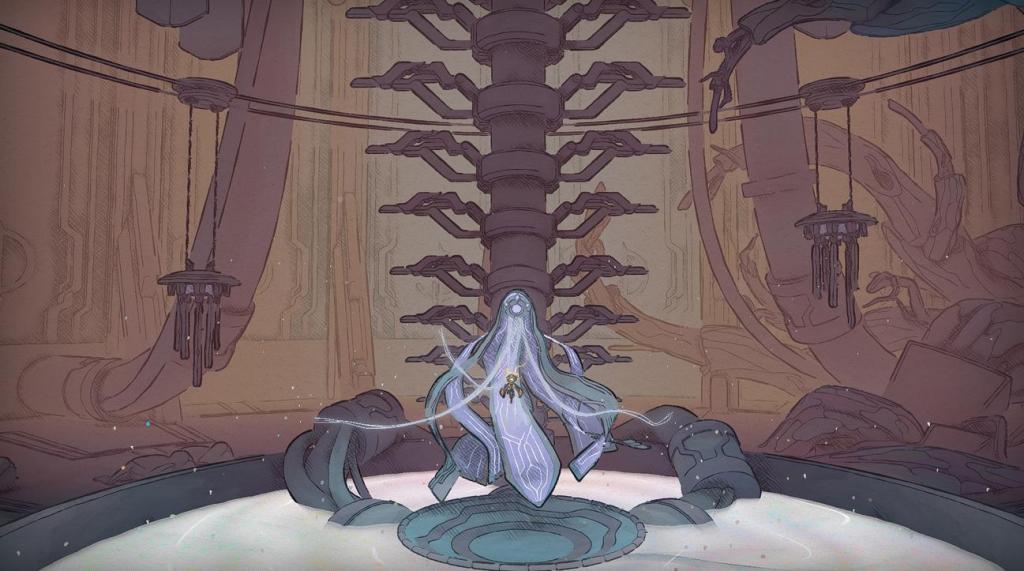
And when that world unfurls? Boy, is it pretty. Even though it’s a ship, the Vessel is home to several regions, each with their own beautiful biomes: pink and purple florals of the Bell Tower, icy blue slopes of the Metropolis, and fiery hot pipes of the secretive manufactory. The hand-drawn art style is a unique breath of fresh air, with scratchy sketchbook-style accents and bright pastels. Top it off with atmospheric music, and you’ve got an experience that’s very pleasing to the senses.
Beneath this gorgeous exterior, the Vessel houses many secrets. Exploration is where MIO shines the brightest, and the game massively rewards you for checking every corner or suspicious-looking bush. There are entire areas with bosses hidden behind secret entrances, and it’s possible to complete the game without ever discovering these parts of the map. As a metroidvania, MIO will have you returning to old areas after unlocking new skills, but even when you feel as though you’re completely done with an area, you might later find friendly NPCs who weren’t there before as the story progresses. The Vessel really does feel like it evolves with you as you progress through the game.
Many of the NPCs you’ll meet on your journey will give you some baseline understanding of how the Vessel became desolate, but there’s so much the characters gloss over or only ever hint at. Most of the world-building is actually done through the collectibles you can find around the ship. The story can initially be confusing, but the more items I found, the more the pieces began to fall into place. My own theories sprouted and grew with every digital record or curio I found, and I became hungry for more clues, like a caffeine-addicted detective on a murder case.
But a platformer can’t only be judged by how pretty it is or how many secrets it hides. Both movement and combat mechanics play major roles in the genre, and while MIO’s movement system feels fluid and fun, its combat can be fairly simple. Your main attack is a single button push, an attack that causes Mio to whip her hair out like she’s Willow Smith. You can thread three of these attacks together to make one mini combo, and directional hits allow you to gain air in the heat of a fight. Eventually, as you explore the various regions and defeat bosses, you’ll gain access to more skills, like a dodge, a grapple, and a wall-climb—all of which can be used in combat but typically won’t change the core of your attacks too drastically. Some boss fights will require you to prove your mastery of these skills, though, and you can only navigate many areas of the ship once you obtain them.
Modifiers, or collectible upgrades, influence the way you fight, but you’ll have to first find and equip them. Some of these upgrades can be bought from a vendor, though the best ones are hidden. Most Modifiers grant passive effects, like an increase to Mio’s shields or a buff that causes enemies to drop more currency. Others, the rarest of the bunch, improve Mio’s skills, granting a secondary attack on Hairpin dashes or summoning a decoy that enemies will prioritize over Mio. If exploration isn’t really your thing, you may miss out on these Modifiers entirely, meaning the combat will remain simplistic throughout your playthrough.
Boss fights are very fun, and oftentimes, pretty darn difficult. Most encounters took me multiple tries to win, but very rarely did victory feel completely out of reach. The boss designs are downright cool—including a majestic, mechanical deer or a giant furnace with four arms—while others are just silly, like “friends :),” a gooey, zombified mess of what was once friendly robot NPCs. But bosses don’t really feel all that impactful to the overall story or regions they’re found in, and very rarely are they referred to in the narrative, data points, or in dialogue with other NPCs. MIO lacks the “big bad”—bosses that tower over a region, standing as the final trials to face. The game is more of an assortment of random mini-bosses sprinkled between difficult platforming segments. With how fun the process of learning enemies’ attack patterns and dodge windows is, though, it’s easy to overlook their narrative shortcomings.
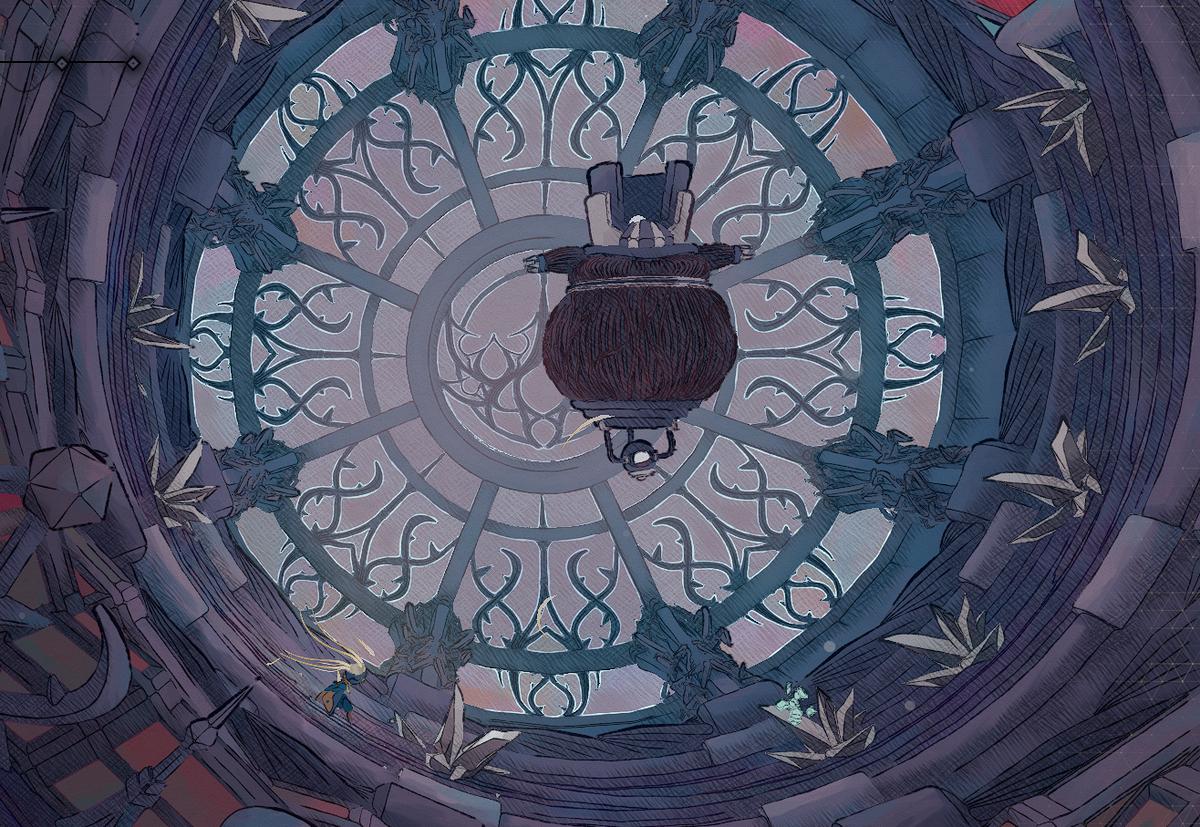
In between boss fights, you’ll be jumping from ledge to ledge as you navigate the ship. Some areas of the Vessel demand patience and precision with incredibly difficult platforming sequences, and just like how you have to learn attack patterns in boss fights, you’ll need to learn timing for these areas. Though it’ll likely take you several tries to navigate these areas, success never feels impossible. And if the difficulty of the game ever gets you down, MIO offers accessibility options that make bosses more brittle after each encounter, prevent enemies from attacking unless provoked, and heal Mio without you having to reach a checkpoint.
All in all, what Douze Dixièmes has created is an absolute marvel for the platforming and metroidvania genres. It’s demanding in more ways than one, and its hidden secrets make it deliciously addictive. Exploration really is the name of the game, and it’ll completely shape your experience in the best way possible.
9
Superb
A hallmark of excellence. There may be flaws, but they are negligible and won’t cause massive damage.
MIO: Memories in Orbit is a gorgeous, exploration-driven platformer that thrives on your curiosity. What starts as a dark, confusing journey slowly unfurls into a vibrant world packed with secrets, hidden bosses, and environmental storytelling that rewards thorough exploration. While combat mechanics remain simple, fluid movement, challenging boss fights, and a richly atmospheric ship make uncovering the Vessel’s mysteries consistently satisfying—for players willing to get lost along the way.
Pros
- Beautiful, hand-drawn art
- Difficult combat and platforming, but never impossible
- Rewarding exploration
- Intriguing world-building
Cons
- Combat can be fairly simple
- Narrative can be confusing without exploration
A copy of this game was provided by the publisher for review. Reviewed on PC.
Review Guidelines

.jpg?width=1200&height=630&fit=crop&enable=upscale&auto=webp&w=360&resize=360,270&ssl=1 "Why is there such a bustling community around Marathon’s soundtrack, when the game isn’t even out yet? One producer tells us why")


