
‘If you want to torture somebody, first show them your tools’ is one of the better horror game design lessons taught by Amnesia: The Dark Descent. I thought of Amnesia’s cistern chapter while playing through a later area in Lunar Software’s excellent first-person spookathon Routine, announced 13 long years ago, though only in active development for around five. The area centres on a curious underground tree, with water dripping from a hydroponic ceiling and sealed doors on all sides. You can imagine Amnesia’s Shadow manifesting here, clogging the roots with acid rot as it homes in on your comically loud footfalls.
I also thought of Alien – of moisture splashing on Brett’s upturned face while he searches for Jonesy in the guts of the Nostromo. Routine is so indebted to that film and the hallmarks of that era that it inevitably risks feeling hollow. The game’s desolate moonbase setting is a late 1970s to 1980s vision of the future, made up of curving Macintosh plastic and cathode-ray crackle. It has the jaw-dropping lustre and formaldehyde reek of a very expensive museum, every room and corridor perfectly composed, however trashed and darkened, every in-world computer display a marvel of speculative 1-bit OS design.
Watch on YouTube
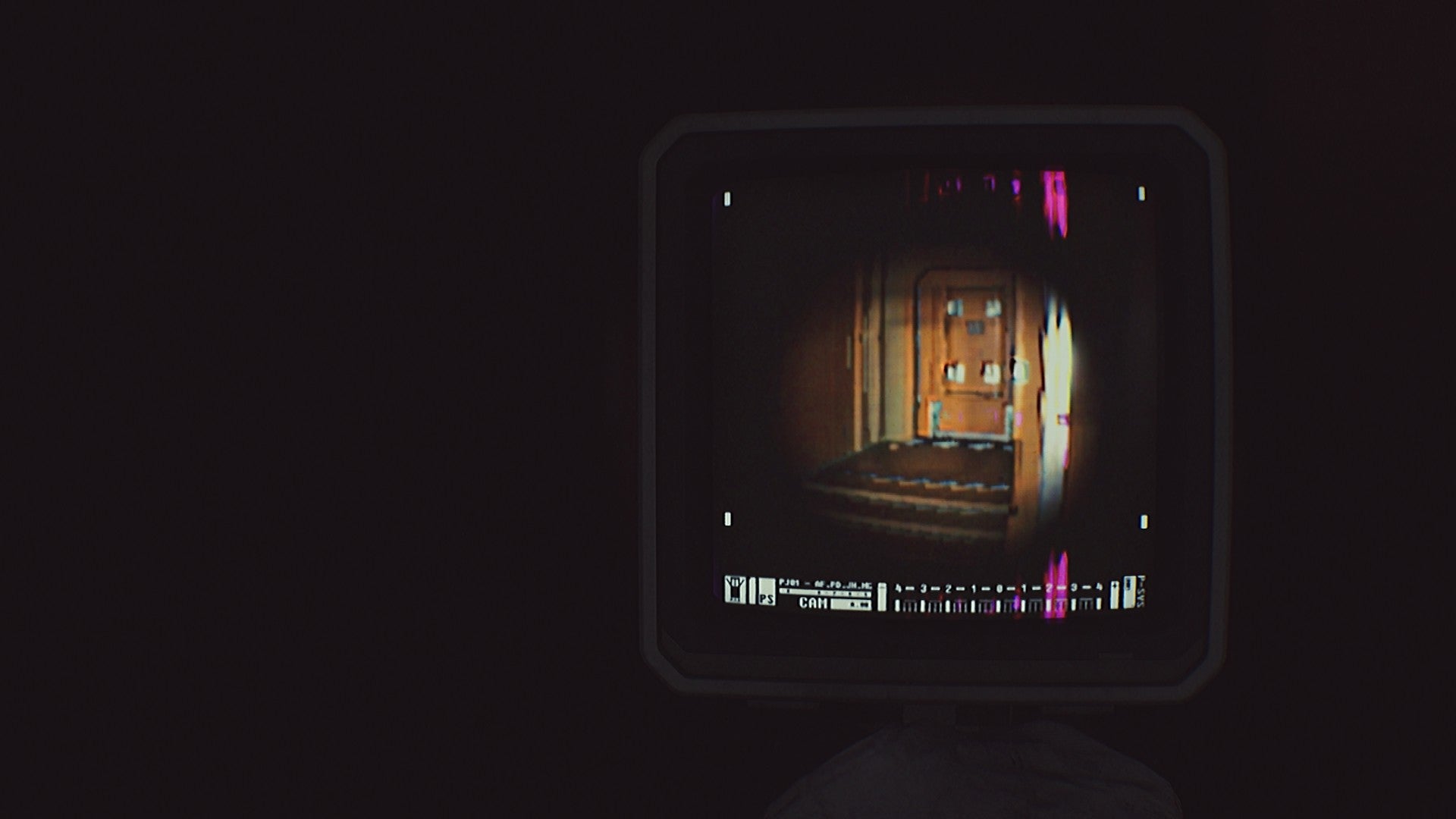
Your only equipment in Routine is a boxy and bevelled multiple-purpose CAT scanner with a camcorder display and accessories you have to manually peer at and pop from the casing, as though ejecting cassettes. It’s the kind of thing I’d have gone crackers over as a kid who dreamed of getting a tricorder for Xmas… Who am I fooling? I’d go crackers over it today. You’ll find a module for your CAT in a mall showroom, and there’s a nagging sense that that’s where Routine ultimately belongs, but the game powers through the sheeny nostalgia.
In some ways, it’s a more exciting piece of horror than Alien: Isolation, which launched a couple of years after Routine’s announcement. Mostly, that’s because it doesn’t have an Alien, one of the most overexposed monsters in gaming. It has other dangers that need to be encountered and deciphered, with uncommon care. You’ve likely seen the robots in trailers: there’s a nasty trick to their operation, a simple variable that cultivates a relatively novel kind of suspense, and they’re not the only thing you have to worry about. Routine also has an impressive knack for foreshadowing, which makes it a shame that the developers have spoiled certain aspects of enemy behaviour in pre-release coverage. Beware of more potential spoilers from here.
So yes, let’s return to that opening Amnesia quote. Show us your tools, Routine! The room with the tree is the centre of a small maze of scanning facilities, server rooms, receptions and terminals. I was calm when I stole into the place – I’d just survived a baptism of fire in chapter 3, around four of seven hours in, a climax I mistook for the end of the game, and Routine had rewarded me with a bizarre floral transition and the chance to grapple with new mysteries.
I thought the pressure was off, and it was, for a handful of minutes. I set out from the hub, having procured the means to unseal one set of doors, and immediately came across computer docs that began layering up hints of a resident threat. Which might sound like a clunky piece of set dressing, a la “Hack off their limbs” in Dead Space, but Routine drags out the payoff to marvellous effect. Having given me just enough material to scrape together some rudimentary engagement tactics, it left me to shuffle through more doors and creep through vents, grasping at the threads of puzzles and returning often to a central computer near the area savepoint. Quite naturally, I saw evidence of my half-understood enemy everywhere.
Above all, I heard it in the walls. Routine boasts a vast menagerie of ambient machine noises – dire reverberations that tickle with the suggestion of guttural lungs and lips, dirging their resentment from deep within the world as you blunder about pushing buttons and rousing dormant systems. It’s just the aircon, you tell yourself, listening to the bulkheads moan. It’s just some turbine that some asshole specifically designed to sound like a dying elephant.
Elsewhere, there are magnetic tape storage units that chatter to themselves unpredictably, like hibernating droids in Star Wars, and speakers playing noisy synth that are absolutely maddening because they stop you hearing anything else nearby. Now, combine those persistent, corrosive acoustic elements with the screech and slam of a motorised door. Every door in Routine opens far faster than necessary and always sounds a little like something bursting through that door in a flurry of teeth. I actually found myself shushing them. For god’s sake, doors! You are going to wake it up. Wherever and whatever it is.
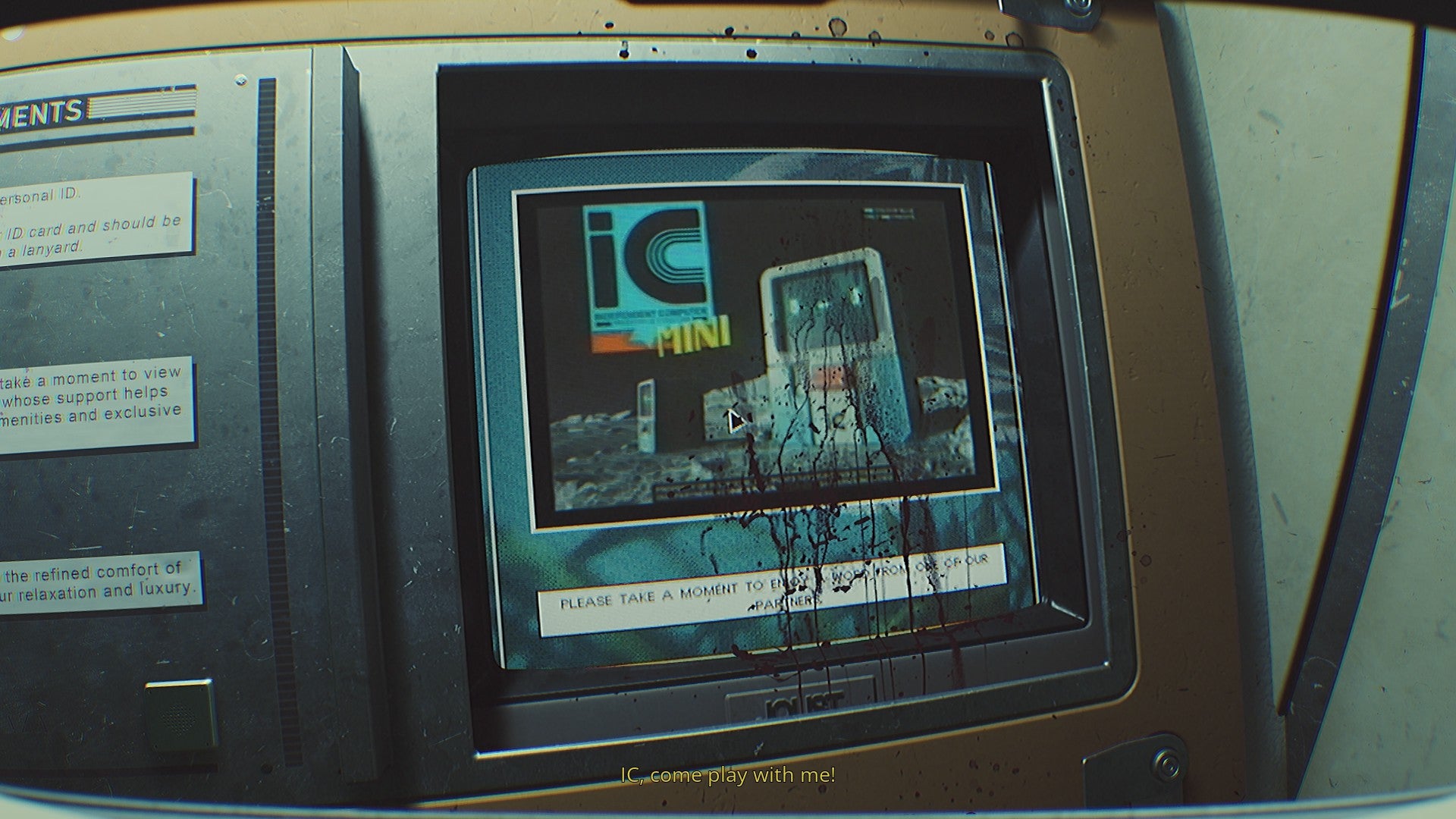
You horror junkies are reading all this and thinking “aww, look at Baby getting to grips with some bread-and-butter sci-fi fixtures and elementary dramatic build-up”. Well, the other twist is that I’m fairly sure Routine uses familiarity with such things against you. It’s not just that your surroundings sound like they’re coming to life, to say nothing of abysmally long hallways with the regulation Object In Shadow at the far end, or pure slabs of negative space that cry out to have a grenade lobbed into them, if any were to be found.
As I trawled the rooms around the underground tree, I also slowly put together a list of hiding spots, changing plays of sightlines, and certain props of the yellow-paint variety. I grasped at future sequences of actions and how challenging it would be to complete them, given what I understood about my still-unseen aggressor. Again, might sound like knowing too much in advance, but therein lies the wickedness. Having allowed you to understand the overall nature of the trap, to settle in as armchair designer, Routine lets you burden your mind with permutations. Like Amnesia’s victims, you wield the scalpel against yourself, stockpiling scenarios while waiting for the game to finally take the knife from your hands.
Lunar Software manage to raise the tension while sort of hiding nothing, in a way I haven’t quite experienced in any other horror game. One random document more or less spells out the eventual, sadistically belated scripted emergence, but it managed to scare the pants off me anyway.
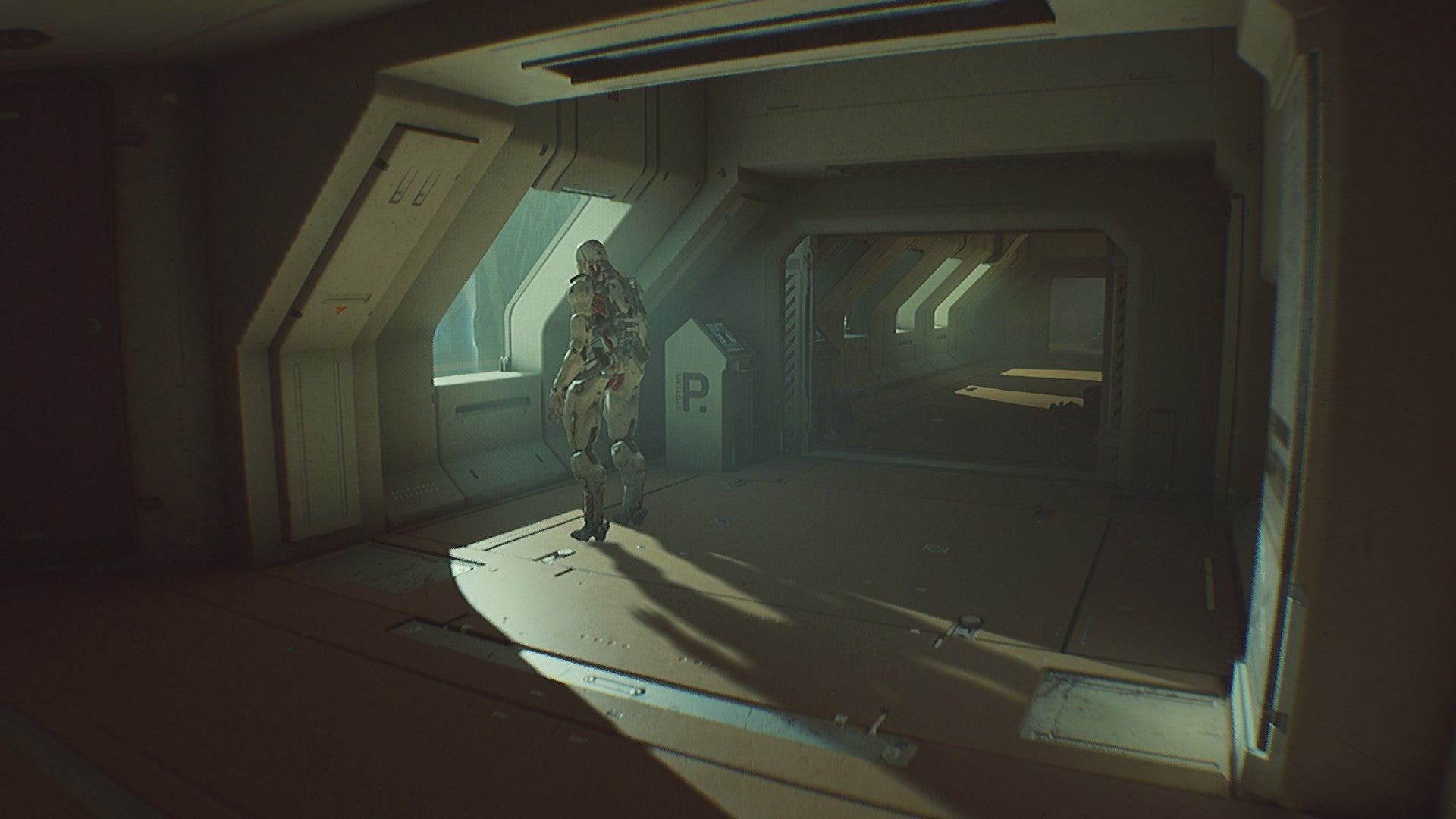
I do find it masterful. But I fear I’m overegging the Kane-pudding. I played Routine in parallel to Santa Ragione’s Horses (review up very shortly), a rather more… complicated horror production, though a curiously similar one in terms of its shared interest in older media technologies, and I do think I’ve come to see Lunar Software’s project as a reprieve. So here’s an unceremonious list of things that might turn you off.
Firstly, and just in case it wasn’t obvious, do not play Routine if you hate hiding from things you can’t kill, or trying to solve puzzles while hiding from those things. The CAT scanner can be repurposed as a weapon, but not a lethal one, and you’ll run out of battery power quickly if you try to Vasquez the opposition. There are lots of replacement batteries around, but they’re just rare enough that you might keep a note of their locations.
Don’t play Routine if you can’t bear manual savepoints that are not only relatively far apart – or feel that way, given your character’s lumbering spacesuit movement – but have to be activated by synching up your CAT over wireless. Do not play Routine if you hate backtracking from one part of a puzzle to another, either, and definitely do not play Routine if you can’t abide the thunderous tramping of an avatar’s feet – the sound design’s one failing.
Do not play Routine if you need modcons such as maps or minimaps, or an always-available codex carrying every hint or document you’ve looked at. Such bits and pieces are mostly found on computers within the world. Shout-out for how your look controls synch to the in-game terminal cursor when you approach – it’s just fiddly enough to raise your hackles when you’re in a hurry, which you usually are. Don’t play Routine if you like good gunfeel. Your CAT is a flexible device, but also a winningly ungainly one: you’ll need to reset the display after passing through a strong magnetic field, if you want to shoot straight, and there’s no tactical hotkeying between firemodes when push comes to AIEEEE.
You can’t change modes while crouched under tables either, but that’s less of an issue, because you’re seldom safer than when crouched under a table. If Routine’s enemy design has an obvious belief-scuppering flaw, it’s a strange disinclination to bend over.
Do play Routine if you enjoy actually good jump scares – scares that arise convincingly and organically from the behaviour of entities who are never more dreadful than when utterly silent and still. And do play Routine if you like epistolary sci-fi backstory. There are a lot of missing people to get to know through collected correspondence, and if the writing is perhaps too spare, leaving the key personalities half-lit, don’t forget that you won’t be perusing those docs at leisure in a codex. I’m too craven to test it out in the company of anything horrendous, but I’m not sure the pause button actually pauses anything.
The story is more Solaris, 2001: Space Odyssey and Annihilation than Dead Space or Alien, though the weaponising of tools recalls Visceral’s various mining implements. It’s all rather fey and sketchy, with passing asides on being and consciousness: “it’s like time forgot to take me with it”. The biggest mystery is your own identity, but there are also subplots of the wacky science cult variety, and reminders of the human brain’s susceptibility to odd patterns and signals. There’s also plenty of mystique bubbling through the decor, including ads for products that might have been named for Stephen King stories, and arcade parlors with singsong cabinet games that riff upon the wider terrors.
Routine is just a well-made sci-fi horror game. I wish I had a more elaborate closing note, but I’ve used up all my adjectives yammering about turbine noises and VHS-C. 2012 was a million years ago, but this elegantly cumbersome chillfest seems none the worse for the interruptions and extended spells in suspended animation. Congratulations, Lunar Software. You pulled off the moonshot. Now, let’s get the hell out of here before that thing down the hall notices me typing.


.png?width=1200&height=630&fit=crop&enable=upscale&auto=webp&w=100&resize=100,100&ssl=1 "Helldivers 2 on PC will now take up 85% less space thanks to reduced installation size")