
Legendary swordsman Miyamoto Musashi considered himself more an artist than a fighter. A keen strategist and a self-proclaimed master of war, I think it’s Musashi’s art that hits more keenly than his katana: it’s minimalist, monochromatic, a study of nature defined by its simple brilliance. Less is more. Whether intentional or not, I think Capcom may have internalised this philosophy when creating Onimusha: Way of the Sword – a game based loosely on the life and conquests of Musashi. Seldom over-complicated and often composed with artisanal skill, Way of the Sword takes the philosophies of 16th Century Japan’s most influential martial artist and somehow applies them to video game development.
Making you feel as adept with a blade as the man that is said to have invented the two-sword technique used by many samurai afterwards, Capom devised a fascinating combat system for Way of the Sword (which they hired actual swordsmen to refine and motion capture for, by the way). It relies heavily on momentum, and the keen observations of your enemies. If you ready a light or heavy attack as they strike, you can perform an ‘issen’ – a counterstrike that acts like a parry, interrupting and damaging your foe and allowing you to make follow-up attacks. But you can’t get greedy: Musashi – said to have won over 60 duels in real life – is a better reactor than he is instigator; readying feints, tells, and charges and responding in kind is far more important than simply engaging in a war of attrition.
To this end, it feels like your regular attack strings are under-powered and slightly awkward. These are filler moves, tools to confound and compromise, rather than kill. Your most lethal moves come after parries or deflections, or follow on from your dodges and issens. By dancing around your enemies, and forcing them to spend stamina and dignity in whiffing attacks, you open them up both physically and psychologically. It means longer skirmishes can be gruelling; long-winded encounters that rely on your not making a single error, reading and riposting like a true swordsman of legend. It’s a more effective role-play than anything I’ve encountered in Nioh or Wo Long or even Sekiro, to be honest: more concerned with aptitude and application than it is with acrobatics and action.
Watch on YouTube
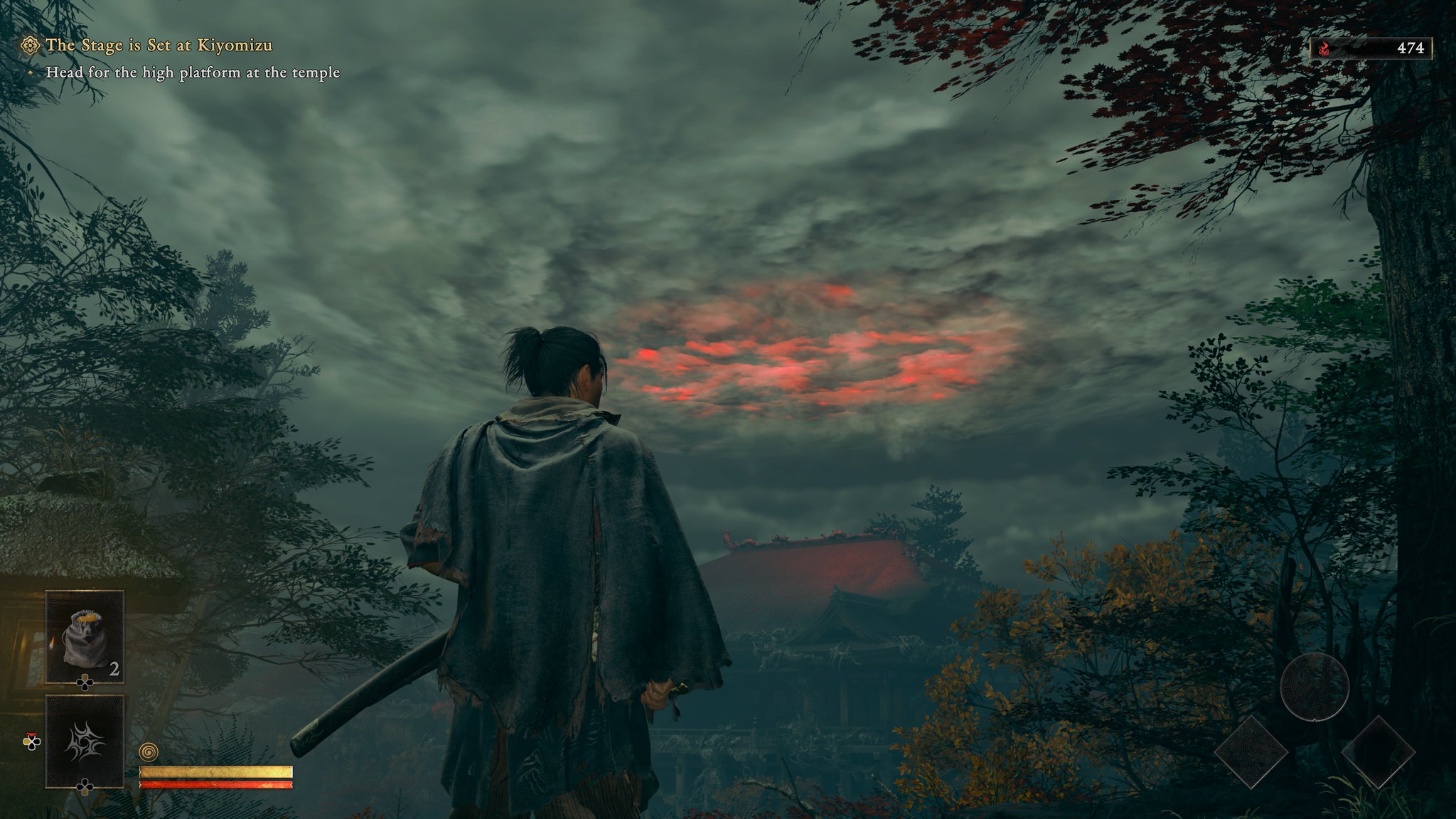
Musashi penned a very famous manual on strategic thinking – and how it applied both to his martial technique and to everyday life – called The Book of Five Rings. “Pay attention even to trifles,” was one of the maxims he recommended. Capcom teaches you this with its insistent but well-concealed hands; you need to watch – really watch – your enemies every second they’re on-screen. Even fodder enemies are animated and telegraphed with so much attention to detail it makes FromSoft’s weaker enemies look embarrassing by comparison. “Develop intuitive judgement and understanding for everything,” recommends Musashi later in his book. Again, this feels like a pillar Capcom leant on during development: by about halfway into Way of the Sword, I felt like I was looking at the destroyed urban setup of Kyoto with naught by my reflexes, sharpened and primed to cut down enemies before they could so much as lay a finger on me.
It’s a tightly-constructed power fantasy… if you’re good at it. I anticipate the battle system becoming aggravating for some, off-putting for others – especially if they’re loyal subjects from the school of Miyazaki, for instance. And, masochists rejoice, it is hard. If you’re being ungenerous, you could say the flashing telegraphs for deflect-only attacks, the red colouration of undodgeable attacks, or the glowing blue that denotes a dodge-only attack are simply ‘Simon Says’ cues, and that the life-or-death split-second decision-making these impart are broadly similar to other games in the same genre. But I think a more generous reading of it is that this visual language – drilled into us as we’ve studied the Way of the Controller over the past decade-plus of hardcore action games – is used to great effect by Capcom, who manages to craft high-stakes fights (that are always tidal in their nature) that feel fair, familiar, and hard, all at the same time. Not an easy feat.
When you’re not fighting, you’re exploring. Way of the Blade is neither completely linear nor open-world, but instead occasionally balloons to let you explore medium-sized areas and complete a couple of repetitive side missions. These distractions give you a better sense of the world you’re trying to save from an invasion of ‘genma’, nefarious beings that want to conquer both the human realm and hell for all the usual reasons: power, infamy, boredom. But, honestly, I think the game would have benefitted from a more blinkered setup: the ‘legacy’ dungeons and severely-walled paths are for more effective uses of Onimusha’s time than what often feel about dalliances around a crumbling Kyoto.
Don’t dismiss the side content entirely, though; by exploring and finding items and hunting down rogue ‘genma’, you are empowering Musashi. There’s a rudimentary RPG skill tree to master, a simple upgrade path for your weapons and armour, and new skins to unlock for yourself and some of the more prominent supporting characters. “Perceive those things, which cannot be seen,” advises Musashi in his book – something Capcom probably took a bit too literally when it gave you a ‘Press R2 to see into the demon realm’ button that highlights objectives and the critical path for you. At least it speeds the lulls in the game up, somewhat.
Driven by an intriguing and compellingly watchable story, Way of the Sword had me pining for boss fights, nearly all the way through. The connective tissue is good, don’t get me wrong – fighting mobs and solving simple puzzles makes for a nice self-contained momentum in between the important fights – but the busywork just isn’t as impressive as the setpieces. The cutscene direction is less ‘inspired by’ Akira Kurosawa than it is simply trying to copy him (but to great effect). The camera work, the pacing, and the timing are all superb. I’ll take this opportunity to say Way of the Sword is also one of the funniest games I’ve played in a long time, too – and intentionally so. When you spent two years negotiating the rights to a dead man’s face because he’s “the quintessential samurai action actor”, you’re going to want to make sure you do right by him. And Capcom has; the mix of dramatic, funny, and emotive Mifune always seemed to strike is alive and well in Onimusha – which is a bit weird considering he’s been dead for nearly 30 years.
It’s the little things: the grimace Musashi makes when he’s flung into a wall by an over-powered demon, the little sniff and brush of his nose he does when he’s dubious, the single eyebrow raised at an unexpected development… it’s almost uncanny. But I believe in this character; his monkey-ish charm, his cocky confidence, his humble belief in the right thing and that eponymous ‘way of the sword’ that defined his life and his teachings. I want DLC for Way of the Sword just to bask in more of that sumptuous cinematography and pitch perfect characterisation.
But, for now, I will just have to replay the boss fights – a nice and easy option available to you from the game’s hub. Jumping back into old fights with new gear makes them feel interesting once again, and there’s so much texture to these that in all but one fight, I saw a move or created conditions for something special to happen I didn’t see in my first dance with the same enemy. That’s great combat design; Capcom lets us see the breadcrumbs, but it’s up to us to pick up the trail.
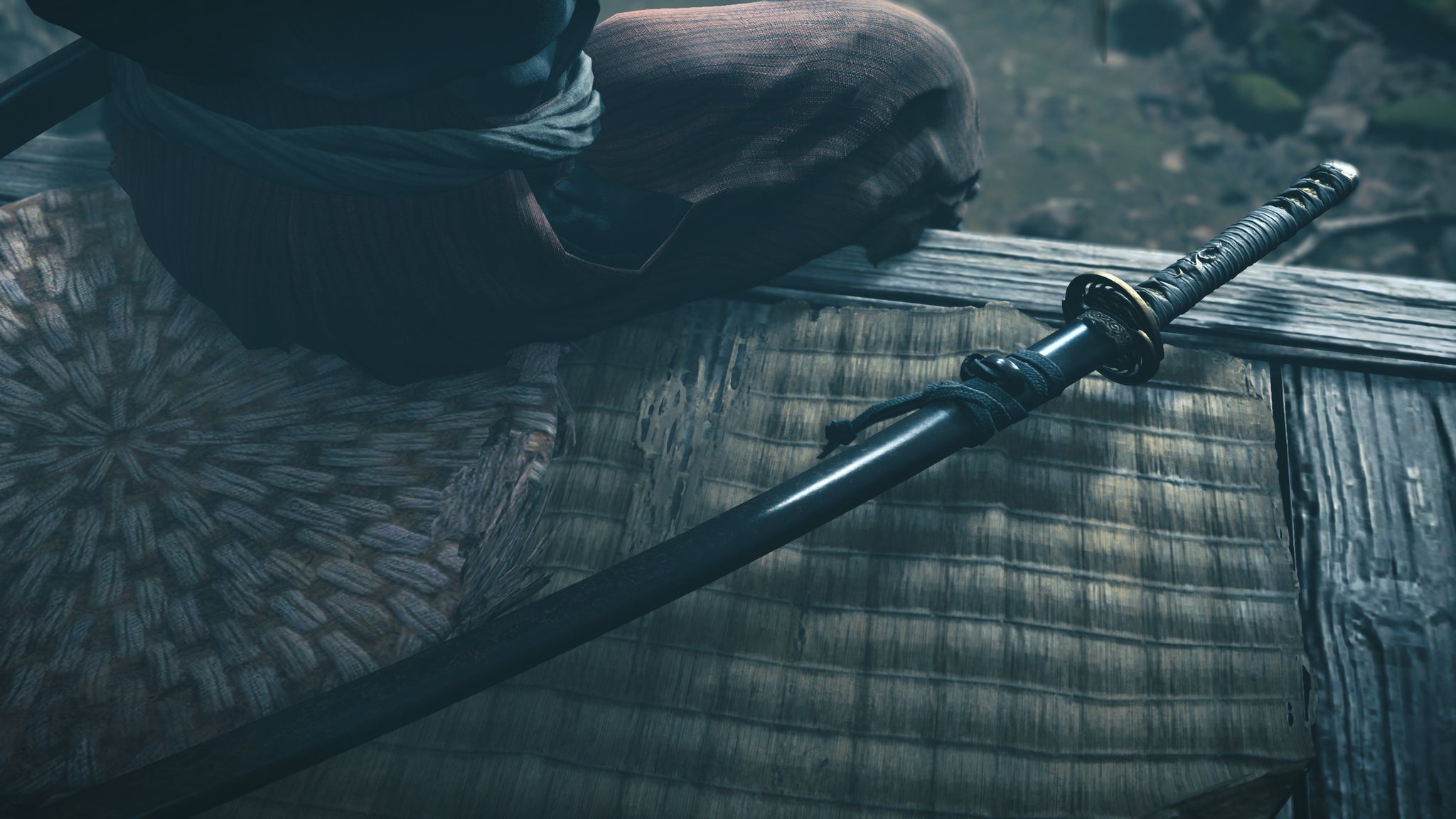
Onimusha: Way of the Blade can be bested in about 20 hours, if you’re rushing. If you want to “become acquainted with every art” and “pay attention even to trifles”, though, you’re looking at something closer to 30. For me, that’s the sweet spot: with a combat system that requires you to be this switched on and focused, and with fights that need to be flashy and somewhat brief in order to not outstay their welcome, this is the perfect sort of length. Onimusha’s value comes not from the breadth of its content, but in the artistry of its two best bits: the fighting, and the boss design. It forces you to “do nothing which is of no use”, and if you don’t learn from your mistakes, you will die.
Though some of the connective tissue that binds Onimusha: Way of the Sword together is a bit weak, though some of the pacing and padding is a bit thin, Capcom has once again shown us it is a master of its craft here. The developer dares to say ‘no’ to the ubiquitous Soulslike design and opt for something more unique, and more fitting for its central character, instead. By insisting you play honestly, learn how to wholly embody Musashi and his philosophies, Capcom forces a level of role-playing that merges narrative and mechanical storytelling. The result? There is no game out there that makes you feel more like a swordsman of legend than Onimusha: Way of the Blade.
A copy of Onimusha: Way of the Blade was provided for this review by Capcom.


