
Some may find this hard to believe, given the absolute state of the market today, but if you were building a gaming PC in 1998, the hard part wasn’t finding somewhere that had 3D cards in stock for a reasonable price. It was choosing the right one among a glut of potential, reasonably affordable options.
In 1998, 47 companies were designing or selling PC graphics, driving a market that hit 130 million units and outsold PCs themselves. Just two years later, at the turn of the new millennium, only 15 remained, and not long after that, there were merely two: Nvidia and ATI, nowadays part of AMD.
But the Nvidia of the late 1990s and early 2000s was a far cry from the vast (if tarnished) juggernaut it is today, and at the time it wasn’t even the obvious survivor. Research firm 4th Wave put ATI top for 1998 with 24.5 million 3D chips sold, followed by S3 with 15.2 million and Intel, in its first year in the market, with 6.5 million. Nvidia came fourth on 6.4 million. 3dfx, the company whose Voodoo cards had made 3D gaming on PC a thing in the first place, sold 5.2 million.
Each of those companies went under or sold up for one reason or another, but what’s striking is how most did so within a few years of one another. In the four years between 1998 and 2002, the graphics business essentially stopped rewarding whoever had the fastest chip, instead favouring the companies that could iterate the fastest. A new chip every six months or so for the same APIs everyone used, backed by enough capital to ride out the dot-com crash. Nvidia was built for that; almost nobody else was.
The first companies to go didn’t need any help from Nvidia, though. 3D acceleration had made the humble graphics chip a much bigger and more expensive thing to design, and plenty of incumbents that had found their footing on 2D couldn’t afford to keep going. Tseng Labs stopped developing graphics chips at the end of 1997 with roughly $28 million still in the bank, selling its graphics engineers to ATI for about $3 million. Rendition, maker of the Vérité V1000 3D accelerator, agreed to sell itself to memory maker Micron in June 1998, and ATI bought Chromatic Research for $67 million that October.
In its prospectus for its January 1999 IPO, Nvidia warned that PC makers brought out new systems as often as twice a year, on a spring and fall schedule, and that missing one was a serious risk. The company subsequently reorganised itself around that schedule, releasing the GeForce 256 in October 1999 and the GeForce 3 in February 2001. By 2002, Nvidia’s annual report disclosed that separate design teams were working on several generations of chips at once.
By this point, though, the writing had been on the wall for quite some time. S3, then the world’s second-largest graphics chip maker, wrote in its annual report for 1999 that a graphics chip stayed on sale for 12 to 18 months, and that a delay “as short as a few months” could cost it a design win with a PC maker. Any company that was rolling out just one major chip per year was launching against a rival’s refresh at best. At worst, it was launching late against next-gen chips.
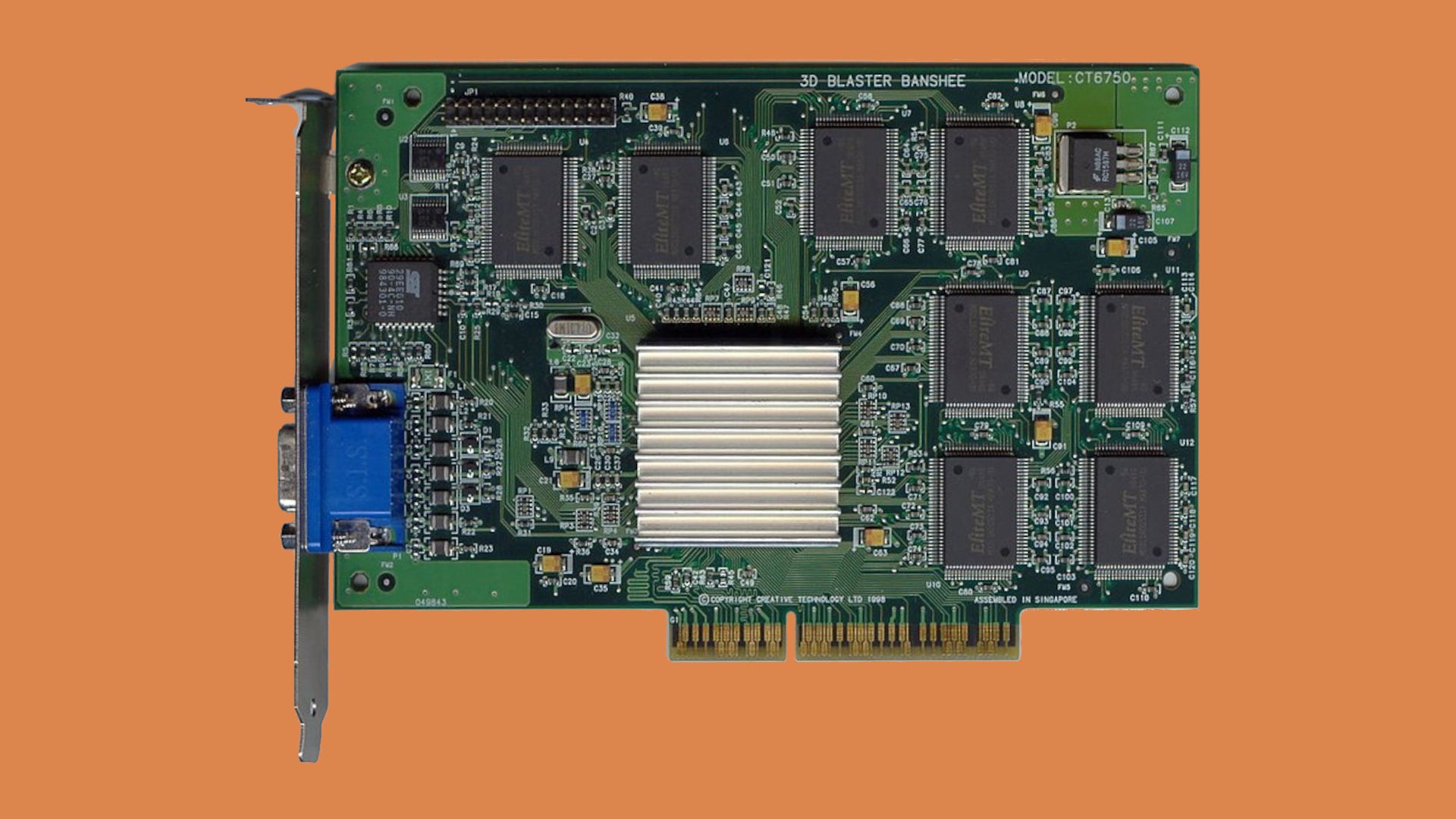
That’s essentially what happened to 3dfx when Rampage, the chip that was meant to succeed the Voodoo5, never shipped. The company lost its other big advantage around the same time with Glide, its own programming interface that only ran on Voodoo cards. Glide flourished while Direct3D, Microsoft’s rival interface built into Windows, was still lacking features, meaning that plenty of games ran best on 3dfx hardware, but that lead was quickly eroded once Direct3D and rivals’ OpenGL drivers caught up; developers could now write a game once and run it on anyone’s card. By 1999, Creative was selling Nvidia-based Riva TNT cards with drivers that let Glide games run on them. 3dfx sued, then open-sourced Glide altogether that December.
By then, though, 3dfx had already made its most damaging mistake. A year earlier, on December 14, 1998, it agreed to buy graphics card maker STB Systems for about $141 million in stock, and CEO Greg Ballard said the Voodoo3 would only be sold on 3dfx’s cards. That revelation left Diamond and Creative in a tough spot, having built their gaming lines on Voodoo chips. They were now stuck high and dry without access to the new one.
3dfx was solely concerned with its margins here. The price of its single-chip Voodoo Banshee card dropped from $150 to $89 within a month of launch. With prices in freefall, selling the finished Voodoo Banshee meant that 3dfx pocketed the margin that’d otherwise go to a partner like Diamond or Creative. Those boardmakers inevitably walked, and went where the chips were. STB had been selling Nvidia cards right up to the deal, and its last annual report includes a $3 million note it held from “Nvidia Corporation, a supplier.” Creative already had Riva TNT cards on shelves, and Nvidia, which then didn’t make its own cards, would sell its chips to anyone.

Intel, meanwhile, was causing problems from the other end of the market. Its i740 “Auburn” graphics chip launched in early 1998, and Microprocessor Report, the newsletter for the industry’s engineers, argued that Intel’s arrival encouraged Cirrus Logic, Oak and others to fold that year. Just over a year later, after lacklustre sales, Intel confirmed that it was ending support for the i740, then pulled out of standalone desktop graphics chips altogether to put graphics into its motherboard chipsets instead, starting with the i810. This was extremely problematic for companies like S3, Trident, and SiS. They survived on cheap chips for big PC makers, and by the second half of 2001, estimates say Intel’s integrated graphics business had risen to control 55% of the market. That, in turn, pushed S3 to sell its graphics business to a VIA joint venture for $323 million.
Then the money ran out. Venture funding for graphics startups had already dried up in 1999 as the dot-com bubble deflated, and exits inevitably followed. 3dfx lost $100.5 million in the second quarter of 2000, with its CEO blaming a late Voodoo5, and on December 15 that year it sold its assets to Nvidia for $70 million in cash (and a million Nvidia shares) after failing to secure credit. STMicroelectronics, which made the PowerVR-based Kyro II, quit PC graphics in early 2002.

ATI, however, survived alongside Nvidia because it was already operating in the way the new market wanted it to. It was the biggest seller at the time, and it made its own graphics cards, which Microprocessor Report said brought in most of its revenue and margin. So, making its own cards wasn’t 3dfx’s mistake; it was locking out boardmakers who had been selling Voodoo cards for it. That pushed those boardmakers towards Nvidia, and a late Voodoo5 and cash crunch dealt the death blow. ATI also used its stock to buy the engineers that its rivals were shedding: Tseng’s, Chromatic’s, then, in February 2000, ArtX’s for $400 million, a team that’d just designed the Flipper graphics chip for Nintendo’s GameCube.
For the next two decades, the the graphics industry was dominated by ATI – which eventually folded into AMD in 2006 – and Nvidia. For a while, it was a real fight. AMD paid $5.4 billion for ATI, and in the second quarter of 2010, Radeon cards briefly overtook Nvidia in discrete graphics shipments. However, AMD had a problem: it couldn’t really afford ATI. It wrote off $1.6 billion of goodwill from the deal about a year after it closed, and its PC chip business kept struggling.
By early 2015, AMD’s CPU and GPU revenue was down 38% on the year, and the company was close to negative book value. Its quarterly R&D budget had fallen to its lowest level since 2004, with Nvidia spending nearly half as much again. Radeon cards stayed on the same Graphics Core Next architecture for about seven years before RDNA arrived in 2019. By then, Nvidia had already launched its RTX cards with dedicated ray tracing hardware and Tensor cores for AI, and it never gave that lead back.

Intel was the only company with pockets deep enough to try breaking back in. Its first go, Larrabee, was cancelled as a consumer graphics chip in December 2009. It finally got there in 2022, when the Arc A770 went on sale from $329, alongside the cheaper A750. Both arrived after repeated delays and struggled with older DirectX 9 games, and many observers – RPS included – put their chances of breaking up the Nvidia-AMD duopoly at low. By the time then-hardware editor James returned to the A750 in 2023, Intel had drastically improved its drivers, bringing big gains to both general performance and DX9 compatibility. Even then, the Arc series had yet to prove it could work well at launch, without the need to be ironed out across months of updates.
The second generation did indeed fare better, with the Arc B580 successfully selling out at $249 in December 2024. But that still barely impacted the wider industry, with Intel sitting at just 1% of graphics card shipments in the third quarter of 2025 and around 2% this spring, when Nvidia took roughly 90% of the 12.5 million cards shipped.
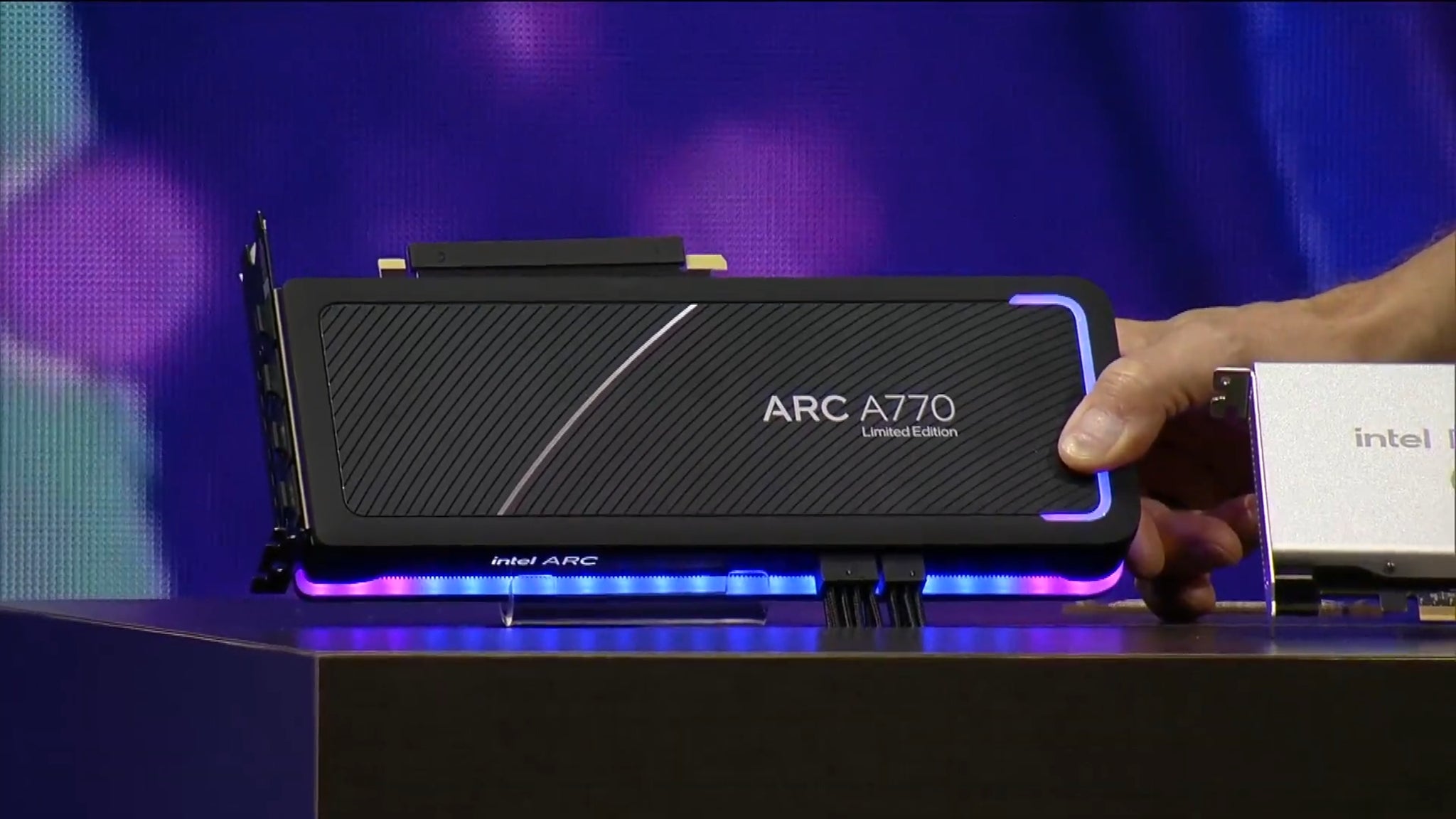
It now looks like Intel is on its way back out of gaming graphics cards. In April, leaker Jaykihn claimed that its next-generation Celestial gaming cards had been cancelled “long ago,” and the latest rumours say B580 supply could be cut so Intel can sell more Arc Pro cards for, surprise surprise, AI work. It’s important to note that Intel hasn’t confirmed any of that, and one of its execs has said that Arc isn’t leaving its PC roadmap. Still, Intel had everything 3dfx didn’t: the cash, the PC makers on side, and the same APIs as everyone else. But money can’t buy two decades of Nvidia and AMD fixing their drivers game by game, and it seems to have decided its capital is better spent on AI anyway.
Evidently, the question of where all the other GPU makers went does not have one single answer. Some couldn’t afford the rising costs, some couldn’t keep pace with a new Nvidia chip every six months, and some lost their cheap business to Intel’s integrated graphics or went under when the dot-com bubble burst. Left over was a Nvidia/ATI (later AMD) duopoly, and PC gamers haven’t exactly done well out of it. We saw the RTX 4080 launch at $1,199 in 2022, nearly twice the 3080’s price, and the ongoing, AI-driven RAM shortage has pushed prices higher still.
In 1998, 47 companies wanted your money. Now there are two, and the bigger one, Nvidia, sells nine of every 10 graphics cards – yet still makes most of its money from data centres. Eighteen years on, it’s a bad time to be a PC gamer, and nobody’s in a hurry to make things any better.


