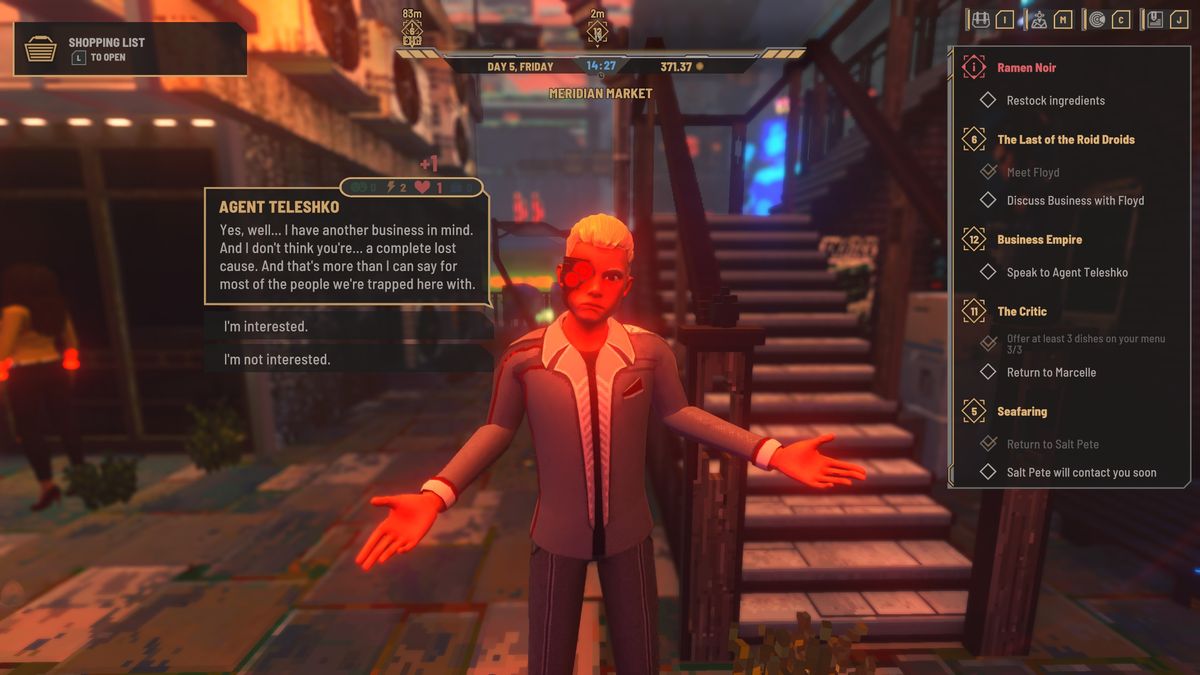
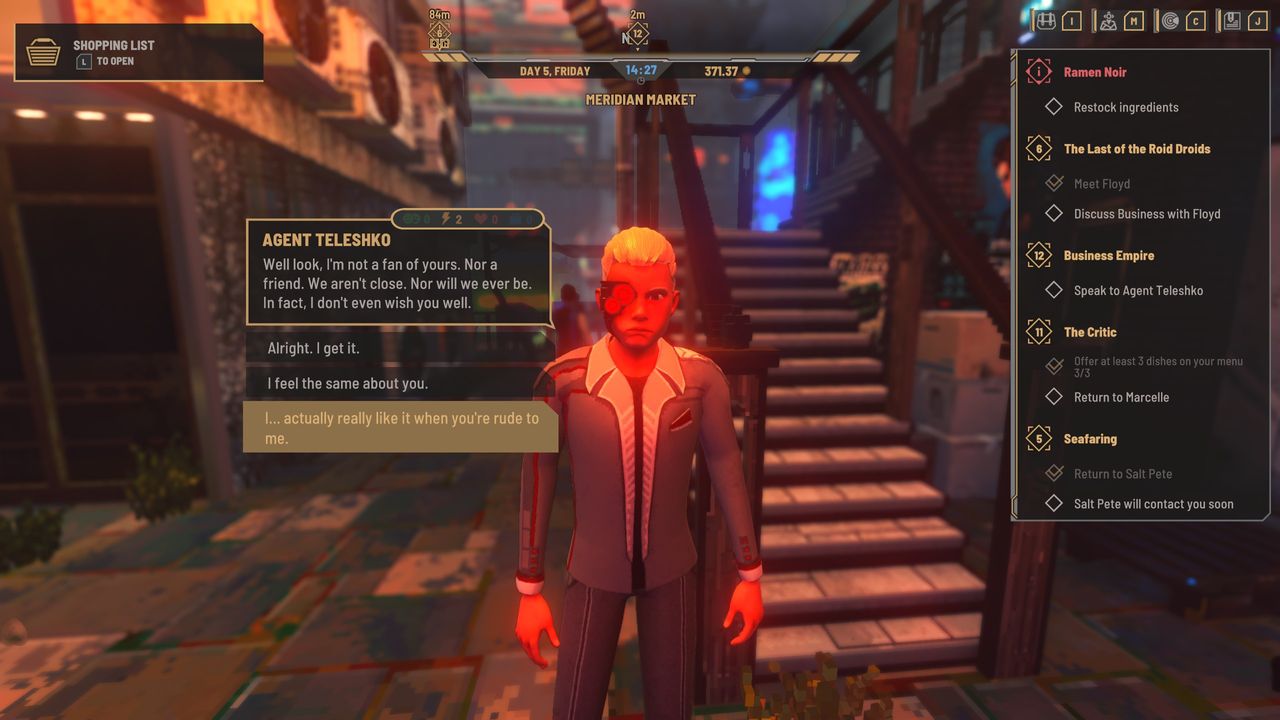
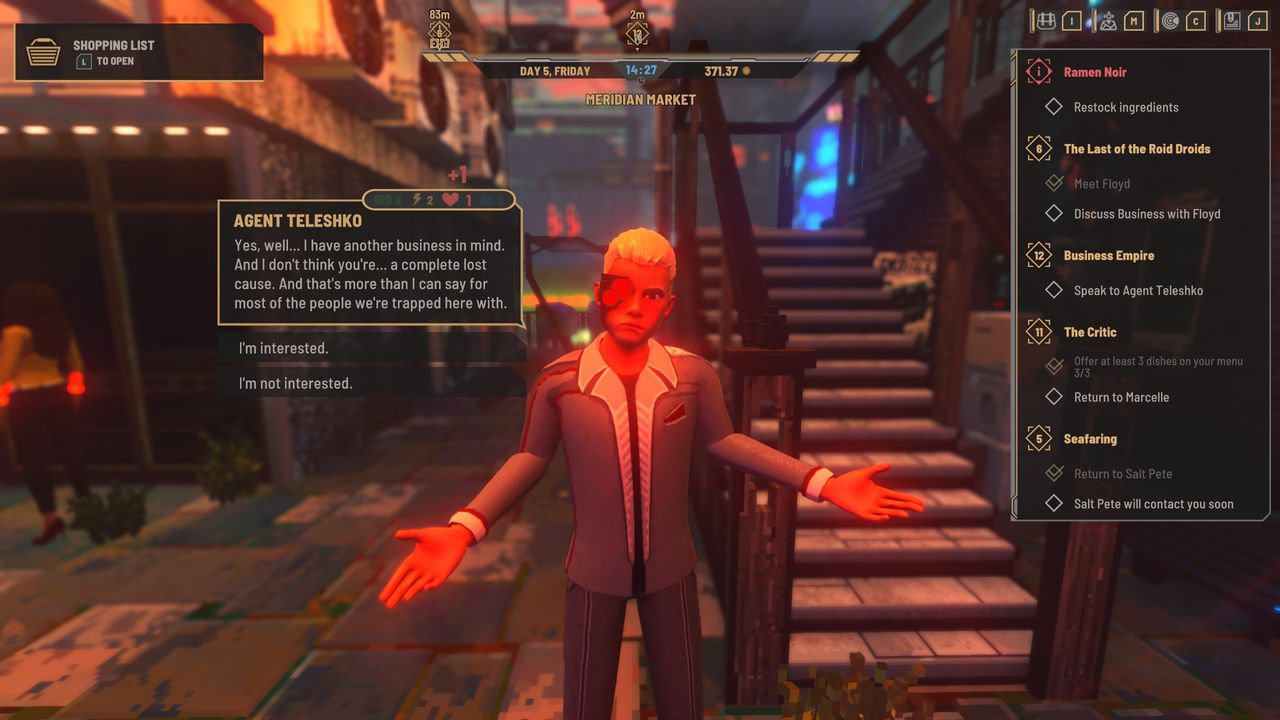
Nivalis Nights is mostly a story-heavy shop simulation but it does also have a sprinkle of relationship building. Conversations with characters can affect four different attitudes towards you: friendly, combative, romantic, and savvy. Dialogue options aren’t clearly marked though, so you don’t always know if you’re about to piss someone off or say something they’ll perceive as flirtatious.
Some characters you can tell you’re obviously heading towards a relationship with but others are less clear about whether you took a wrong turn or love just isn’t on the table. It’s a very opaque system compared with other RPGs or life sims that have big red heart icons and dialogue flags making sure you never have to guess. I asked lead writer Thomas Welsh to weigh in:
Did you ever test a more obvious romance system or was it a very intentional choice to make it an opaque experience?
Thomas Welsh
We went back and forth on romance. We knew we wanted it to be messy. We also knew we wanted the player to have a “what did I say wrong?” experience. When they miss out on romance, they never quite know why it didn’t line up, just like in real life. We also wanted to avoid “I was nice to you three times in a row, so can I have one sex please?”
When we miss out on love, we should be left questioning why, and maybe reflecting – ideally, asking ourselves some difficult questions. Maybe that’s ambitious for a game about stolen donut recipes and robot pirate sailors, but we took a swing!
But honestly, I’m into these mixed signals

Lauren Morton
As I got into in my Nivalis Nights review, there’s barely any romance here. And yet I really appreciate how it just refuses to conform to the way other RPGs and life sims approach dating.
As Welsh points out, romance can be extremely formulaic in games. A life sim must have equal numbers of date scenes for each eligible character. An RPG must have dialogue lines marked with big red icons so you don’t accidentally do a flirtation by accident. View the scenes, pick the choices, consume the “romance content,” and eventually you win a relationship for your Steam achievements shelf.
I don’t hate those systems—Dragon Age: Origins was formative for me and I recently really enjoyed Fields of Mistria’s by-the-book romances—but they are transparent. When I give you ten iron ores and you give me one heartfelt confession scene, that’s amore!
In Nivalis, dialogue isn’t tone marked at all. You’ve just gotta infer whether something is snappy or saucy. There’s one character who it seemed like I just couldn’t stop flirting with. Even seemingly neutral responses earned me a heart point until suddenly I’d sort of led him on into a relationship. Sometimes you can’t control how people read you and I think he’s just a ‘falls fast’ kind of guy.
Another character I developed a much longer friendship with across some pretty deep, earnest conversations, but never once earned any hearts with her. Maybe I avoided some obvious flirtation opportunities early on and forgot? Maybe, but a conversation we had about friendships and attraction at work suggests that she may just not be looking for romance and finding an intimate friendship has been more meaningful to her. I guess those are the reflections and questions Welsh is talking about.
I can’t tell you with certainty that I know exactly how romance works in Nivalis Nights. I don’t know for sure who I can or cannot go on a date with and who I’m just flirting with occasionally for no payoff. All I’ve got is my experience playing through it once, different from everyone else who’s played, and that’s all there is. I wouldn’t want every game with romance to be this way, but I’m glad Nivalis Nights turned the HUD off on love.
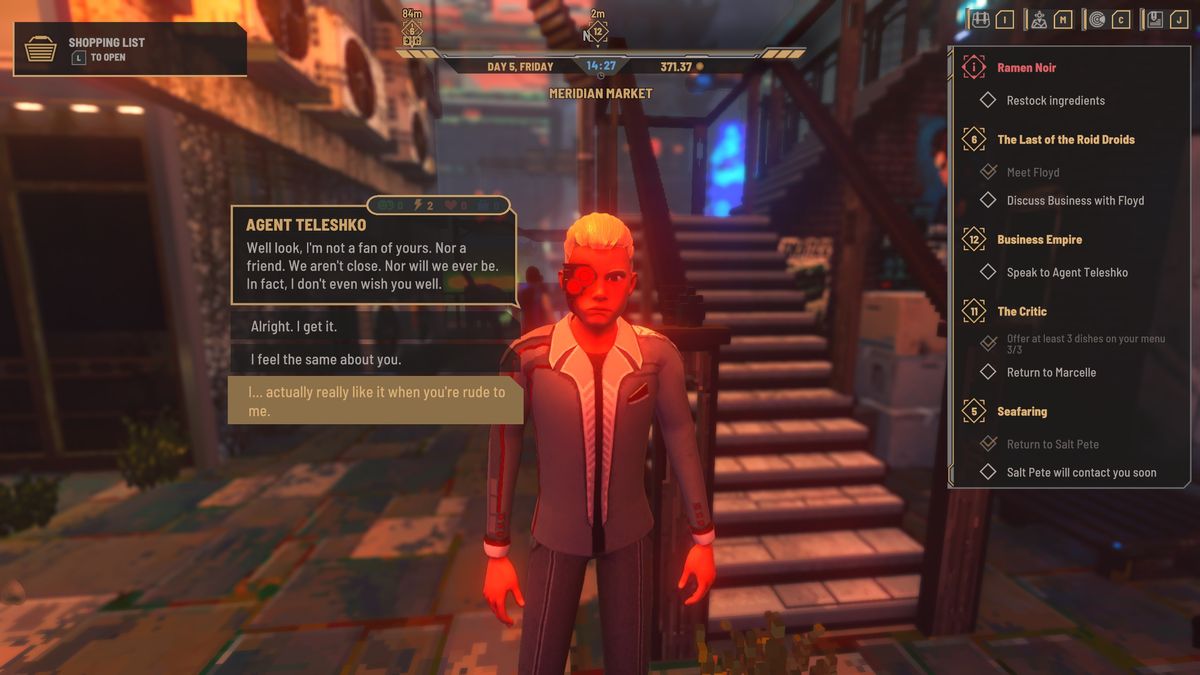
(Image credit: Ion Lands)