
Just imagine you’re Meta. You’ve spent millions of dollars on new servers that only use DDR5 sticks, only to find that you still don’t have enough memory. The solution? Yoink the DDR4 modules out of the old servers and, through the power of a custom chip, splice the two systems together to go ham with RAM.
Even if you only have a little bit of knowledge about how CPUs and memory work together, you’ll probably know that this shouldn’t be possible. But as TechSpot reports, it can be done: you just need something to translate the DDR5-talk from the CPU to DDR4-lingo that the old memory sticks can understand.
Bridging the gap between the AMD Zen 5-powered Epyc processors and the last-gen memory tech is something called a Compute Express Link (CXL), with Meta’s custom chip named Vistara. This manages the bundle of DDR4 sticks as a separate pool of memory, albeit one that’s much slower than the main pool of DDR5.

You can read more about the specifics of how it all works in Meta’s research paper (PDF warning) for Vistara and its so-called MemServers, but you can just think of it as being like a PCIe expansion card that hosts a big pile of DRAM. Because of the various latencies and lower bandwidth of DDR4, the software that operates Vistara keeps track of threads and data, using the older DRAM for ‘cold storage’.
That’s basically information that you want to keep nearby, rather than on an even slower SSD or HDD, as it might be needed at short notice. Data that’s currently in use or might be required immediately is kept in ‘hot storage’, i.e. the Epyc processor’s DDR5 memory.
Image 1 of 2
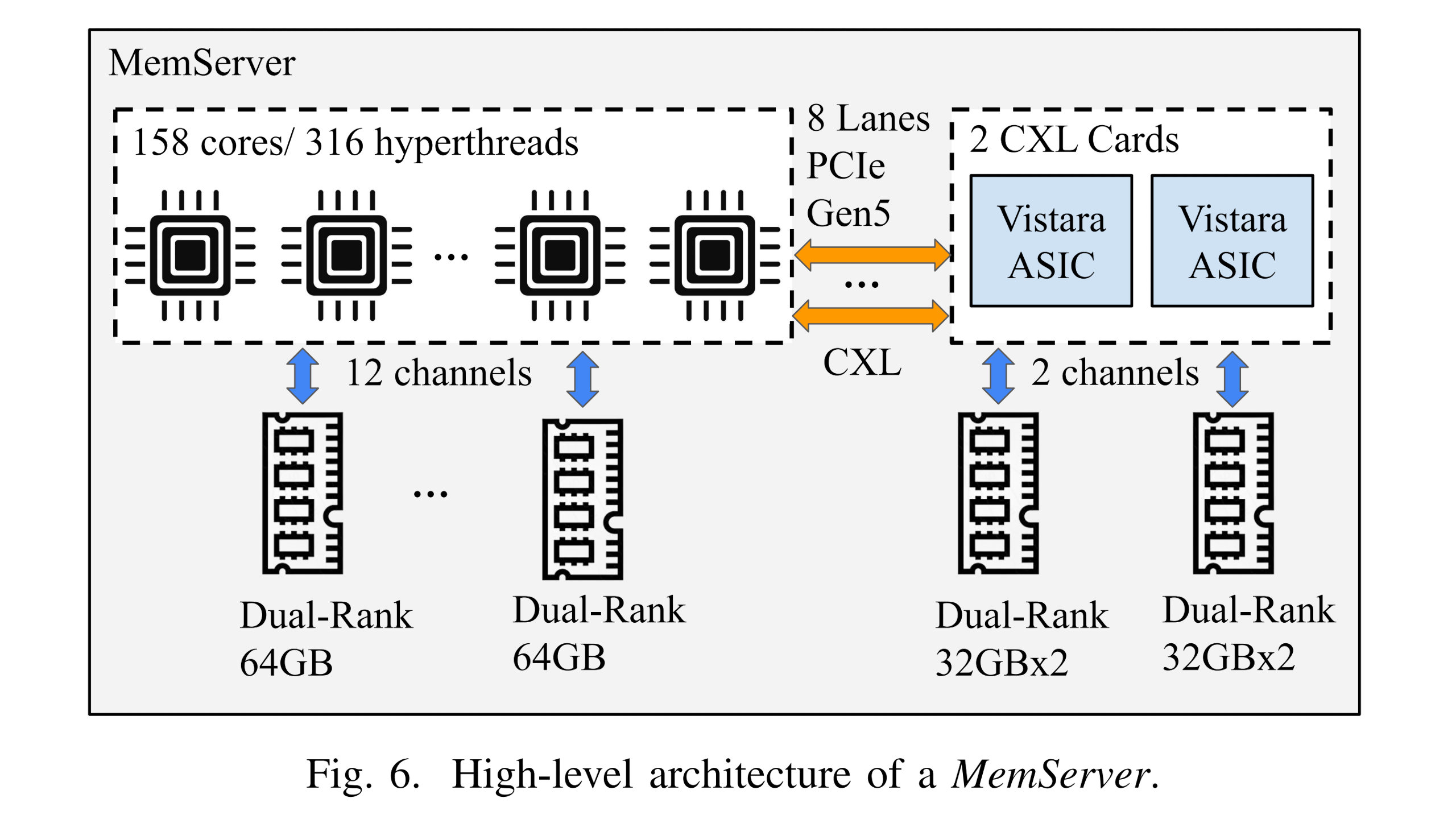
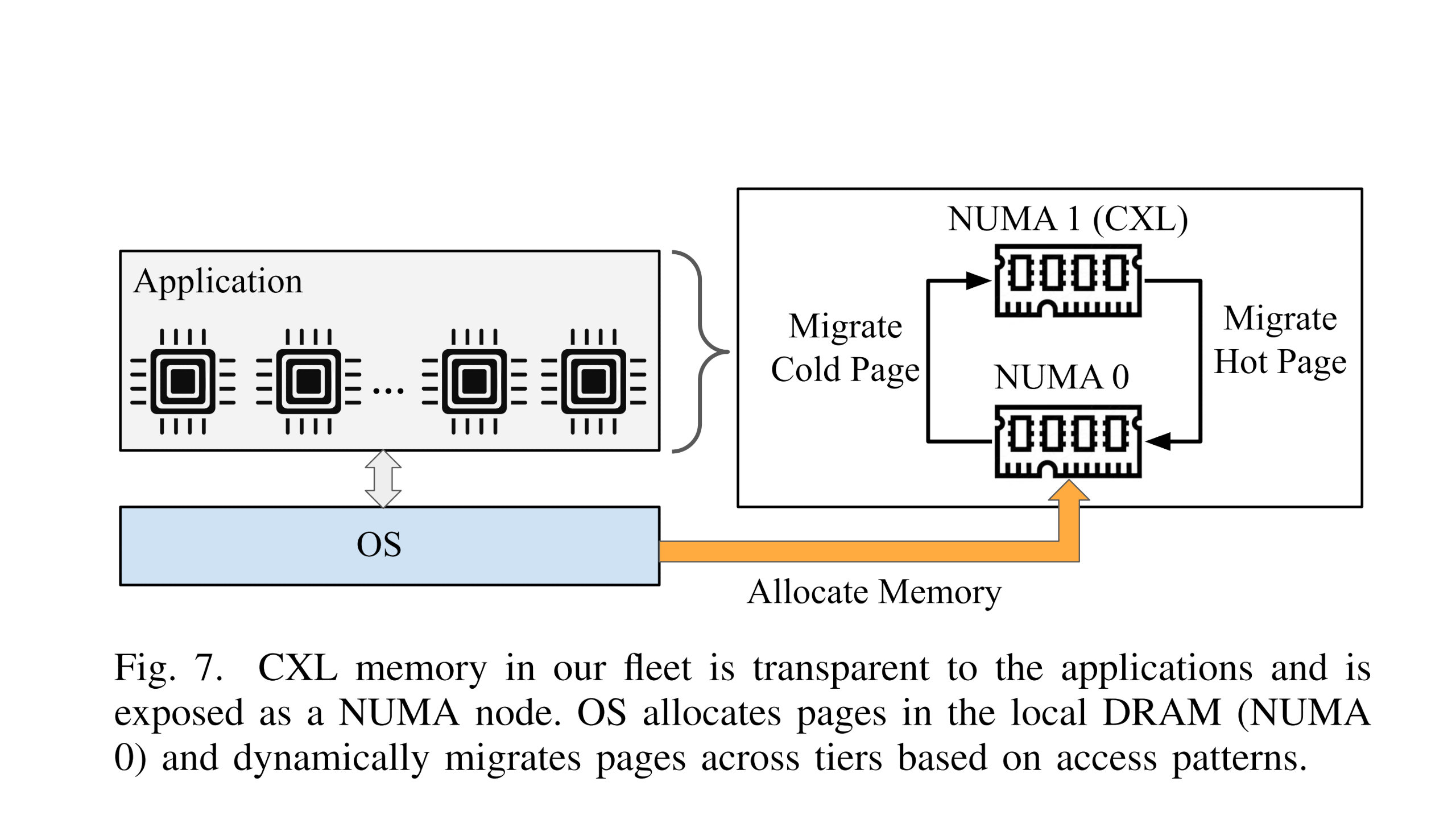
The paper says that each MemServer node houses a 158-core AMD Epyc 9000-series chip, and it’s either a custom processor (because no Epyc CPU has exactly 158 cores) or it has one or more core chiplets disabled for some reason. Anyway, the motherboard housing the processor sports 768 GB of DDR5-6400, which you’d think would be enough.
Not for Meta it isn’t, hence the inclusion of 256 GB of DDR4-2400, handled by two Vistara expansion cards in PCIe 5.0 x8 slots. Together, that’s a grand total of 1,024 GB or 1 TB of system memory. In other words, one MemServer should be just about okay to run Star Citizen.
Could you do the same in a gaming PC? Well, MSI’s MEG X870E Godlike X Edition motherboard has two Gen5 PCIe slots connected to the CPU, so if Meta created Windows-based drivers for Vistara, you could technically jam an expansion card in there and load it up with cheaper DDR4. However, CXL isn’t designed for general consumer PCs, and there isn’t a desktop CPU that supports it.
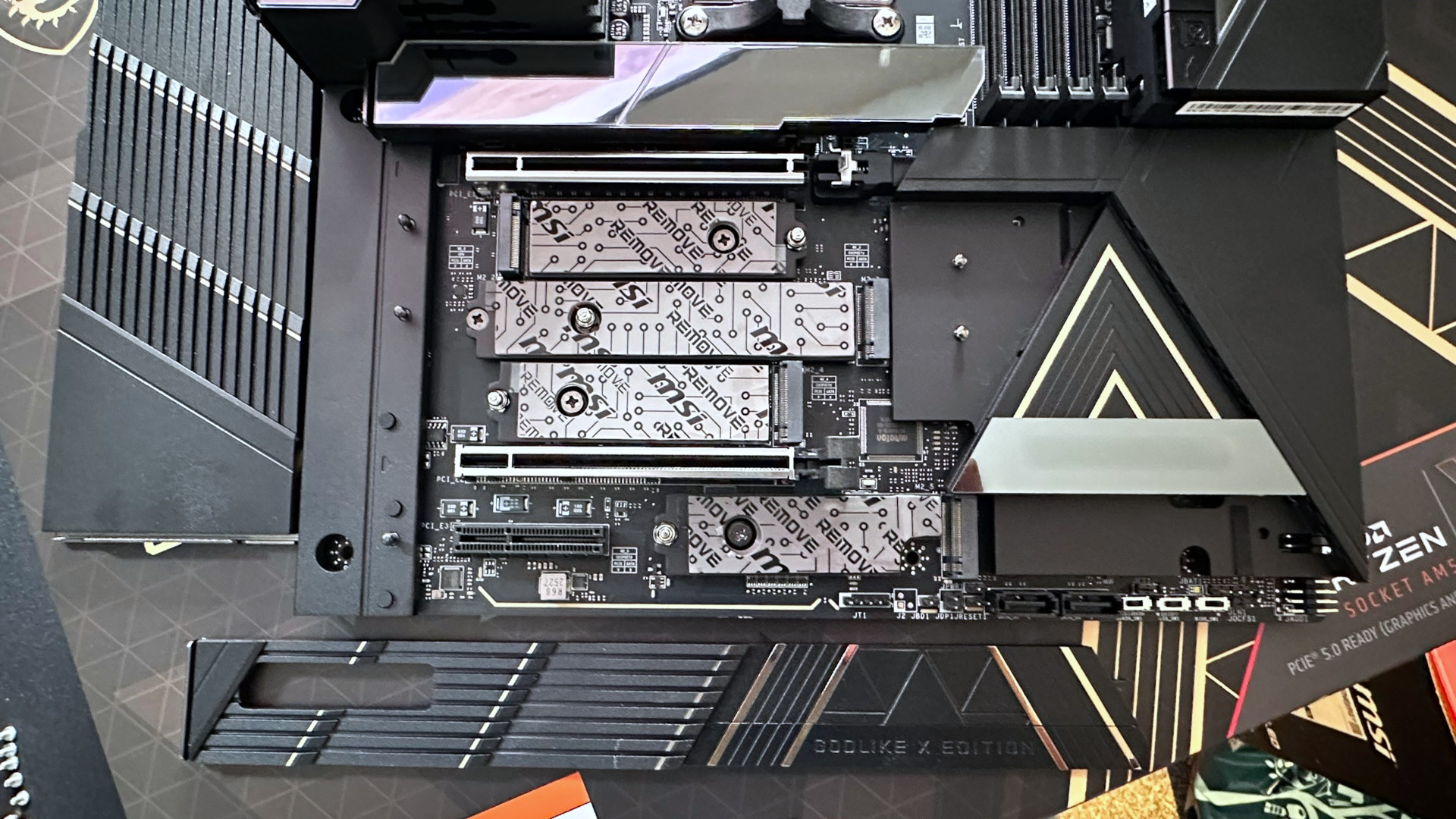
But if memory prices remain sky-high for years to come, perhaps never returning to pre-2026 levels, then this could be one way to offset the enormous bill of having a decent amount of DRAM in your gaming PC. Of course, the cost of the Vistara card, a necessary motherboard, and a CXL-capable CPU would probably make it all pointless anyway.
Should DRAM prices actually fall back into the realms of common sense, and you go on the hunt for a big memory kit, just point to any tech news article from this year if anyone says “Hey, you know games don’t need 96 GB of memory”.
Best PC gaming kit 2026


