
It’s tricky to appraise the Remastered edition of The Witcher 3: Wild Hunt because on the one hand, everything about it is extraordinary. It’s a free upgrade to an 11-year-old game that showcases a level of support and generosity I don’t think I’ve seen for any other single-player game, ever. It’s remarkable that The Witcher 3 should be visually overhauled and even systemically altered so long after its release, without a cost to the player attached.
However, it does also feel a bit purposeless without a Songs of the Past expansion to play with it – assuming you weren’t already considering a replay of the game, or going back to finish the main campaign (which you need to have finished for Songs of the Past), or playing the expansions. All good reasons to go back. What I’m saying is that alone, if you’ve already played it before, the Remastered edition won’t necessarily keep you entertained for longer than a few hours while you tour the game to see what’s new.
To put it more bluntly, the Remastered edition doesn’t fundamentally change The Witcher 3. If you were somehow hoping this remaster overhauls the game’s combat, for example, I’m sorry to tell you that it doesn’t. Indeed, it can be quite challenging to work out what is actually new when you’re playing it. Most of the time, it’s The Witcher 3 game we all remember, however long the list of changes is – though perhaps it’s more accurate to say it’s The Witcher 3 that lives in our memory.
Watch on YouTube
You see, before playing the Remastered edition, I loaded the current version of The Witcher 3 to refresh my memory, and even though CD Projekt Red has gone to lengths to update the game over the years, and add new things like ray tracing to it, there’s no shaking the feeling it now looks old. Under the cold scrutiny of 2026, the textures are aging, the world is pretty but a bit cardboard-cut-outy, especially the foliage, and the lighting a bit simplistic. No amount of graphical flourishes can change this – it’s what’s underneath the flourishes that needs to change. And this is what the Remastered edition has done.
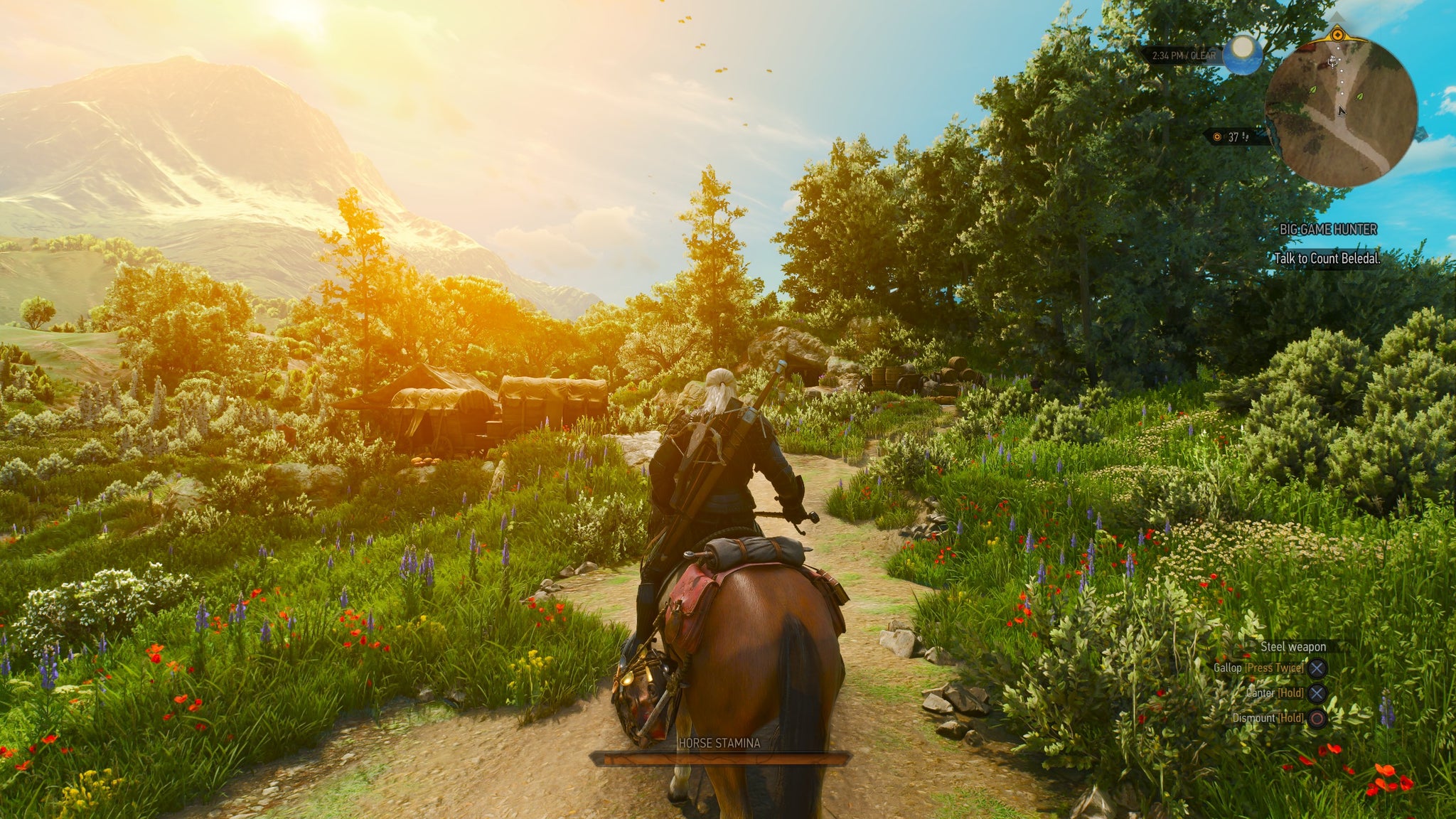
Load it and, immediately, there’s more detail up close. There’s more detail on Geralt’s scarred body as he bathes in the wooden tub at the beginning of the game, and on the clothes he wears. There’s more detail on the mountain as he walks to the balcony to take a look. There’s more detail on his mentor Vesemir’s face when he talks to him. All of a sudden, The Witcher 3 bears close scrutiny again. And it’s the same all over: environments are sharper and more detailed; wilderness areas are fuller, bushier, and more vibrant. The faces of people you speak to are all improved: no one looks like they were made 10 years ago, in other words. They all look as though they belong in a game now.
Some snaps from the beginning of the game.
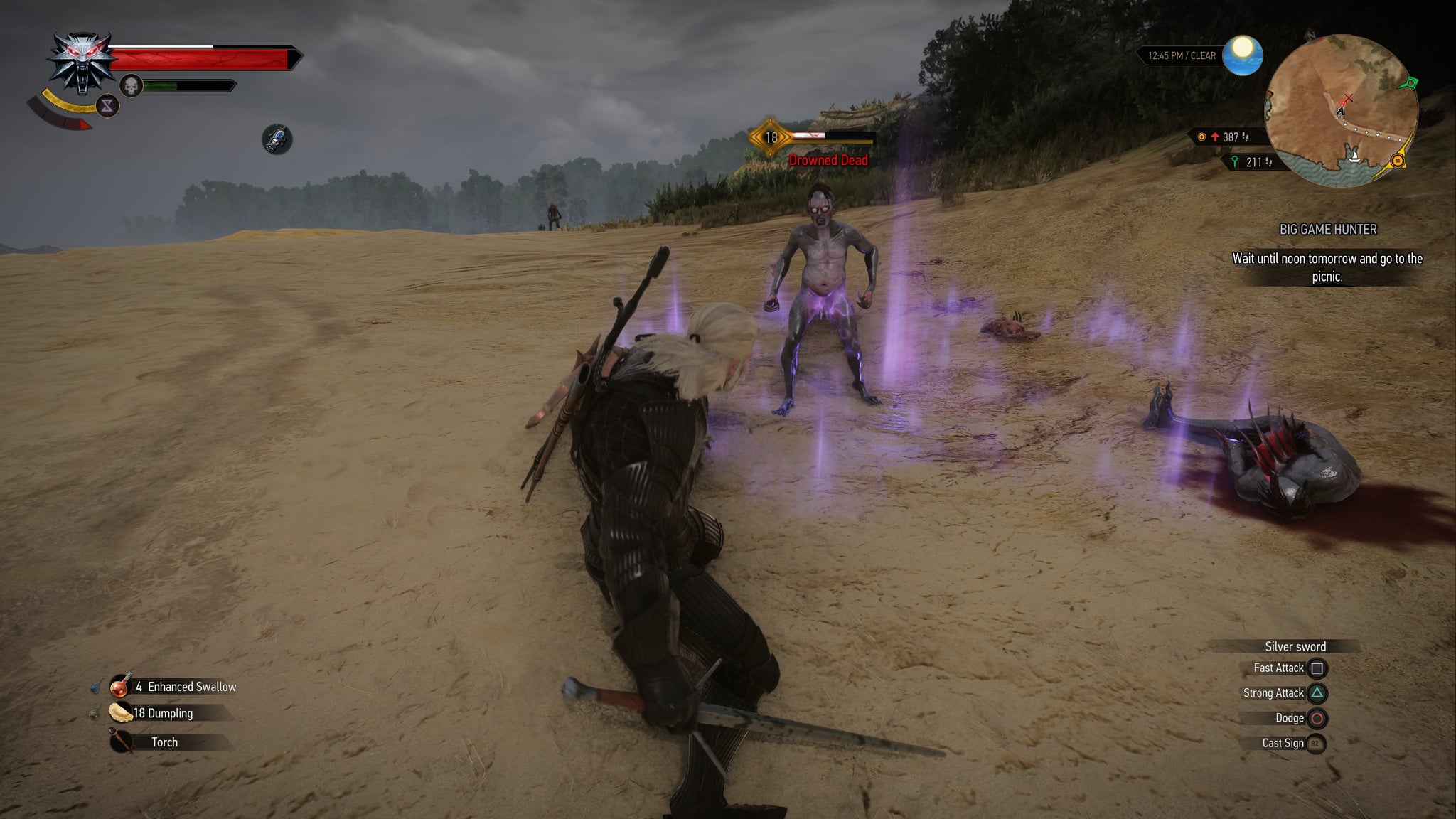
Enemies have had visual glow-ups as well. Drowners look more like creatures from the lagoon now, with light-reflecting, iridescent skin. Forktail dragons boast shades of metallic green skin and membranous wings, which flap, chicken-like from their backs. Barghest hellhound dogs have flaming green eyes and leave shadowy trails as they jump. A vampire enemy – who looked exactly like that lady from the A Night to Remember Witcher cinematic – and who kicked my arse a few times, had greying, rotting skin, and disappeared in and out of shimmering thin air. All over the world, there’s thrill in simply encountering an old enemy to see what’s changed.
Newer lighting techniques frame the world even more picturesquely, even more of the time. The Witcher 3 always excelled visually at dawn and dusk, throwing the game in peachy golden hues, or cutting it through with pale shafts of light, but now those spectacular lightshows reflect on watery surfaces, and forests have more depth because of the shadows cast from them. Similarly, packs of torch-bearing citizens light cities in different ways, while sconces blare moodily in archways, or the moon highlights mist hovering on the harbour. And of course ray tracing and path tracing take this further (should your computer be capable of them, if playing on PC), helping boggy swamps and water-filled areas of the game look more real.
Sidenote: this does come at the cost of performance. My middling computer spluttered hard when I had ray tracing mode turned on in Novigrad, whereas it otherwise handled it okay in the wider world (I haven’t had a chance to test it on a base PS5 console yet; apparently PS5 Pro now runs ray tracing at 60 FPS). Still, the graphical changes are such that even with ray tracing turned off, there’s a noticeable visual upgrade to the game.
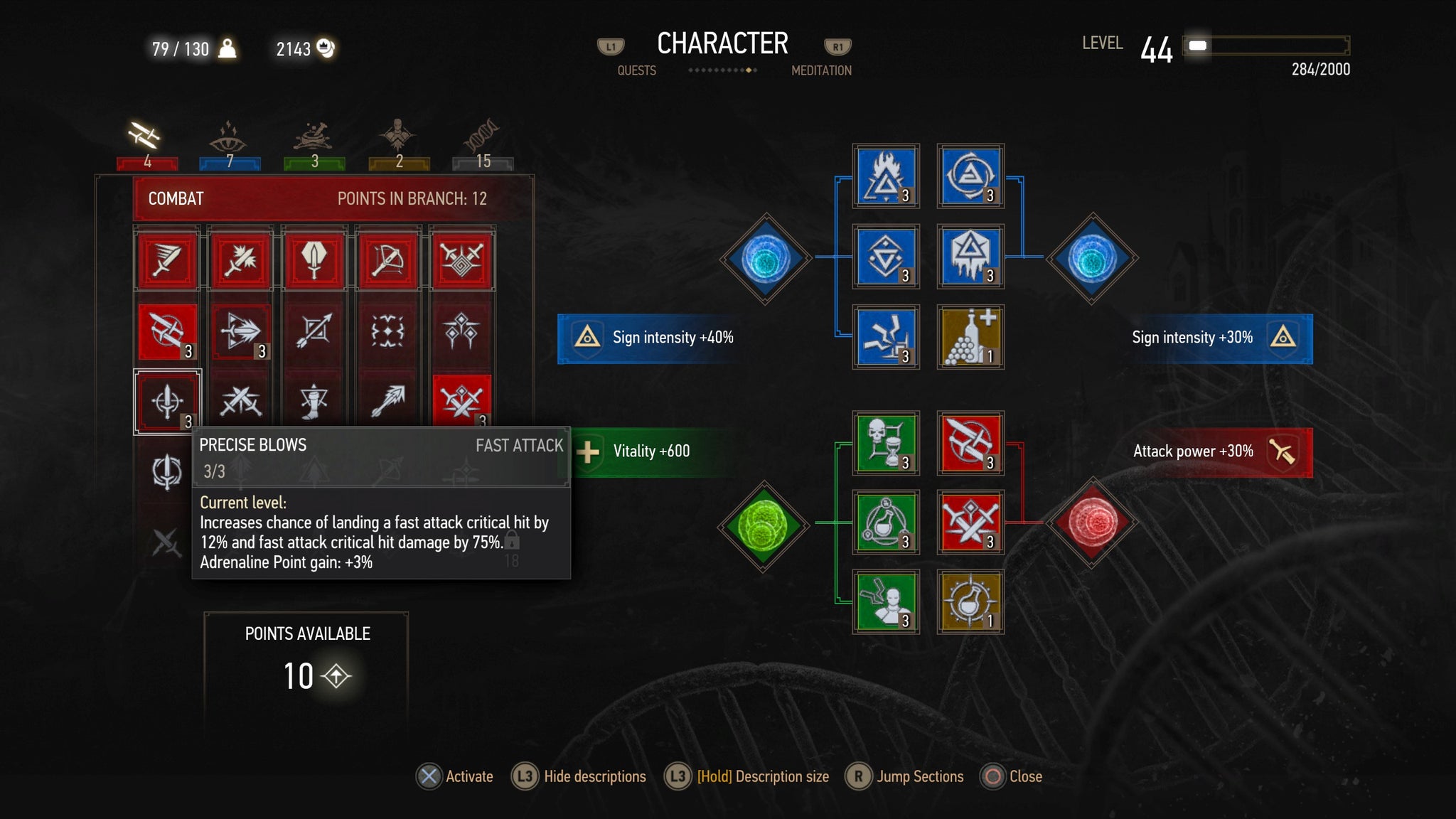
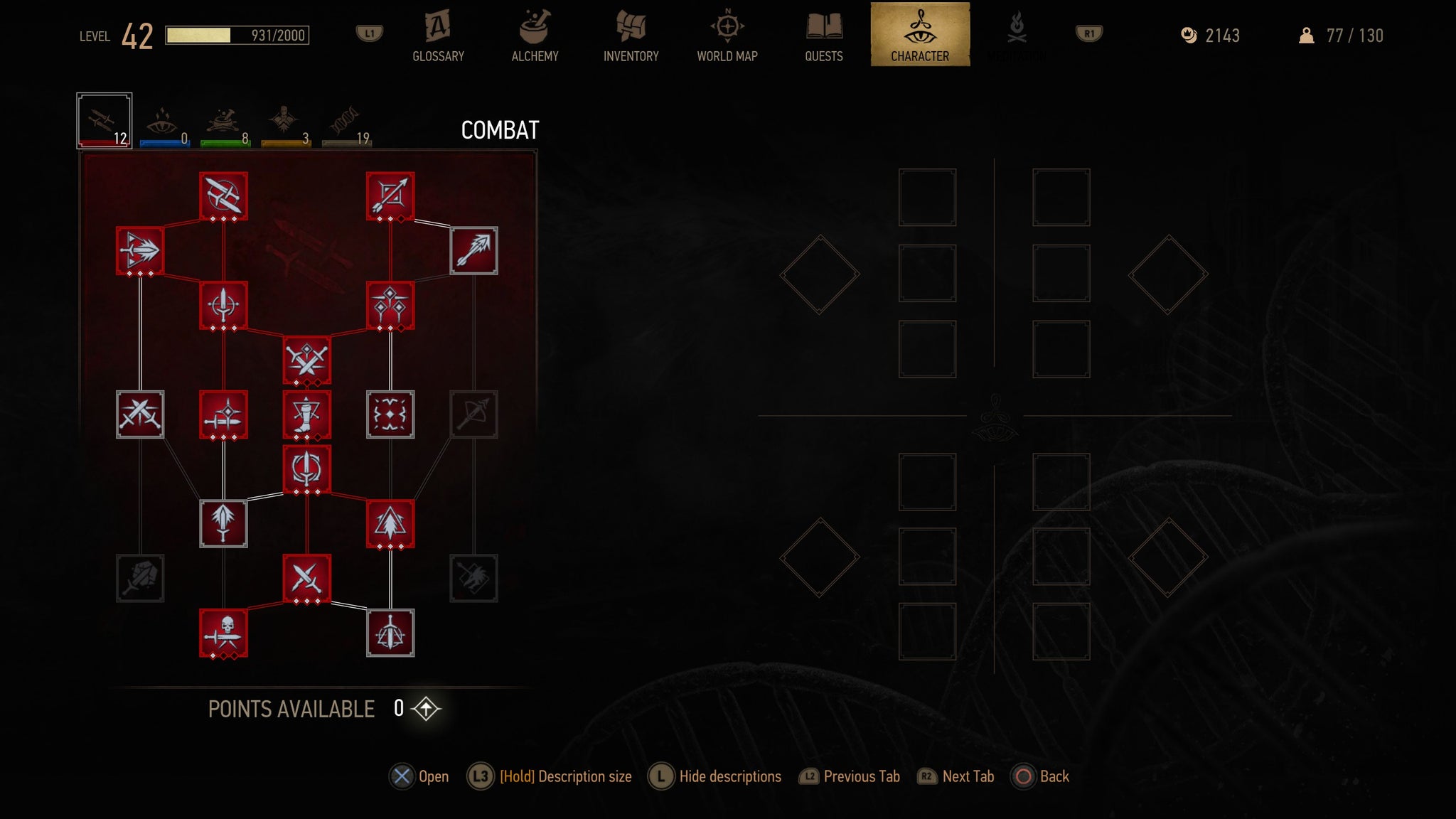
That’s nice, but I’ve always been slightly more interested in what the Remastered edition brings to the game in addition to visual improvements, especially where combat is concerned, and one of the most exciting changes here is reworked skill trees. Whereas you used to have four blocks of abilities – one related to weapons, one to potions, one to magic – you now have those categories but organised into trees, with branching routes you can plot your way around. There still seem to be the same amount of skills though, despite the new layout making it appear as though there are more, and many of the same skills return.
Some skills have changed, though. The crossbow in particular seems to have been improved – it being a little useless before, other than for knocking flying opponents out of the air – and it benefits from some very generous damage multipliers now, especially to headshots. There’s a wonderful new ability that gives you a percentage change to kill a ranged attacker if you parry their shot perfectly. There also seems to be a trend towards encouraging build overlap, so having magical or potion-related abilities increase sword damage and vice versa. More theoretical complexity, perhaps, though not a great deal of tangible change after my limited time with it. (I still find the game’s ability slotting system, whereby you can only have 12 abilities active at any one time, restrictive. Why not, many years after release, simply remove it? Let people be overpowered.)
Enemy behaviour has also been updated in this Remastered edition, though it’s sometimes hard to tell exactly how – it’s not specifically detailed anywhere. Accompanying press documentation states: “Formerly routine encounters with enemies like wolves and drowners feel much more immersive and reactive thanks to updated enemy behavior.” So I sought out some wolves and drowners to test this, but in both cases I couldn’t notice much difference. They did seem more aggressive and more predisposed to dodging – more challenging, in other words – and this is true of all the enemies I encountered in the remastered game. Though whether this is because I’m rusty and jumped into a late-game save, I don’t know. Perhaps a bit of both.
The other big combat change is animations. Geralt now pirouettes and slices his sword – and casts his spells – with more fluidity and grace than he did before, but also with zip so you’re not slowed down by them. There are more combat finisher moves as well, which usually seem to involve sliced-off limbs, and they help bring visual flair and interest to battles, as you encounter them over and over again. Combat feels refreshed and challenging, if not radically different.
Smaller changes are harder to get a handle on. The Witcher Senses system – whereby you hold a trigger for Geralt to go into detective mode – has been reworked, apparently, requiring you to more specifically focus on clues, but I didn’t notice much difference. Similarly, the photo mode has been expanded but I couldn’t really tell you how – it looks the same to me. Transmogrification is a more notably new addition to the game, whereby you can change the appearance of your weapons and armour so you don’t have to look like a higgledy-piggledy patchwork scarecrow – and this is very welcome, but it’s unlikely to make or break your overall adventure.
And so much of that is true of many nips and tucks; there are even features like cross-platform mod support, and a mod area built into the main menu, which are quietly very important additions, but obviously don’t do much unless you start interacting with the mods themselves. These are a way to help the game live on for another decade, albeit in the community’s hands.
Mostly, the Remastered edition is excellent preparation for what lies ahead, which is Songs of the Past. But it’s also a wonderful reminder of how impressive The Witcher 3 still is, and why it’s endured. This was already apparent in the game as it was. The world still burped and farted and smeared you with mud as you ran around it, taking you on a fantastical but simultaneously earthly adventure, which felt both more grand and more touchably real than many others.
To stand in Novigrad – one of gaming’s great cities – and be surrounded by all that noise and activity, and just the sheer scale of it, is to appreciate, to some degree, the ambition of what CD Projekt Red attempted to make. Then add to that two impressive expansions and there’s a generosity of adventure here that’s – to suddenly jump back into it – bewildering. By remastering this, and by adding things like a new suite of accessibility options, CD Projekt Red and development partner Yigsoft have ensured The Witcher 3 not only reminds people why it’s such an important role-playing game, but that it continues to be one for many years to come.


