
Disco Elysium has an incongruity that, for me, is nearly impossible to ignore: Martinaise’s story is not Harry’s story. At all. There’s a small handful of points where the two almost collide, but you’re largely left to make loose connections between the corrupt state of society and government and Harry’s fall from humanity. That would be fine, if Harry’s story was about that fall, but it kind of isn’t. And while the team behind Zero Parades: For Dead Spies might have wanted to differentiate their game from Disco as much as possible, it also very consciously corrects the latter’s biggest misstep.
In Disco Elysium, the series of catastrophes that lead Harry to wake up half-dead in a rancid hotel room is the last time his past intersects with the story of Martinaise and Revachol. His path from there takes wildly different directions, depending on your choices and how you mould his stunted personality. Whether he’s a racist, a filthy drunk, a terrible cop, a budding social worker, redeemed detective, libertarian, diehard communist — none of it matters. The forces that culminated in the murder that drags Harry to the city have absolutely nothing to do with him.
So you’re left with what feels like two distinct stories: Harry’s psycho-drama and the socio-political tragedy of everything else in Martinaise. They’re good stories! But it’s an odd divide that makes for an abrupt ending when you realize they don’t really connect. The divide is even stranger when you consider how the writing team frequently cited French novelist and diplomat Émile Zola as one of the inspirations behind Disco Elysium. Zola was kind of like a French Charles Dickens, someone who wanted to show how social, political, and economic conditions affected people’s daily lives. Disco is blatantly not that, not where Harry’s concerned anyway. He might as well be part of a different world.
Then you have Zero Parades, a game from a different narrative team with a different set of inspirations that, ironically, ends up being more Zola-esque. Hershel, the protagonist of Zero Parades, is very much a part of the world, as she’s just as subject to the cultural and political forces that make Portofiro what it is — for better or worse.

There’s a sect of locals who watch Bagman, a conspiracy theorist and talk show host — and barely disguised jab at the likes of Fox News. The viewers develop all kinds of deluded ideas about what’s happening in the world. Hershel can too, or she can reject it and preserve what’s left of her sanity. The modern plague of loneliness, of physical and spiritual isolation and generally feeling rootless, ravages Portofiro. Many of its citizens seek solace in an always-on phone sex line that is, for mysterious (plot-driven) reasons, also always free. Hershel can find comfort here too and, depending on how underdeveloped her personal skills are, even fall into the trap of thinking the person on the other end really loves her.
These and the many, many other examples of Hershel struggling against the world do more than just provide little ties between character and narrative. They shape how she sees herself and interacts with other people, what she can or can’t do, and even, in some cases, what she allows herself to think about (which also shapes certain interactions). Your conversation choices and skill point investments are part of a battle to shape — or preserve, or destroy — Hershel’s identity in the face of a ceaseless onslaught of noise. It’s one of the absolute best parts of the game and the missing piece I wanted so much from Disco Elysium.
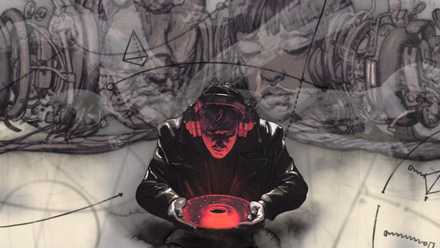
The Disco Elysium team brushes off expectations for all new original game: ‘Pressure is a privilege’
The writers of Zero Parades aren’t trying to make the next Disco Elysium


