
Last month, I flew to Paris to play Castlevania: Belmont’s Curse, the first mainline entry in the series in 12 years. Set in medieval Paris, Belmont’s Curse follows Rose Belmont as she battles all sorts of creatures of the night and unravels the mystery gripping the world following Dracula’s demise.
And I loved every second of it.
The preview itself took place in Chapelle Reille, a deconsecrated Neo-Gothic church that was once devoted to Joan of Arc. The place, with its high arched roof and stained-glass windows, was one of the most breathtaking locations I’ve ever visited, and getting to experience Castlevania there is something I will remember for as long as I live.
The game itself also features the tragic saint as one of its boss fights, but I’ll get into that a bit later.
Castlevania: Belmont’s Curse follows the traditional Castlevania structure, meaning it’s a 2D side-scroller with a vast interconnected world that respects the player’s freedom. In general you get to choose where you want to go, but the game also has systems in place to ensure its campaign structure remains intact and the story is experienced with proper pacing.
You play as Rose Belmont, the daughter of Trevor, both of whom have arrived in Paris to unravel the mystery gripping that medieval town, now consumed by infernal flames. Rose makes use of her trusty Tarot Cards, a gift from her late mother, to help her identify and locate crucial enemies by interacting with the environment and characters within it, while also employing her Whip to traverse the terrain quickly.
The Whip opens the game up to significant verticality and, since you will have found several locations that require it early, rewards you for going back and exploring places that you saw before obtaining it. This is true of several weapons and tools you find throughout the game, meaning you’re given hints toward new places to explore but soon realize you’ll need to come back once you have the necessary tool to tackle them.
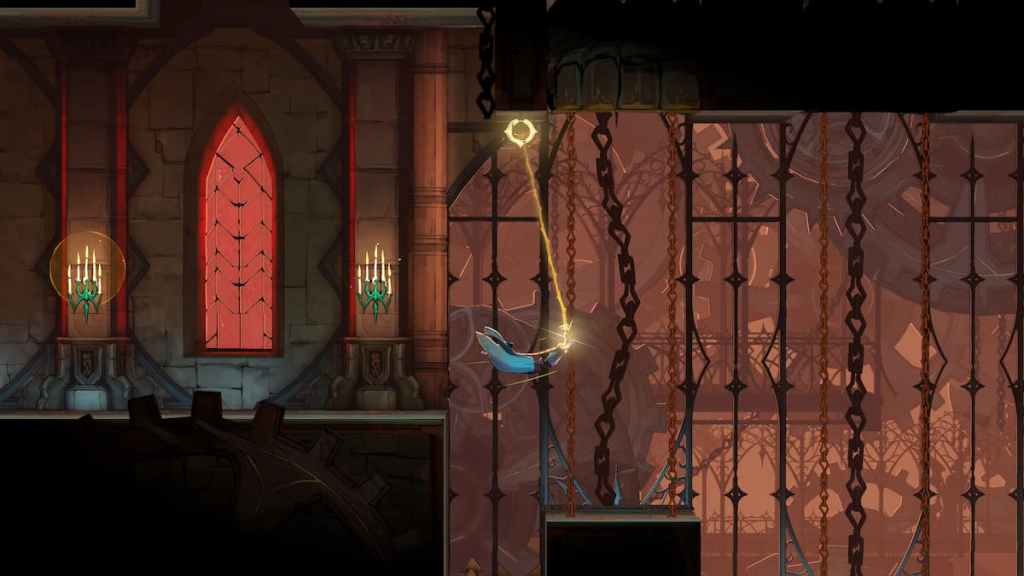
This works wonderfully with the interconnected metroidvania world, and I found myself exploring every nook and cranny of the map, leaving nothing within the fog of war.
Furthermore, there was one moment where I was “lost” trying to find my way to progress, but by exploring unknown areas, I started meeting ghosts that gave me small hints about my next location, with the Tarot cards updating and “falling together” until I had enough information to find the next step.
The Tarot Cards will eventually lead you past all the myriad enemies, traps, and puzzles that you need to solve and into the arms of story-crucial boss fights. These bosses play out like a dance and are exceptionally well-tailored to the 2D side-scroller perspective and control scheme.
They take after what we’ve seen over the last decade and a half in the Soulslike genre and have telegraphed moves, incredible soundtracks, and attack patterns that you might need more than one attempt to learn.
In the three-hour preview, I got to fight three of these bosses: a massive werewolf called “The Fallen,” Medusa, and Joan of Arc. Each boss was unique and required on-the-fly adaptation, with Medusa also coming with her own gimmick compared to the other two’s more traditional boss mechanics. Each of the bosses, once defeated, becomes part of the Tarot deck, allowing Rose to communicate with them throughout the rest of the narrative.
They also drop unique weapons and abilities, such as the cestus and a flaming sword or Medusa’s deadly turn-you-to-stone stare. Relics (items you equip that provide permanent effects and bonuses), spells, weapons, and Arcana, which grant unique buffs to spells, can be found while exploring as well, further creating incentives to go out and look for stuff that could be hiding behind every corner.
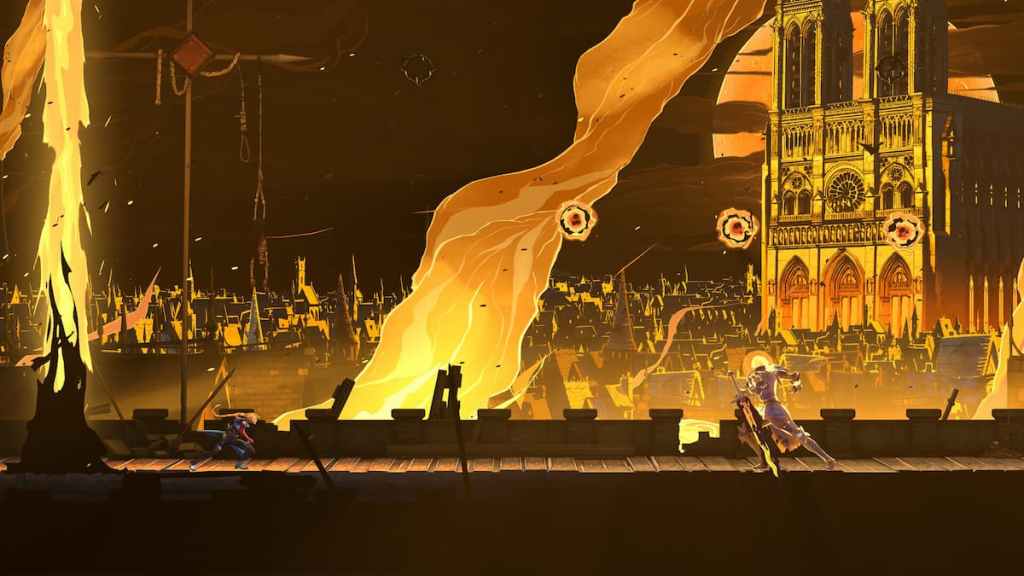
I used the cestus for most of the playthrough, as beating skeletons and living nightmares up with only my fists proved to be incredibly more satisfying than I expected. The fight with Joan, where I dashed under her attacks and only kept bashing her over the head with bare hands at near-zero HP, was one of the most memorable boss fights I had in any game, ever.
The world is packed with well-placed fountains, much like you’ve seen in past Castlevania titles, that function as permanent checkpoints, i.e., bonfires for the Souls fans out there, which you can fast travel between.
All in all, I found the gameplay to be incredibly addictive. Whether you’re fighting regular enemies, exploring, or advancing the plot through boss fights, the game is literally a gift that keeps on giving. It is incredibly responsive, chaining combos and attacks is brutally satisfying, while the agility of Rose’s movement kills the whole mundane side of blind exploration.
I played for merely three hours because that’s how much content I had the permission to explore, but if they had allowed me, I would’ve beaten the entire game in one sitting, not least because I was in a freaking Gothic church dedicated to one of the bosses in Belmont’s Curse.
As for the game’s visuals and art style, it’s a modernized and refreshed but recognizable Castlevania game, one whose story and characters will be recognizable to fans of the Netflix series as well as returning veterans. The looks seem to be significantly inspired by the TV show, but there’s a rigidity and attention to detail to them that is to be expected of a Castlevania title.
The atmosphere is oppressive and, of course, the background work is nothing less than masterful, with the artists giving it their all to make sure this 1499 version of Paris is brought to life even when there’s not much going on on the screen.
It’s the most accessible and approachable Castlevania to date, with the developers smoothing over the difficulty curve to ensure more fans are able to pick it up and have a go.
Older Castlevania titles were much slower, methodical, and difficult, while Belmont’s Curse does all it can to make sure the game is fast-paced and action-oriented without sacrificing tense and challenging moments, particularly when related to the boss fights.
So rest assured if you tried Symphony of the Night and were scared off by the brutal difficulty. That isn’t here, for the most part.
And, yes, the soundtrack is awesome, and I cannot wait to listen to more of it once the game launches on Oct. 15. Mind you, it’ll only be $29.99 on Steam, which is an absolute steal for the quality offered.


