
Mixtape, from The Artful Escape studio Beethoven & Dinosaur, is a delight. It’s a celebration of teenage life that makes its point, aptly, just as a teenager would.
Maybe it’s because I’ve just played through several hours of teen rebellion, but I feel like breaking some rules. Unfortunately these are rules of video game reviewing, which I am paid to care about (and do actually care about, because I am sad) but which I really ought not to ever burden you with because they are, let’s be honest, incredibly dull. So apologies and also: please adjust your excitement downwards, because the circumstances around Mixtape mean I’m obliged to start talking about them.
The first is about quotes: generally quotes in reviews should be avoided, because a review is about your ideas, your opinions, your feelings, not someone else’s. Plus, it’s easy to slip into sounding a bit pretentious when you start quoting excessively. Or just like you haven’t got enough thoughts of your own.
The second is a bit deeper, and maybe not as widely accepted: reviews are not arguments. It’s not a critic’s job to convince you, the lovely reader, that they are right. It’s their job to be honest. Not in the very silly ‘you were paid to give this an X!’ way but in the deeper way. It’s about being properly, radically honest with yourself about how you feel about the thing you’re reviewing, and then about teasing out the why’s behind it. About finding out what’s you and what’s the game, what’s intention and what’s execution. It’s about convincing people, if you’re lucky, that you’ve thought very hard about how and why it makes you feel a certain way, and then about what all that means (and doing so in a way that’s still useful and illustrative, of course). But it is not, at all, about convincing everyone else they have to feel the same.
The third one’s another boring one, and it’s also obvious: ignore what other people think. This is one I really didn’t – and still don’t! – want to break. But unfortunately I’m late to this review, and the online arguments around Mixtape, like the blossoming whiteheads of puberty, have been as horrible as they have been unavoidable. Online arguments are boring and nobody likes them, so I won’t go on about them. But acknowledging that stuff is also unavoidable at this point – which leads me back to rule number two, which leads me to rule number one.
“One,” says Johnny Galvatron, Mixtape’s writer and director, “you don’t want it to be like: ‘Remember the Game Boy Advance?!’ You don’t wanna do it that way. And you also don’t want to be like: this is when things were better. You don’t wanna go with that – and I don’t think the game says that.”
Galvatron, formerly of Australian band The Galvatrons, is a man in a loud suit and a mop of jagged blonde hair, and also the founder of Mixtape’s developer Beethoven & Dinosaur – and is speaking to me here just shy of a year ago at 2025’s Summer Game Fest. I’d just played the first half-an-hour of Mixtape and enjoyed it very much – even that bit; especially that bit! – and it’s a conversation I always felt a little guilty for never finding the time to write up. So let me jam it in awkwardly here.
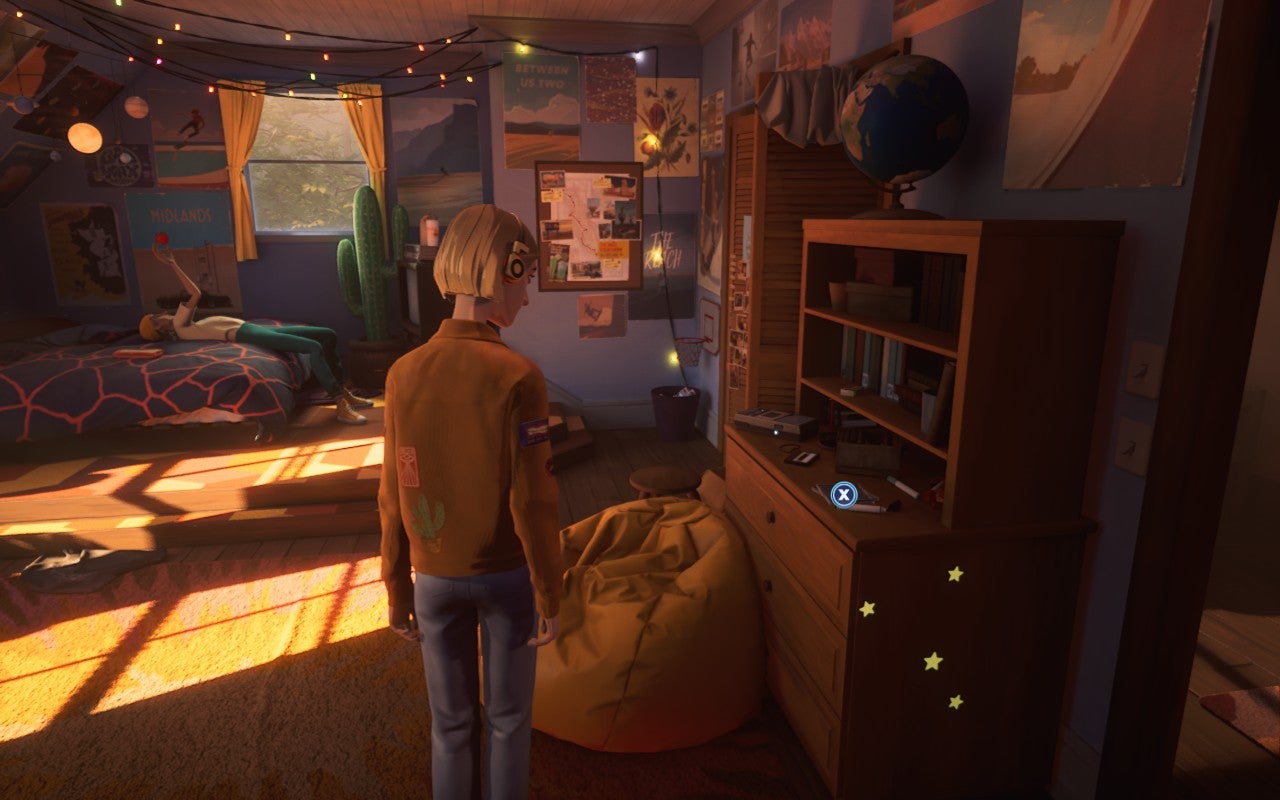
“What you want it to be is like, something that’s universal,” Galvatron continues. “In the sense of: remember when you felt weird? Remember when the future felt strange and disconnected from where you were? And also: remember when everything felt like a huge fucking deal? And also remember when you had no experiences and defined yourself by what you liked?”
Crucially, just because somebody says that’s what they were going for when they made something, that doesn’t mean they succeeded. It also doesn’t, necessarily, mean they were truly going for that at all. Deep down, sometimes the subconscious stuff, or the context of who you are and what you’re making and how you’re doing it, can get in the way of your intent. Intent is a dangerous topic. It’s easy to slip into deference when you start quoting someone and talking about their intentions.
But just as crucially: I do think Beethoven & Dinosaur has made exactly what Galvatron said this studio was trying to make with Mixtape. And I think it’s fantastic.
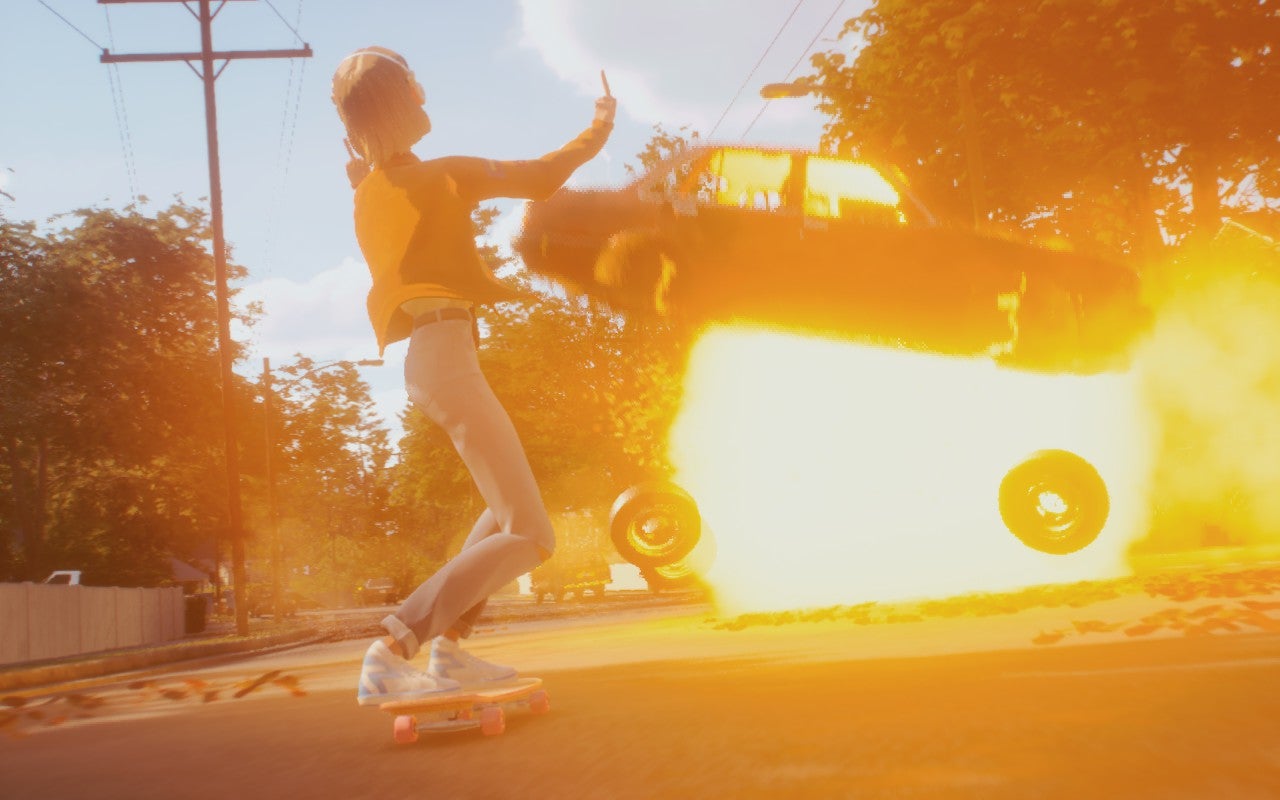
Mixtape is not, despite appearances – despite autumn leaves and sunsets and chunky physical media, and a Blockbuster-alike, and needle drop after needle drop after needle drop – a game about nostalgia. It’s a game that features nostalgia; but it’s a game about being a teenager, and likewise what the teenage experience means. It’s at pains to make this clear, in fact: Cassandra, a central character, even goes as far as to restate that above quote from Galvatron almost verbatim, during one chat in her powder-pink bedroom. (One of Mixtape’s few flaws is that it can occasionally slip into plainly stating its themes out loud, its teen protagonists coming out with sudden profundities well beyond their years. But this is also, like a lot of Mixtape’s excesses, part of its charm.)
Stacey Rockford, her old friend Slater, and newer pal Cassandra are living out their last day together in their fictional northern California hometown. With high school behind them and bodacious, Wayne’s World 90s accents in full swing (how do you write this in a way people get it? Imagine an umlaut on every vowel), Stacey has decided, all of a sudden, that she’s taking a flight to New York to chase an appropriately newly-discovered dream of being a music supervisor. Cue a supremely 80s, Breakfast Club-meets-Ferris Bueller one-day story of low-ish stakes rebellion and self determination. And cue a lot of music.
When it comes to music Galvatron, who describes his previous game, The Artful Escape, as almost “therapy for my experience in the rock industry,” is unafraid of overdoing it. This is fine, because Mixtape’s soundtrack is sublime, a river of cult favourites, personal favourites, big feels and subversive jokes, and a bit of excellent original score. The game was built mixtape-first, Galvatron told me – literally, with the song list the first thing settled on – and then the studio made what he semi-ironically called a “horizontal slice”, where the whole story was completed in janky skeletal form, mapped out to the music, then fleshed out from there. Mixtape opens with a glorious deep cut – That’s Good, by Devo, the kind of song you hear and think you’ve always known, and one Galvatron calls his all-time favourite – and keeps rolling from there.
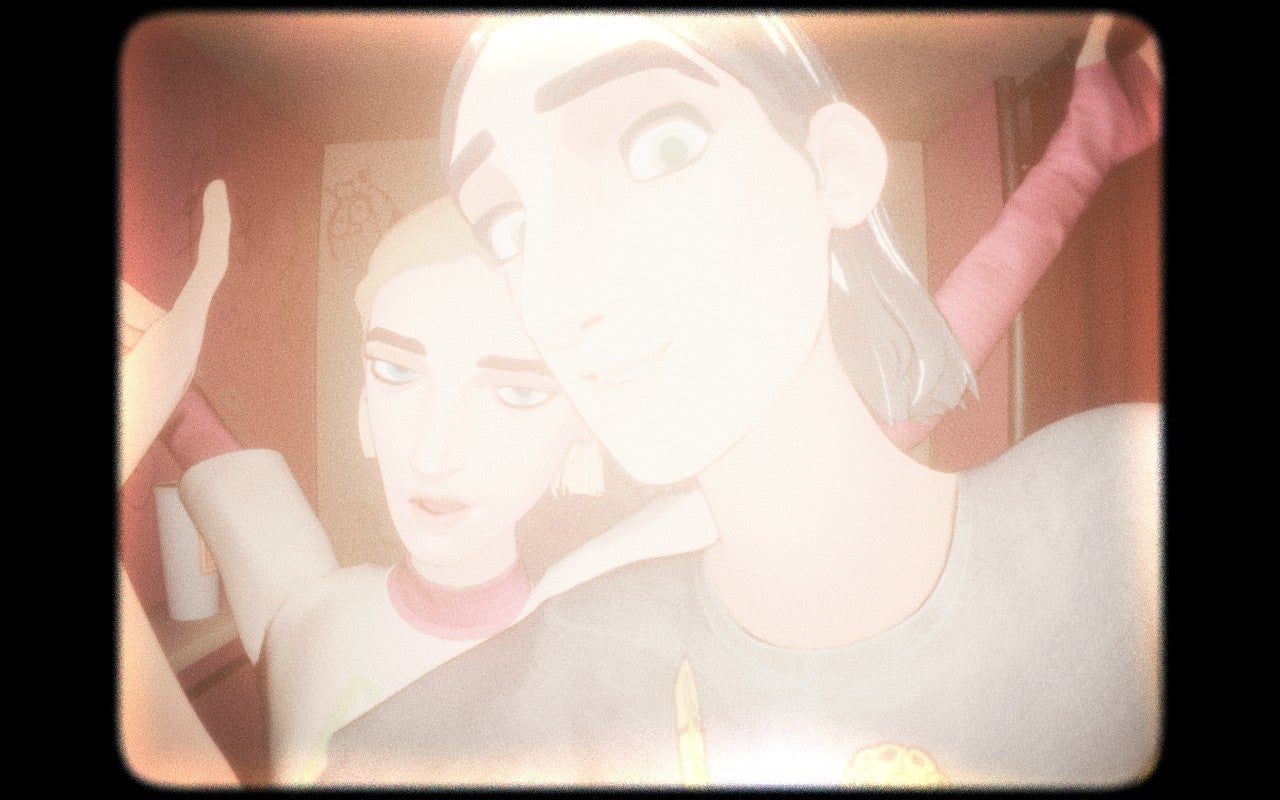
As a game Mixtape is essentially a series of vignettes, each story beat – a couple dozen in all – a kind of anecdote or flashback, each of those accompanied by a song selected by Rockford, speaking down the lens to you as she explains every meticulous, over-confident choice and every sudden, melodramatic deviation from the plan. She’s that defined-by-what-you-like trait personified. But with each track also comes a mechanical twist – Mixtape’s less walking simulator, as it’s been backhandedly called in very dated jibes, than anecdote generator. One moment you’ll be skateboarding in third person, then you might be running, sidescrolling, in 2.5D. Then you’re taking photos, skimming stones, clapping hands, floating, interlocking slimy, glisteni- ahem…
You zip into and out of each of these asides, usually from interacting with a certain item in a character’s bedroom or other hangout space, with whiplash pace. (Much as ‘walking sim’ underdoes it here, there’s a clear touch of Gone Home too, albeit far less morose. Mixtape’s tempo only slightly sags, briefly, during a bit of the middle act, before rising again to a sparkling crescendo). Beethoven & Dinosaur’s developers have a majestic ability to transition through scenes like seasoned filmmakers. Sometimes it’s grandiose, all fireworks and big views, but occasionally and deftly it can be via the opposite. In a split-second: a shell in a closed palm; an open palm, now at the beach; closed palm again, turned over, back in the bedroom. And this stuff is relentless. If it’s not match cuts it’s smash cuts, crash zooms, transitions between real archival footage and the virtual, between aspect ratios and film formats, first- and third-person, super close-up and super long shot, you name it.
The effect of playing Mixtape is really one of watching someone work who themself has watched a lot – references abound, yes, but celebratory ones rather than some kind of stolen valour. It’s a constant barrage of technique, framing, blocking, tempo, the timing of jokes – Mixtape is wonderfully unserious, unashamed of itself – and lavishly small detail to its animations. I became obsessed, briefly, with just watching the poses your friends pull as you waft a camera in their direction. The way Stacey and Slater’s hands and, somehow, heads knot together effortlessly, enchantingly, ridiculously, as you wobble them around goofily in a photobooth. The rolling suite of brief moments Mixtape provides for tiny, essential acts of self expression. My Mixtape save has my awful, ill-framed photos; my haphazard paintwork; my wacky hand gestures on VHS.
This is the teen thing, here. Mixtape’s story is simple – friends, party, booze, strict parents, melodrama – but it’s potent for what it allows Beethoven & Dinosaur to toss up and let you catch. A point it might feel tempting to levy at it is that it’s inauthentic, for instance. The developer is Australian, but has set its game in California. It’s millennial bait but it’s set in the 90s, when we’d have been far too young to have experienced any of this in the chosen era. It centres on a very specific, already frequently depicted Western memory of the time. It’s trying too hard; aping its references rather than becoming one of its own. Its characters are insufferable. It gets rewinding cassette tapes slightly wrong.
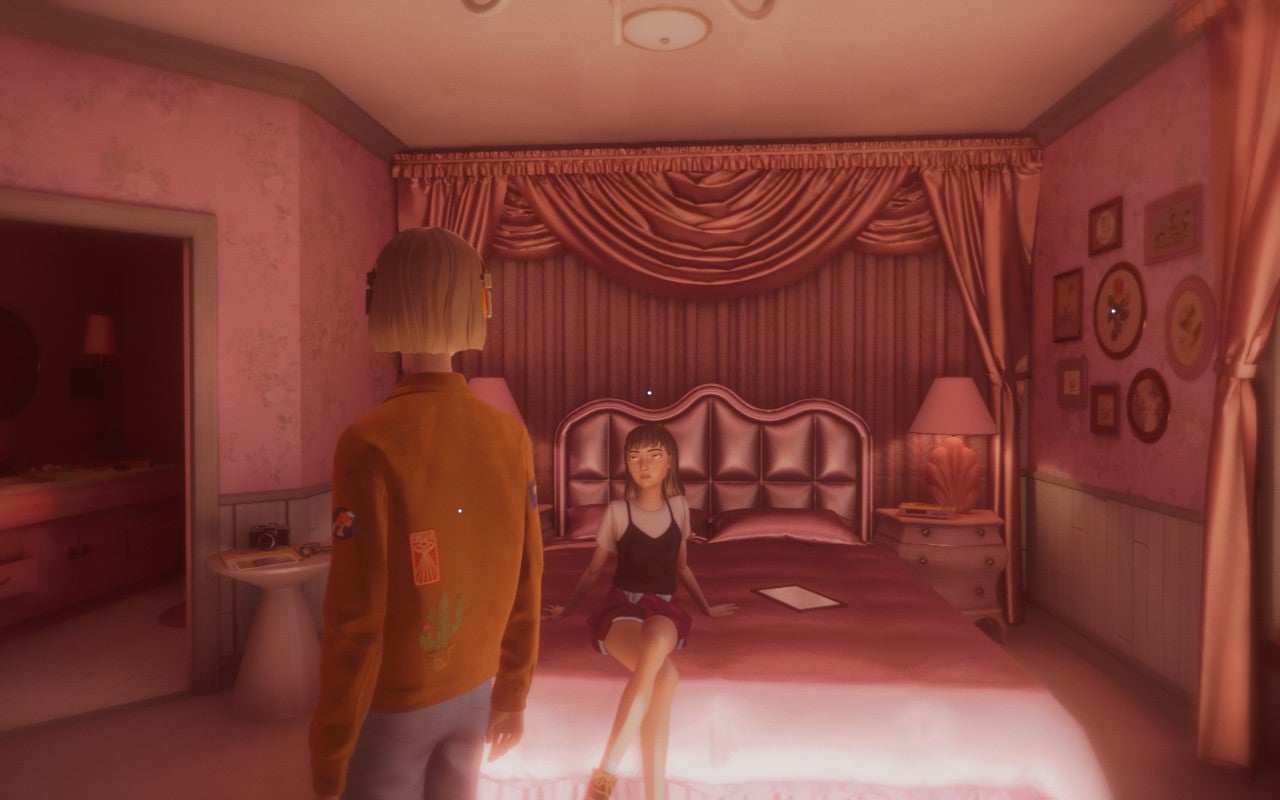
All that’s true, to various degrees, at least on the surface – but to leave it there would also be missing the wood for the trees. This game is not a documentary. It’s not a diary entry, with an exact time and place. It’s not about the pacific northwest, about growing up in that location, or in that era, or about the exact technology it references, even the exact songs it goes through great lengths to talk to you about.
It’s about – brace for cringe – us. Teens are insufferable, it’s very understandable to hate them. I hate them! But hating teenagers is a kind of self-loathing, it’s a factor of remembering what you were like, seeing your own arrogance, your own misplaced certainty, misjudged knowledge, your lack of proportion and perspective, your pride and absolutely comical over-sincerity all reflected back to you in their uncomfortably oily skin. I think about that time in my life and shiver, and I think about that when I look at Stacey and Slater and Cassandra. But I also love them. I feel genuine love for them, in fact, because being those people for a moment in life is so essential, so necessary to the human experience, so profoundly big.
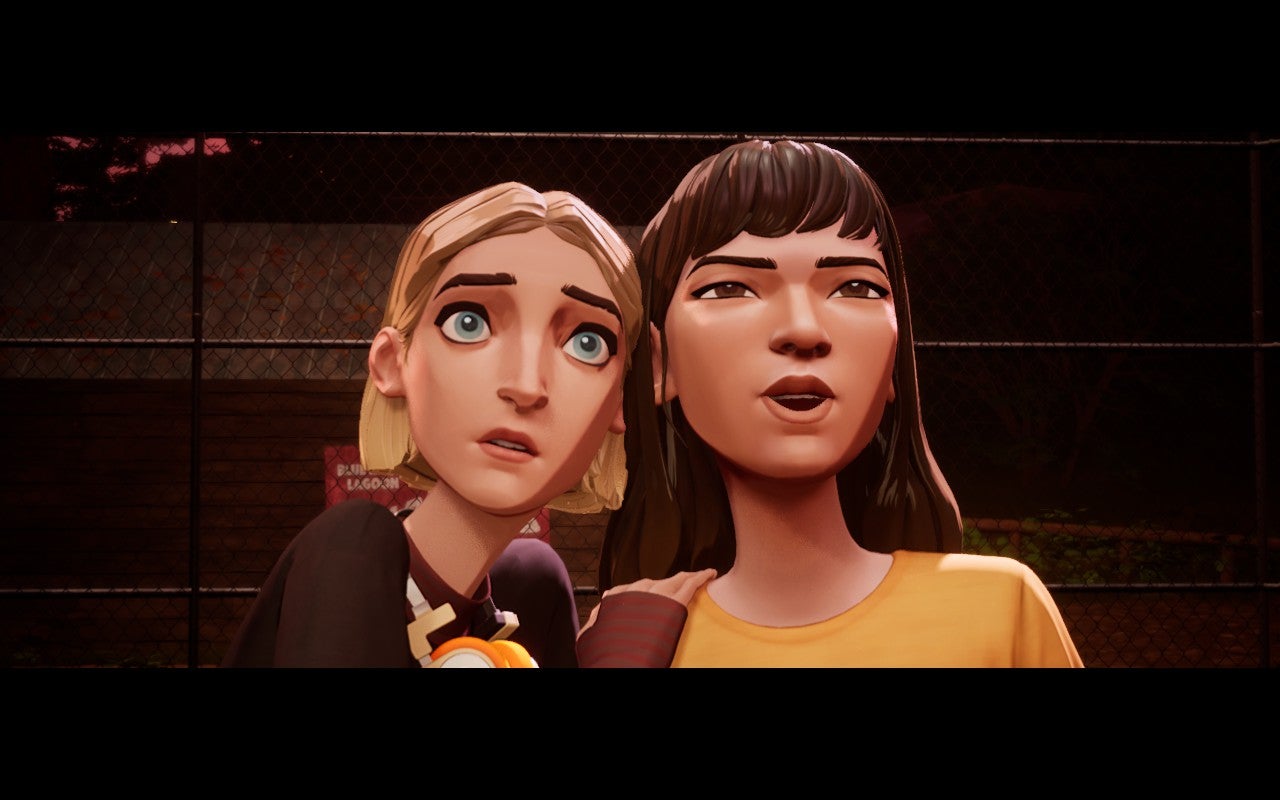
It’s universal – so universal, in fact, that even describing it at all feels kind of trite. We all know it. We’ve all experienced the same. If not in the exact moments of Mixtape – though I did unfortunately do a lot of headbanging in my car – then in your own equivalents. Maybe you didn’t drink like these kids, but you argued, like your life depended on it, for something incredibly stupid. Maybe at a house party, mid-way through a provocative dance move you’d never done before and had no possible reason to be doing right then you accidentally locked eyes with a nosy parent and died a thousand deaths inside. Maybe you swore at your mum or tried to explain a really weird theory of god to your dad, or had meltdown after meltdown after meltdown over nothing at all. I’m certain, surely, you laid on your back one night, next to someone close to you, and felt the whole magnitude of the universe staring back at you from the stars.
Through all of that teenage silliness runs a thread of wonderful, priceless sincerity. The big-heartedness every adult struggles and often fails to keep alive. It’s the same with Mixtape. And it’s the same thing that makes it undeniably self-indulgent, even cringe – so much floating, so many fireworks, so many half-cocked eyebrows – but also so exquisitely, perfectly on beat. Of course it’s over the top! Of course it has about three endings too many! Of course it feels earnest and saccharine and full of broad, obvious strokes. It is like this on purpose. Because it’s funny, because it’s a story that knows itself, because it is reflecting teen-ness through the form, and because it is fundamentally true.
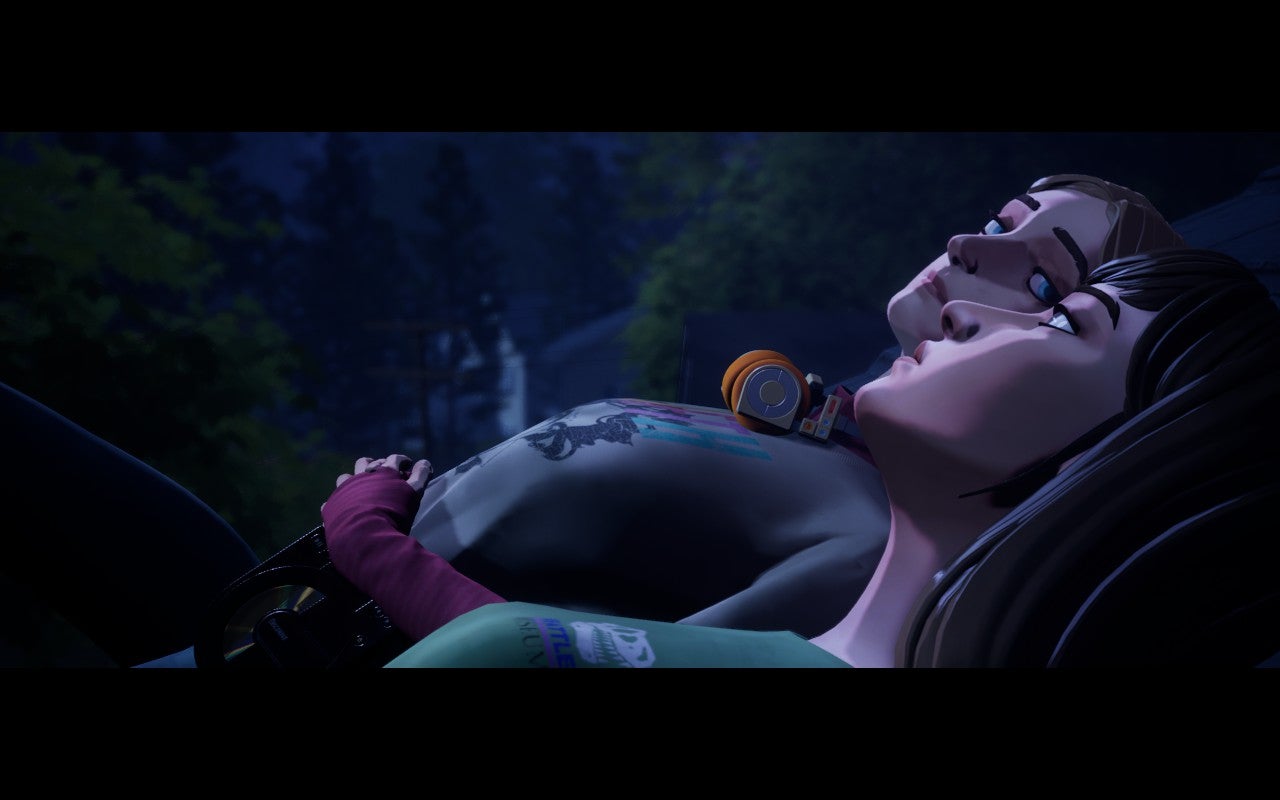
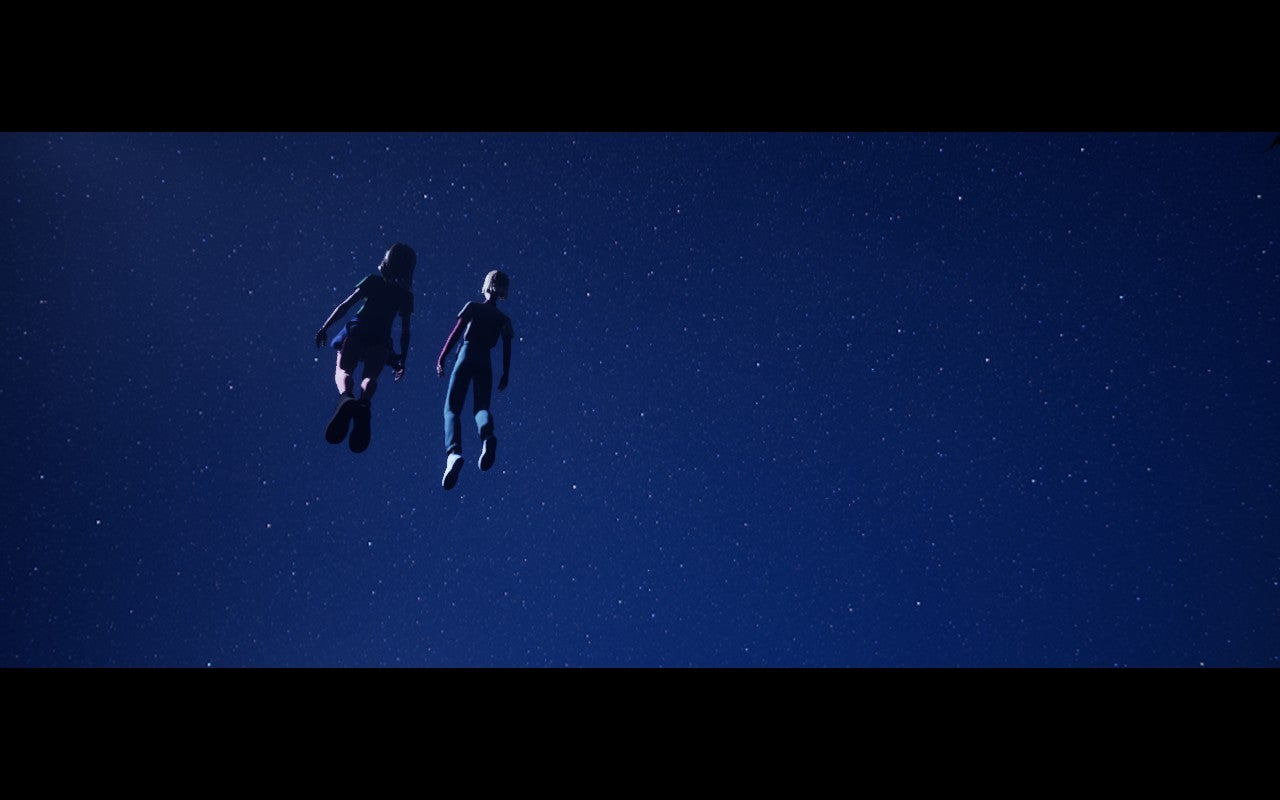
This is the fullness of living that comes with the period of life – a period everyone lived through, which is why it’s one with no real time or real place, a strange 80s-90s land of forever-autumn. It is all those ridiculous things because teenagers are those things. It’s unrestrained because it is if anything an ode to having no restraint. Its message isn’t ‘seize the day’ or whatever but just to remember it, to love it for what it was, to not hide from that time or that version of yourself, or feel so bad when that mid-twerk eye-contact erupts into the front of your mind at 2am and refuses to leave.
To miss the point in this way – as much as there could ever be an objective point and as much as, again, I should never really be trying to persuade you to agree with me on it – feels like a symptom of the exact ailment Mixtape is trying to cure. It’s a result of the excessive cynicism of today, the weariness of online life, adulthood, seriousness. The increasingly understandable sense that everything is a trap, a ploy. Or (good grief) an ‘industry plant’. Follow this way of defensive, self-preservational thinking for too long though and instead of bigness you’ll find your world will shrink, the highs flattened, the lows numbed. If there’s a message to Mixtape I think it’s that. To let go a bit. And also, obviously, to give yourself a little credit. If nothing else I bet your music taste was better than it is now, when you were 18. And maybe teenage you was right about breaking the occasional rule.
A copy of Mixtape was provided for this review by Annapurna Interactive.


![JDM Japanese Drift Master American Classics [RUNE] – MaxBit](https://i0.wp.com/gamepcfull.com/wp-content/uploads/2025/05/Free-download-japanese-drift-master-gamepcfull.jpg?w=100&resize=100,100&ssl=1 "JDM Japanese Drift Master American Classics [RUNE] – MaxBit")