
There’s nothing quite like getting out and exploring, and Outbound aims to deliver a cozy, open-world experience driven by the promise of adventure. But while the journey is smooth and scenic, it struggles to give you a real reason to keep driving.
Outbound is a cozy, slow-paced, open-world exploration game where you set out in a camper van. While on the road, you can gather resources, upgrade your vehicle, and uncover Landmarks, but ultimately, you have the freedom to shape your adventure however you wish. Unfortunately, this freedom doesn’t always amount to much, as exploration can feel aimless rather than rewarding.
A postcard-perfect world that feels a little too still
No matter where you drive, you’re met with stunning views that make you want to pull over, take a seat, and watch the sunset. Outbound absolutely nails the scenery, and I consistently found myself in awe of the world it presents. One of my favorite pastimes was finding a high vantage point, like a watchtower or Landmark, and taking in the landscape below.
As gorgeous as Outbound’s biomes are, though, the world feels noticeably lacking in life to match. The journey is meant to be the star of the show here, yet road trips often move at a snail’s pace, with little to keep you engaged along the way.
There are a few systems that help break up the journey, with my favorite being the Cap-N-Snap vending machines, where you can spend bottle caps on rewards like car charms and bobbleheads. There’s also a wide assortment of collectibles to discover, including Gnome figurines with amusing names, Cairns you can add rocks to, Paintings you can unlock, and Campfires to light, all of which feed into a steady collection loop as you progress. However, since these can all be tracked and toggled on via the map, the system ultimately feels more like checklisting than discovery, with little sense of challenge or reward in finding them organically.
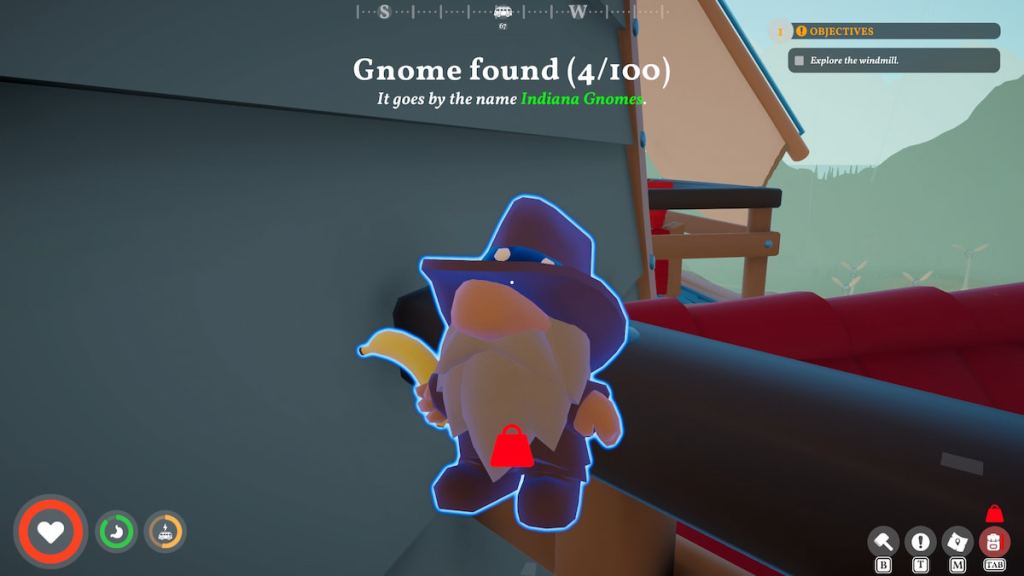
Beyond these systems, the world itself feels noticeably empty when you’re out on the road. If you play alone, you are the only person in the entire world. Everywhere you go, it feels like you’ve just missed whoever might have been there before you. There are notes, letters, and other remnants of life scattered around, but not a single NPC to see or chat with.
For a game that’s built around outdoor exploration, wildlife is also surprisingly sparse. You’ll occasionally spot rabbits, birds, and other creatures, but encounters are rare. It often feels quite lonely on the open road, and while things improve a bit once you gain a dog companion, it’s not quite enough to offset the sense that you’re entirely alone in this vast, lifeless world.
A road trip that keeps looping back on itself
Throughout your journey, your main goal is simple: gather resources to improve your van life. There are various ways to do so, including crafting new or better tools, upgrading the van to make it more efficient or to unlock new features, and gradually crafting a home on wheels by building up your vehicle.
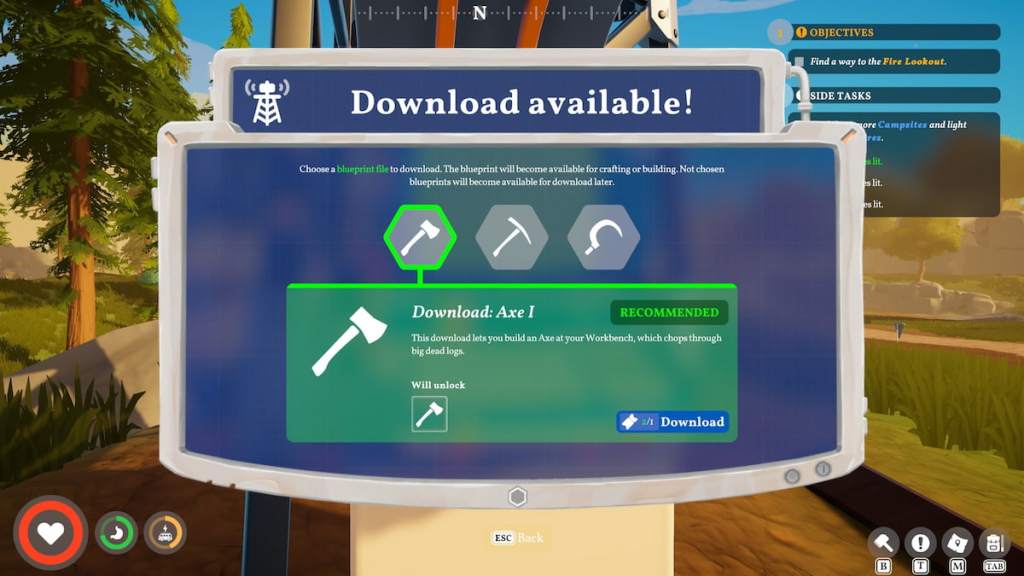
Progression is tied to Blueprints, which are found at Radio Towers scattered across each biome. Each Blueprint costs a Download Voucher, created by recycling litter collected throughout the world. It’s a loop you repeat constantly, and it quickly wears thin. It doesn’t help that you have no control over where new radio signals appear, often forcing long trips back across the map just to collect a single upgrade.
While I don’t mind retracing my steps in moderation, the combination of slow travel and long resource respawns makes the journey feel increasingly tedious. When there’s nothing new to see or gather along the way, those long drives to the next Radio Tower start to feel more like mindless busywork than exploration.
Building a home wherever the road takes you
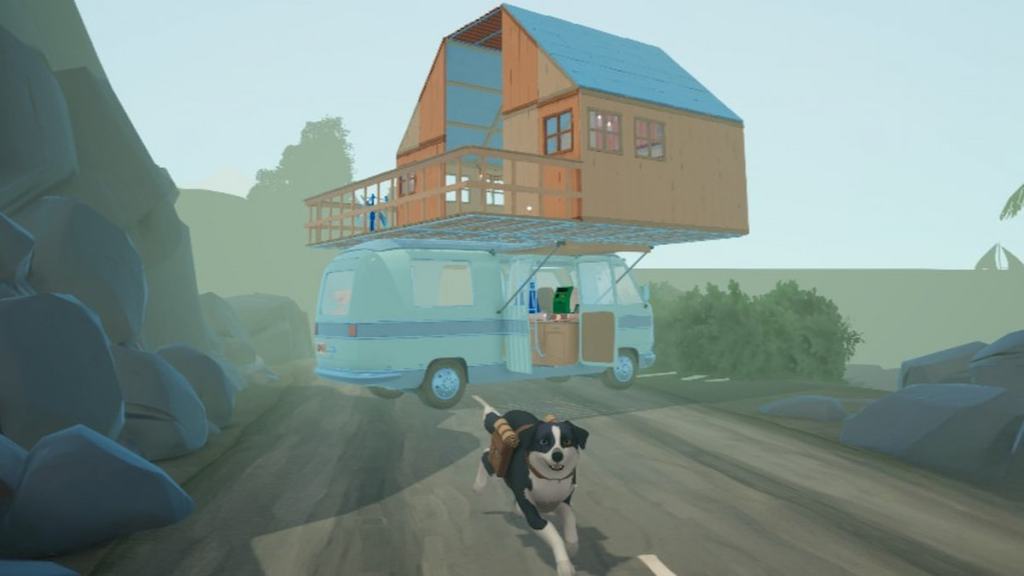
Perhaps my favorite part of Outbound is the gloriously goofy building system, which lets you turn your van into a fully customizable home on wheels. Each time you slide open the middle door to set up camp, your entire home seamlessly unfolds, and when you close it again, it neatly compacts back into the vehicle. It makes absolutely no logical sense, but I love it. This system can also be upgraded over time, eventually allowing you to expand your living space around the outside of the van, too.
Progression requires a fair number of different machines, so it’s quite convenient that you can take an entire home on the road with you, giving you plenty of space to build and store them. As someone who’s always a sucker for a good building system, this one really delivers. It’s easy to use, intuitive, and offers plenty of customization options, whether your focus is efficient crafting layouts or building the most unnecessarily gorgeous mobile home imaginable.
A world that comes alive in multiplayer
At its core, Outbound feels like it was designed with multiplayer in mind. The world becomes noticeably more engaging when you’ve got friends exploring alongside you, and the more tedious parts of the experience, like gathering resources or driving the same stretches of road repeatedly, are softened when you’re sharing the journey, whether that’s foraging together or simply chatting along the way. This isn’t necessarily a flaw in itself, but it does mean solo play can feel lackluster by comparison, as I often struggled to stay fully engaged when exploring alone.
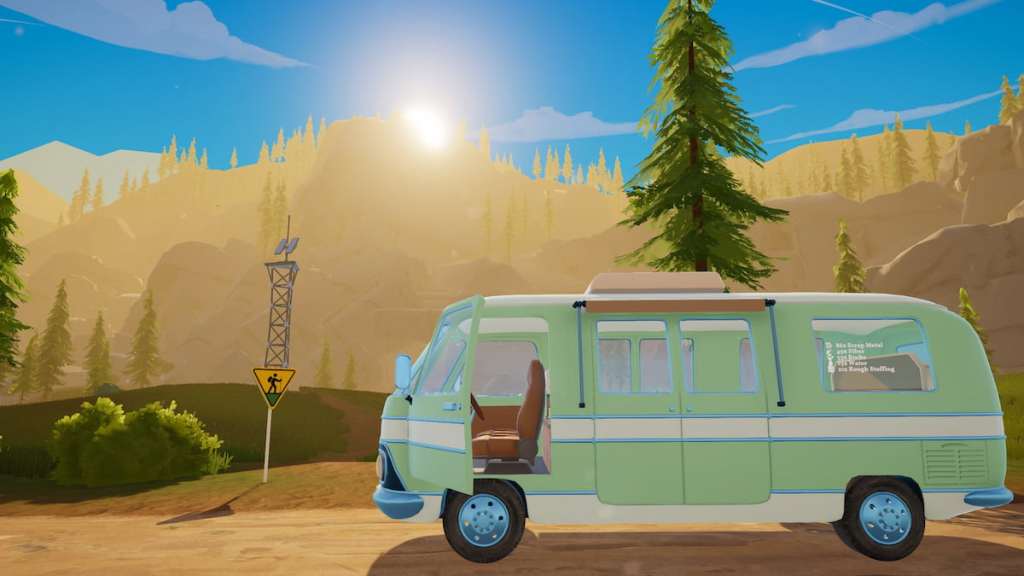
There’s a lot to love about Outbound, from its cozy atmosphere and scenic open world to its wonderfully flexible building system that lets you turn a simple van into a fully fledged home on wheels. When it clicks, it’s a relaxing and genuinely pleasant experience to unwind in. But once the novelty wears off, the repetitive gameplay loop and lack of life in the world start to stand out, especially if you’re playing alone. It’s a game that’s easy to enjoy in the moment, but unlikely to stay with you once the journey ends.


